Every year, over 1.4 billion people cross borders for work, adventure, or family visits. But for many, the biggest threat isn’t lost luggage or language barriers-it’s getting sick from something they never expected. Travelers’ diarrhea, malaria, hepatitis A-these aren’t just distant risks. They’re real, common, and mostly preventable. The key? Knowing what to do before you leave.
Why Pre-Travel Health Matters More Than You Think
Most people think a quick trip to the pharmacy for some antidiarrheal pills is enough. But that’s like bringing a bandage to a broken leg. The CDC reports that 30% to 70% of international travelers get sick from food or water, depending on where they go. In high-risk areas like South Asia or sub-Saharan Africa, that number jumps to over 60%. And it’s not just about stomach bugs. Malaria alone causes 3,000 to 5,000 cases in the U.S. each year-almost all of them preventable with the right medicine and timing.
Here’s the hard truth: only 55% of travelers heading to high-risk areas even see a doctor before they go. That means nearly half are flying blind. And it shows. The CDC found that travelers who get a proper consultation cut their risk of vaccine-preventable illness by 78%. That’s not a small edge. That’s life-changing.
Vaccines: Not Just for Kids Anymore
You don’t need to be a child to need vaccines. In fact, some of the most important shots for travelers are the ones you probably skipped years ago.
Hepatitis A is the #1 vaccine-preventable disease among travelers. It’s spread through contaminated food and water-even ice cubes. One dose gives you 95% protection. Two doses, spaced 6 to 12 months apart, protect you for life. It’s not optional in places like Mexico, India, or Indonesia. Yet, many travelers still skip it because they think, “I’ve never had it before.” That’s not how it works.
Typhoid is another big one. The newer conjugate vaccine (TCV) gives you 87% protection for three years. Older versions only gave you 50-80%. If you’re going to rural areas or eating street food, this isn’t a luxury-it’s a necessity. You need it at least 10 days before departure.
Don’t forget your routine shots either. MMR, Tdap, and varicella aren’t just childhood requirements. If you’re 30, 45, or 60 and haven’t had a tetanus booster in the last 10 years, you’re at risk. Travel clinics check these first. If you’re missing them, they’ll get you caught up before moving on to destination-specific vaccines.

Malaria Prophylaxis: Choosing the Right Medicine
Malaria isn’t just a tropical disease anymore. Climate change is pushing mosquitoes into higher altitudes and new regions. The WHO estimates that by 2030, 200 million more travelers could be at risk.
There are four main drugs used to prevent malaria. Each has pros, cons, and rules.
- Atovaquone-proguanil (Malarone): Take one pill daily. Start 1-2 days before travel. Stop 7 days after you return. It’s 95% effective and has the fewest side effects. But it costs around $220 for a 3-week trip. If budget isn’t an issue, this is the gold standard.
- Doxycycline: A daily pill, cheaper at $45 for the same trip. But it makes your skin super sensitive to the sun. About 30% of users get bad sunburns. You also can’t take it if you’re pregnant or under 8.
- Mefloquine (Lariam): Taken once a week. Start 2-3 weeks before travel. This one has a scary reputation. Some people report vivid dreams, anxiety, or even hallucinations. Reddit users have shared stories of emergency room visits after taking it in Thailand. It’s still used, but many doctors avoid it unless other options aren’t possible.
- Tafenoquine (Krintafel): Newer, approved for adults and kids over 16 in 2025. One pill weekly. Start 3 days before travel. The catch? You must get tested for G6PD deficiency first. Why? If you have it, this drug can destroy your red blood cells. That’s rare, but serious. About 10% of people in malaria zones carry this trait.
Adherence is the biggest problem. Only 62% of travelers take their pills exactly as prescribed. That’s why so many cases still happen. Missing even a few doses can leave you unprotected.
Safe Food Practices: The Simple Rule That Saves Lives
You don’t need a medical degree to avoid food poisoning. Just remember this:
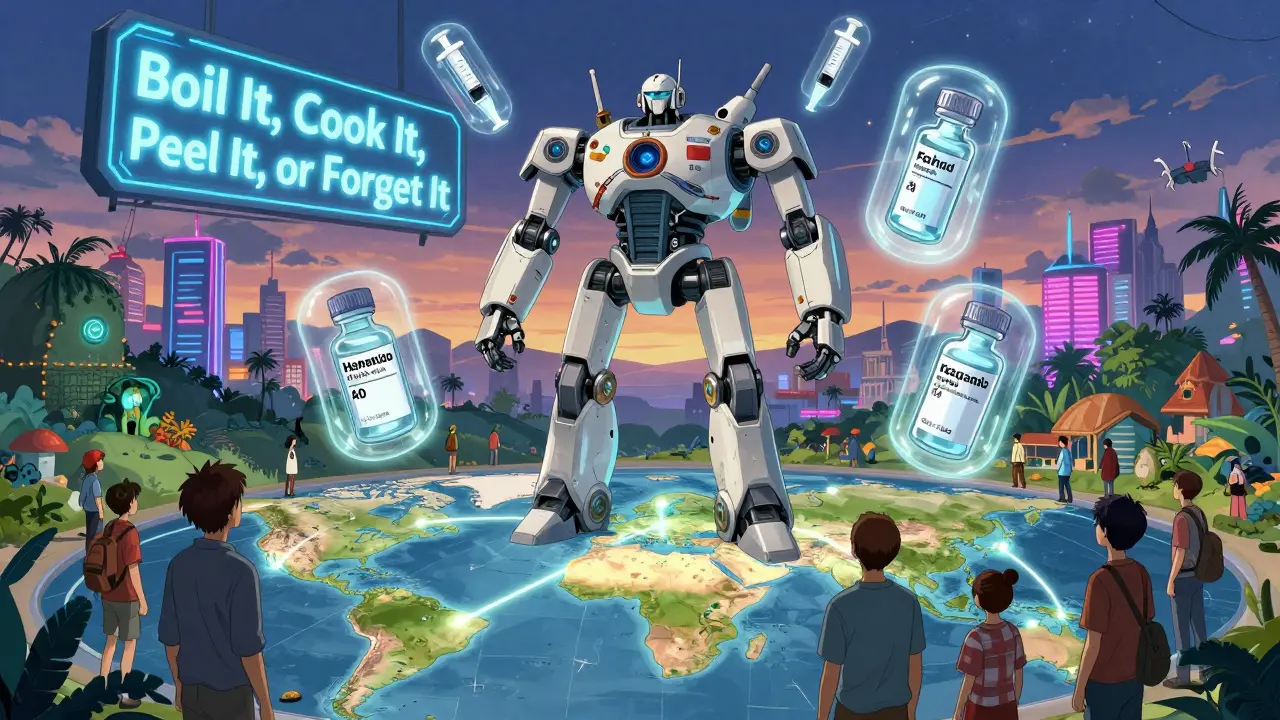
Boil it, cook it, peel it, or forget it.
That’s the CDC’s golden rule. It’s not a suggestion. It’s a survival tactic.
- Boil it: Drink bottled or boiled water. Avoid ice unless you know it’s made from purified water. Many travelers get sick from ice in cocktails or even coffee.
- Cook it: Food must be hot-steaming hot-when served. Bacteria die at 165°F (74°C) for poultry, 160°F (71°C) for ground meat, and 145°F (63°C) for fish. If it’s lukewarm, skip it.
- Peel it: Bananas, oranges, mangoes? Fine. But don’t eat sliced fruit from a street vendor unless you saw them peel it right in front of you.
- Forget it: Salads, raw veggies, unpasteurized dairy, and undercooked eggs? High risk. Walk away.
Even if you follow all this, you’re not 100% safe. That’s why bismuth subsalicylate (Pepto-Bismol) is a game-changer. Taking two tablets four times a day reduces diarrhea risk by 65%. It’s not a cure-it’s a shield. And it’s available over the counter. Many seasoned travelers carry it in their carry-on.
What You Might Not Know About Travel Medicine Today
There’s a hidden layer most travelers never think about.
First, timing matters. You need 4 to 6 weeks to complete most vaccine schedules. But 73% of people wait until less than 2 weeks before departure. That means they miss out on full protection. Hepatitis A? One dose gives good protection, but two doses give lifelong safety. If you only get one because you’re in a rush, you’re not fully covered.
Second, medications don’t always travel well. Some countries ban common prescriptions. ADHD meds, opioids, even certain antibiotics can get you detained. Always carry pills in their original bottles with a doctor’s letter listing the generic names. Travel.State.gov says 45% of travelers run into trouble with this.
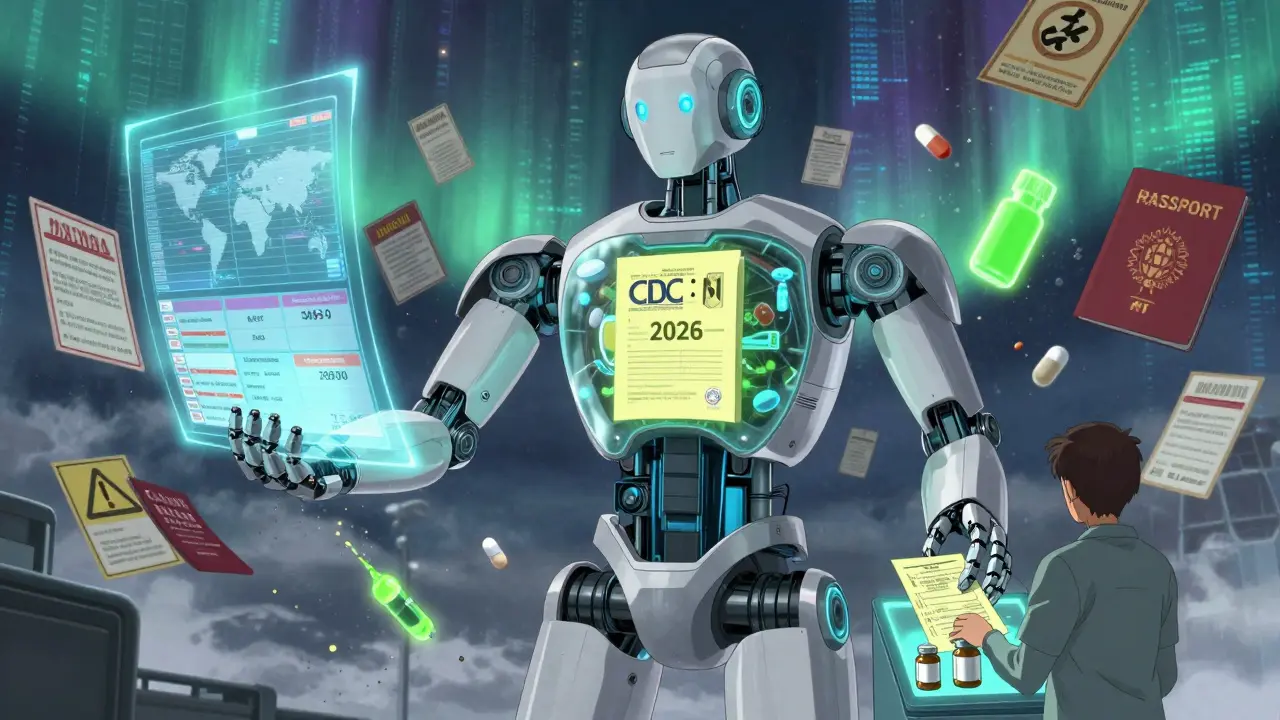
Third, the tools are changing. The CDC Yellow Book 2026 is now the gold standard, used by 92% of U.S. clinics. It’s updated every two years and includes new guidance on high-altitude malaria risk and climate-driven foodborne illness. Digital health passports are now active in 127 countries. They store your vaccine records and let border agents verify them instantly.
And resistance is growing. Azithromycin, once the go-to antibiotic for travelers’ diarrhea, is now over 30% ineffective in Southeast Asia. Doctors are shifting to alternatives like rifaximin. But many U.S. pharmacies don’t stock them. One Reddit user said they waited three weeks to get a prescription filled. That’s not normal. It’s a system gap.
What to Do Next
If you’re planning a trip in the next few months, here’s your checklist:
- Check the CDC Yellow Book 2026 for your destination. Type in your country or region. It tells you exactly which vaccines and medicines are recommended.
- Book a travel clinic appointment at least 4-6 weeks before you leave. Don’t wait.
- Ask about malaria prophylaxis options. Don’t just accept the first drug offered. Ask about cost, side effects, and your personal health history.
- Carry bismuth subsalicylate. It’s cheap, legal everywhere, and works.
- Write down the generic names of all your meds. Print a doctor’s note. Keep it with your passport.
- Follow the rule: Boil it, cook it, peel it, or forget it. Even if everyone else is eating it, don’t be the one who gets sick.
Travel medicine isn’t about fear. It’s about control. You can’t control the food in a village market. But you can control whether you carry Pepto-Bismol. You can’t control whether your flight stops in a malaria zone. But you can control whether you take the right pill. The tools are there. The knowledge is out there. Now it’s up to you to use them.
Do I need a vaccine if I’m only staying in a resort?
Yes. Even luxury resorts use local water and food supplies. Hepatitis A and typhoid can spread through ice, salads, or improperly washed fruit. Resorts don’t have special immunity. The CDC has documented outbreaks in high-end hotels in countries like Mexico, Thailand, and Egypt. If the country recommends vaccines, take them-even if you’re not hiking through jungles.
Can I get travel vaccines at my regular doctor?
Maybe. Many primary care doctors don’t stock travel-specific vaccines like typhoid or yellow fever. They may not know the latest guidelines for malaria drugs. Travel clinics specialize in this. They have the vaccines on hand, updated resources like the CDC Yellow Book, and experience with international regulations. If your doctor doesn’t offer travel medicine, they can refer you. Don’t assume your regular clinic can handle it.
Is it safe to take malaria pills if I’m pregnant?
Avoid travel to malaria zones if you’re pregnant. But if you must go, atovaquone-proguanil (Malarone) is the safest option. Doxycycline and tafenoquine are not safe during pregnancy. Mefloquine can be used in the second and third trimesters, but only if benefits outweigh risks. Always consult a travel medicine specialist. The CDC has specific guidelines for pregnant travelers, and they’re not the same as for the general population.
What if I forget to take my malaria pill?
If you miss one dose, take it as soon as you remember. If it’s close to your next dose, skip the missed one and go back to your regular schedule. Never double up. But if you miss multiple doses, you’re no longer protected. Get to a clinic immediately. In remote areas, carry a standby antibiotic like azithromycin or rifaximin for fever or chills-these can be signs of malaria. Don’t wait.
Are there side effects from travel vaccines?
Most are mild: sore arm, low fever, headache. Serious reactions are rare. The hepatitis A vaccine is one of the safest vaccines ever made. Typhoid shots may cause redness or swelling at the injection site. The oral typhoid vaccine (capsules) can cause stomach upset. If you have a severe allergy to any vaccine component, tell your provider. But don’t skip vaccines because you’re afraid of side effects. The risk of disease is far greater.
Travel isn’t about avoiding risk. It’s about managing it. With the right prep, you can explore the world without becoming its next statistic.

Philip Blankenship
February 16, 2026 AT 16:57Man, I love how this post breaks it all down without being scary. I used to think I was invincible until I got traveler’s diarrhea in Bali-three days in a hotel room, sweating through my sheets, wondering if I’d ever walk again. Turns out, it was the ice in my cocktail. I still laugh about it now, but man, it changed everything. I carry Pepto-Bismol like it’s my personal bodyguard now. Two tablets, four times a day, no exceptions. Even on fancy resorts. Even if everyone else is eating the salad. I don’t care. I’ve got my rules now.
And honestly? The ‘boil it, cook it, peel it, or forget it’ rule is the only thing I need. It’s stupid simple, but it works. No fancy apps, no travel blogs, just that one line. I’ve been to 17 countries since then. Zero stomach issues. Zero hospital visits. Just peace of mind and a lot of weird looks from locals when I refuse their ‘fresh’ fruit platter.
Oliver Calvert
February 18, 2026 AT 10:42Just want to add that the newer typhoid conjugate vaccine is a game changer. Older versions were iffy and required boosters every few years. TCV gives you 87% protection for three years with one shot. If you're going anywhere with questionable sanitation-rural India, parts of Africa, even some Southeast Asian cities-this isn't optional. Also don't forget to ask for the injectable version. The oral one? I got sick from it. Seriously. Stomach cramps for two days. Not worth it.
And yes, your regular doctor might not have it. Travel clinics exist for a reason. They know what's current. I've seen too many people get slapped with outdated advice. CDC Yellow Book 2026 is your bible. Bookmark it. Print it. Carry it.
Kancharla Pavan
February 20, 2026 AT 06:22Let me be blunt. People treat travel medicine like a suggestion, not a survival protocol. You think you're 'just going to a resort'? You're a walking Petri dish. You don't get to opt out of biology because you're paying for a poolside cocktail. The CDC stats are clear: 60%+ get sick in high-risk zones. That's not bad luck. That's ignorance dressed up as adventure.
And don't get me started on the 'I'm healthy, I don't need shots' crowd. Hepatitis A doesn't care if you're fit. It doesn't care if you've never been sick. It doesn't care if you're 'only there for a week.' It's in the water. In the ice. In the fruit someone peeled with dirty hands. You think you're tough? You're just lucky. Until you're not.
And Malarone costs $220? Good. Let the cheap ones get sick. Maybe then they'll stop acting like travel medicine is a luxury. It's not. It's the difference between a vacation and a hospital bed halfway across the world.
Dennis Santarinala
February 20, 2026 AT 09:17This is so well done!! Seriously, thank you for writing this with so much care and clarity!! 😊
I just got back from a trip to Vietnam, and I followed every single thing you mentioned-vaccines done 6 weeks out, Malarone daily, Pepto-Bismol in my bag at all times, and I stuck to the ‘boil it, cook it, peel it, or forget it’ rule. I ate street food? Yes. But only when it was piping hot and served fresh. I drank bottled water with a seal? Always. I even asked the vendor to peel my mango right in front of me. They thought I was weird. I didn’t care.
I didn’t get sick. Not even a sniffle. And I’m not bragging-I’m just saying, it works. It’s not magic. It’s just smart. I wish more people knew this. I’ve already sent this to three friends planning trips. You’ve saved someone’s vacation. Maybe even their life. Thank you!! 💙
Tony Shuman
February 20, 2026 AT 20:28Look. I get it. You’re all scared of germs now. But let’s be real. America is the most over-medicalized country on Earth. We treat every mosquito bite like a biohazard. You think the rest of the world is just waiting to kill us with bad water? No. They’re living there. They’re fine. We’re the ones who panic over a taco.
And Malarone? $220? That’s a scam. Doxycycline is fine. Sunburn? So what? You’re on vacation. You’re supposed to be outside. And as for the ‘boil it, cook it’ rule? That’s just common sense. You don’t need a 10-page CDC pamphlet to know not to eat raw fish in a place without refrigeration.
Stop scaring people. Travel is supposed to be exciting. Not a medical checklist. I’ve been to 20 countries. Never got sick. Never took a shot. I just use my brain. Maybe that’s too much to ask now.
Haley DeWitt
February 21, 2026 AT 12:07OMG YES YES YES!! I did the whole thing before my trip to Morocco!! 🥹💖
I got all my vaccines, took Malarone (no sunburns for me, lucky!), carried Pepto-Bismol in my purse like it was my baby, and I even printed out my med list with doctor’s notes!! I was so nervous but it paid off!! I ate street food, drank the water (bottled, ofc), and didn’t get sick once!!
Also!! I told my mom she needs to do this too!! She’s 68 and planning a trip to Peru!! I sent her this post!! She cried!! (In a good way!!) THANK YOU for making this so clear and not scary!! 💕
Jonathan Ruth
February 22, 2026 AT 22:37Let’s cut the fluff. The CDC says 73% of people wait until two weeks out. That’s not ignorance. That’s laziness. And now we’re paying for it. I work in a travel clinic. I see it every week. People show up the day before departure asking for yellow fever. I have to say no. They leave angry. Then they get sick. And then they blame the country. The country didn’t make them late. They did.
And don’t get me started on the ‘I’m healthy’ crowd. Health has nothing to do with it. It’s about exposure. You can be a bodybuilder and still get hepatitis A from a contaminated mango. It’s not about fitness. It’s about risk. And if you’re not planning for it, you’re not traveling-you’re gambling.
Also: tafenoquine needs G6PD testing. That’s not a suggestion. That’s a life-or-death requirement. But half the people I see don’t even know what G6PD is. We’re not educating. We’re just handing out pills.
PRITAM BIJAPUR
February 23, 2026 AT 11:47There’s something beautiful about the idea of ‘boil it, cook it, peel it, or forget it.’ It’s not just a rule-it’s a philosophy. It says: you don’t need to control the world. You just need to control your choices. In a time where we’re overwhelmed by information overload, this is a rare anchor. Simple. Clear. Human.
I used to think travel was about conquering the unknown. Now I see it as a dance with uncertainty. You don’t need to know everything. Just know your boundaries. And respect them. That’s why I carry Pepto-Bismol. Not because I fear sickness. But because I value the freedom to explore without being held hostage by a stomach bug.
And yes, vaccines aren’t magic. But they’re a bridge. A bridge between your home and the world. And bridges aren’t optional. They’re how we connect. Not just places. People. Cultures. Memories. We owe it to ourselves to cross them safely.
Travel isn’t about risk. It’s about responsibility. And responsibility? That’s the real adventure.
Sam Pearlman
February 23, 2026 AT 11:54Okay but have you seen the prices of Malarone? $220? That’s a joke. I’m from Ohio. I can’t afford that. And now you’re telling me I have to get a whole bunch of shots and wait six weeks? What am I supposed to do? Cancel my trip? My boss said I can’t take more than 10 days. I’ve been saving for this for two years. And now you want me to spend half my budget on pills and vaccines?
I’m not saying skip everything. But this feels like a scam. Like, ‘Here’s a 10-page PDF. Now go spend $500 so you can eat a taco.’
I’m not saying don’t be smart. But this feels like fear marketing. And I’m tired of it.