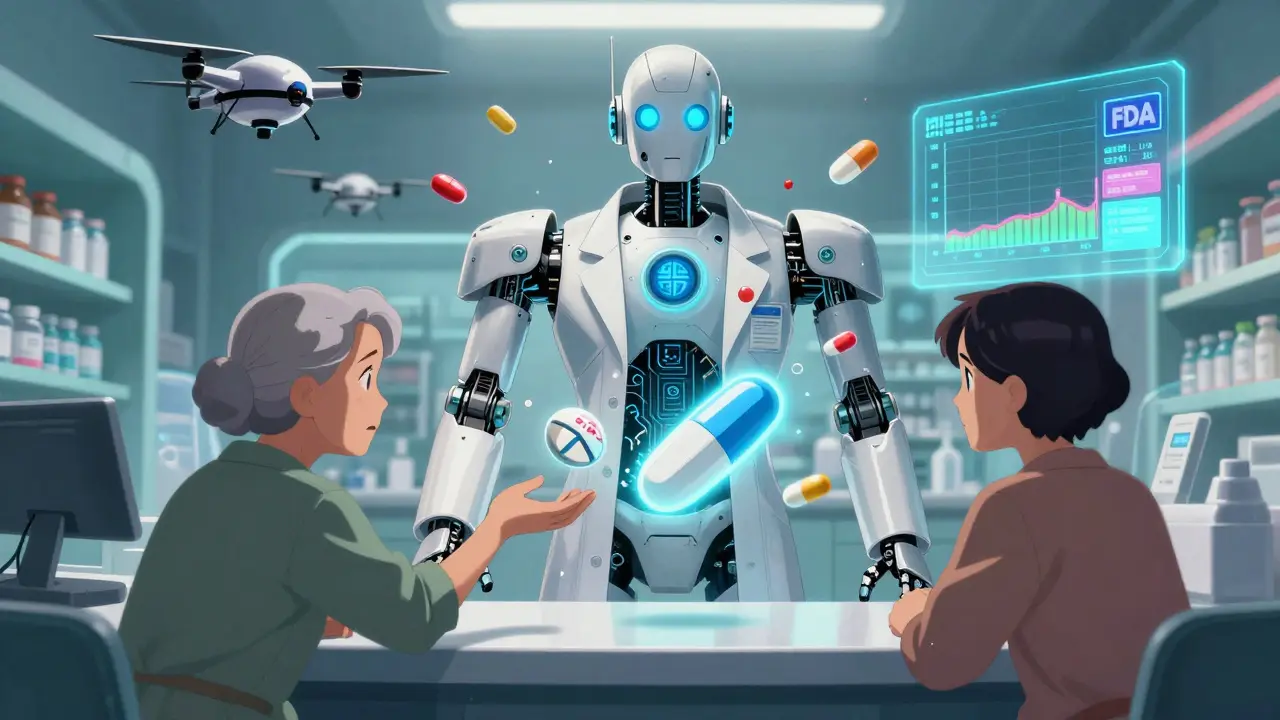
Every day, pharmacists in the UK and beyond face the same quiet tension: a prescription for a brand-name drug lands on the counter, and the law lets them swap it for a cheaper generic. Sounds simple, right? But behind that routine exchange are real worries - not just about money, but about patients, trust, and whether the system is truly working.
It’s Not Just About Cost
Generic drugs save patients an average of 21% on their prescriptions. That’s huge. But for pharmacists, the savings aren’t the whole story. The real challenge starts when a patient looks at the little white pill in their hand and says, “This isn’t the one my doctor gave me before.” It’s not just about color or shape. It’s about belief. Many patients think if it costs less, it must be weaker. That’s not true - the FDA requires generics to be bioequivalent, meaning they deliver the same active ingredient with no more than a 3.5% difference in absorption compared to the brand. But patients don’t hear that. Pharmacists do. And when a patient doesn’t believe in the generic, they might skip doses. Or stop taking it altogether. That’s when the real cost shows up: more hospital visits, more emergency care, more complications. The savings vanish.When Patients Say No - And Why
Half of all patients asked to switch to a generic want to talk to their doctor first. That’s not stubbornness. That’s fear. Older patients, especially those on multiple medications, are the most hesitant. They’ve been on the same brand for years. The pill looks different. The bottle says a different name. They don’t know if it’s the same. And they’re right to be cautious - if you’re on epilepsy medication, blood thinners, or thyroid drugs, even tiny changes can matter. One pharmacist in Bristol told me about a 78-year-old woman who refused her new generic blood pressure pill because the tablet was oval instead of round. She’d been on the brand for 12 years. She trusted that shape. Changing it made her feel unsafe. It took 20 minutes of explaining, showing her the FDA bioequivalence data, and calling her GP to get her to agree. That’s not a one-off. In Australia, pharmacists reported spending up to 15 extra minutes per patient just to explain generics - time they don’t always have. In Italy, patients openly doubted the quality of generics made overseas. In the U.S., 64% of patients said their doctor never mentioned substitution was an option. So pharmacists become the default educators - and the target of frustration.The Narrow Therapeutic Index Problem
Some drugs live on a razor’s edge. Too little, and the condition flares up. Too much, and you get side effects - sometimes dangerous ones. These are called narrow therapeutic index (NTI) drugs. Examples: warfarin, levothyroxine, phenytoin, lithium. Pharmacists are trained to know which ones need extra care. The FDA says generics for these drugs are still safe. But in practice, many doctors and patients still worry. One study found that switching epilepsy patients from brand to generic led to seizure recurrence in a small but significant number of cases. Was it the drug? Or the disruption in routine? No one knows for sure. That uncertainty is what keeps pharmacists up at night. They know the science says it’s fine. But they’ve also seen patients crash after a switch. And when that happens, they’re the ones who get the calls.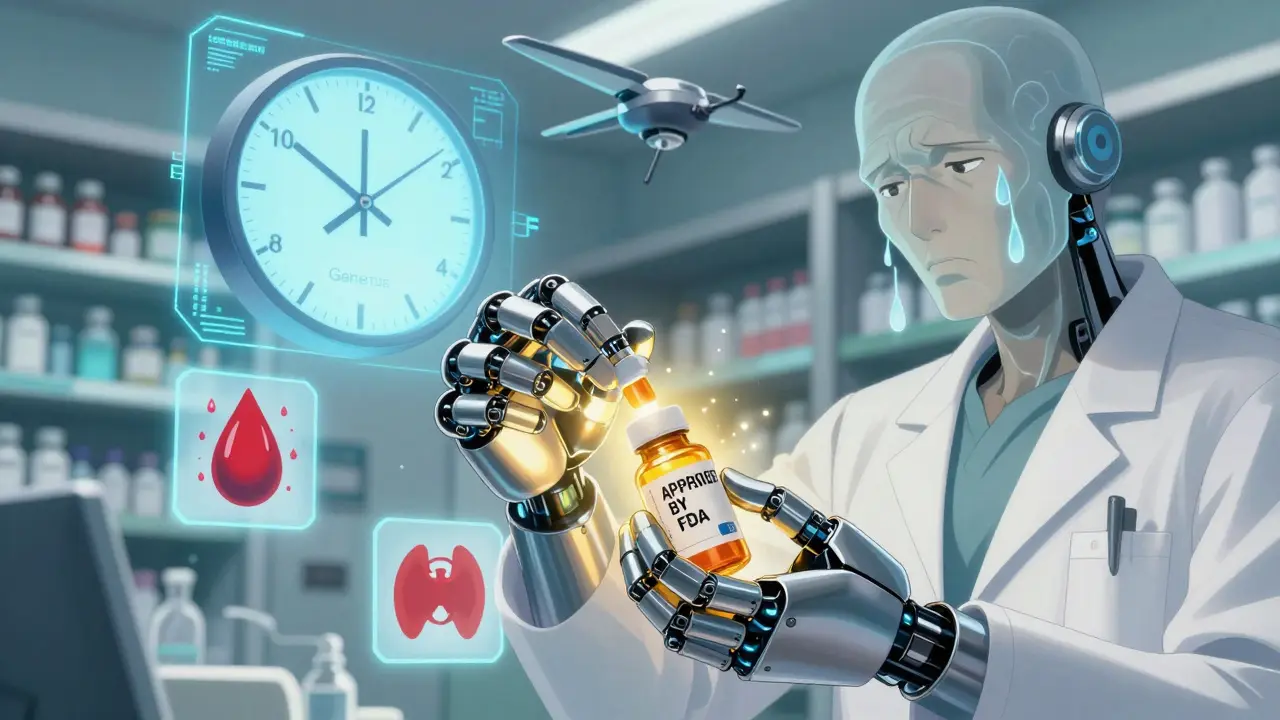
Education Gaps - And Who Fills Them
Here’s the uncomfortable truth: most patients don’t get informed about generics by their doctor. Only 38% are told they can refuse the switch. Only 52% are told how much they’ll save. And only 79% are even told substitution is happening. That means pharmacists are left to do the heavy lifting. During a 3-minute counseling session between filling prescriptions, they have to explain bioequivalence, reassure about safety, answer questions about foreign manufacturing, and respect patient autonomy - all while juggling insurance forms, refill requests, and staff shortages. It’s not fair. But it’s real. One study showed that when pharmacists spent just 2-3 minutes explaining why generics work the same way, patient acceptance jumped by 40%. That’s not magic. That’s communication. But that kind of time isn’t built into the system.What’s Different About Biosimilars?
It’s not just pills anymore. Now there are biosimilars - cheaper versions of complex biologic drugs like Humira or Enbrel. These aren’t made from chemicals. They’re made from living cells. That means even small changes in how they’re produced can affect how they work. Unlike regular generics, biosimilars need full clinical trials to prove they’re safe. But many patients still think they’re “just generics.” Pharmacists have to explain the difference - without overwhelming them. And when a patient switches from Humira to a biosimilar, they’re often not told it’s a different drug. That’s a problem. Pharmacists are now the first line of defense against confusion. They have to track which drugs are biosimilars, which are interchangeable, and which require extra monitoring. It’s a new layer of complexity on top of an already overloaded job.
What Works - And What Doesn’t
Some pharmacies have started using simple tools: a one-page handout that says, “Your generic medicine has the same active ingredient as the brand. It’s been tested to work the same way. It’s safe. And it saves you money.” That’s it. No jargon. No charts. Just facts. Others put a sticker on the bottle: “This is a generic version. Approved by the FDA.” Simple. Visible. Reassuring. The best pharmacists don’t just tell patients they can refuse the switch - they ask if they want to. They say: “You have the right to stick with the brand if you prefer. But here’s what you’d save.” That shifts the conversation from pressure to partnership. And when a patient says no? Good pharmacists don’t argue. They write it down. They note it in the system. And they call the doctor if the patient is at risk.The Bottom Line
Generic substitution isn’t broken. It’s under-supported. The science backs it. The savings are real. But the human side - the fear, the confusion, the lack of communication - is where the system fails. Pharmacists aren’t against generics. They’re for patients. And when patients don’t trust the switch, the pharmacist becomes the bridge between policy and practice. What’s needed isn’t more rules. It’s more time. More training. More collaboration between doctors and pharmacists. And above all, more honest conversations with patients - before they ever walk into the pharmacy. If you’re on a generic drug and you’re worried - ask. Ask your pharmacist. Ask your doctor. You have the right to know. And you have the right to say no.Are generic drugs really as effective as brand-name drugs?
Yes. The FDA requires generic drugs to have the same active ingredient, strength, dosage form, and route of administration as the brand-name version. They must also be bioequivalent - meaning they deliver the medicine into your bloodstream at the same rate and amount, with no more than a 3.5% difference on average. Over 2,000 studies support this. For most medications, there’s no meaningful difference in how well they work.
Why do generic pills look different from brand-name ones?
By law, generic drugs can’t look exactly like the brand-name version because of trademark rules. So they change the color, shape, or markings. But the active ingredient is identical. The differences are only in the inactive ingredients - like dyes or fillers - which don’t affect how the drug works. Still, patients often mistake the change for a different medicine, which is why pharmacists need to explain it clearly.
Can switching to a generic cause side effects?
For most people, no. But for a small number of patients on narrow therapeutic index drugs - like warfarin, levothyroxine, or epilepsy meds - even small changes in absorption can trigger side effects or reduce effectiveness. That’s why pharmacists are trained to flag these cases and often consult with the prescriber before switching. If you notice new symptoms after switching, tell your pharmacist or doctor right away.
Do pharmacists get paid more for dispensing generics?
No. Pharmacists don’t earn more from dispensing generics. In fact, because generics cost less, the profit margin per prescription is often smaller. Their motivation isn’t financial - it’s clinical and systemic. They support generics because they reduce patient costs and help the healthcare system function better. Their main goal is to make sure patients get the right medicine, at the right price, without compromising safety.
Can I refuse a generic substitution?
Yes. You always have the right to ask for the brand-name drug, even if a generic is available. Some pharmacies may charge you the full brand price if you refuse the generic, depending on your insurance. But you can still say no. Always ask your pharmacist to explain your options - you’re entitled to that information.
Why do some doctors oppose generic substitution?
Some doctors worry about patients who are stable on a brand-name drug - especially with NTI medications - and fear switching could disrupt their condition. Others have outdated beliefs about generic quality, or they’ve seen a patient have a bad reaction after a switch. While most doctors support generics for cost reasons, clinical concerns still exist. Open communication between doctors and pharmacists helps reduce these worries.
Are biosimilars the same as generic drugs?
No. Generic drugs are copies of simple chemical medicines. Biosimilars are copies of complex biological drugs made from living cells - like insulin or rheumatoid arthritis treatments. Because they’re more complex, biosimilars require more testing to prove they’re similar, but not identical. Pharmacists need extra training to explain this difference, since patients often think “biosimilar” means “generic,” which isn’t true.
How can I trust a generic drug made overseas?
All generic drugs sold in the UK and US must meet the same strict quality standards as brand-name drugs, no matter where they’re made. The FDA and MHRA inspect manufacturing facilities worldwide - including in India and China - and can block imports if standards aren’t met. The active ingredient is the same. The testing is the same. The oversight is the same. The country of origin doesn’t affect safety or effectiveness.



Abner San Diego
January 11, 2026 AT 16:10Look, I don't care if it's generic or brand name - if my insurance makes me take the cheap one, I take it. But don't act like pharmacists are saints here. They get paid the same either way, and they push generics because it's easier to fill prescriptions faster. Meanwhile, I'm the one who gets stuck with a pill that makes me nauseous and no one listens.
And don't give me that FDA nonsense - I know people who switched to generic levothyroxine and ended up in the ER. Science doesn't care about your lived experience.
Cecelia Alta
January 11, 2026 AT 18:25Oh honey, please. You think this is new? I’ve been a pharmacist for 22 years and I’ve seen the same drama since 2003. People freak out because their pill changed from blue to white and suddenly they’re convinced it’s poison. Meanwhile, the guy who took the same generic for 15 years? He’s fine. But no one wants to hear that.
And don’t get me started on biosimilars. Patients think they’re getting a knockoff of Humira like it’s a fake Louis Vuitton. It’s not. It’s science. But we spend 10 minutes explaining it and they still say ‘I’ll just pay extra.’
And yeah, we don’t make more money. We just get yelled at more.
Faith Wright
January 12, 2026 AT 13:18My grandma refused her generic blood pressure med because it was oval instead of round. Took her son, the pharmacist, and three phone calls to the doctor to convince her. She’s 84. She’s been on the same brand since Clinton was president. She trusts the shape. That’s not irrational - that’s human.
Maybe we should stop pretending everyone thinks like a pharmacist. Some of us need to see, touch, and recognize our medicine. That’s not weakness. It’s survival.
George Bridges
January 12, 2026 AT 19:38I’ve worked in rural clinics where the only pharmacy is 40 miles away. Patients take generics because they have no choice. But here’s the thing - when the pharmacist sits down with them for five minutes, explains the bioequivalence, shows them the FDA page on their phone, and says ‘You don’t have to take this if you’re scared’ - acceptance goes up. It’s not about the pill. It’s about feeling heard.
Pharmacists aren’t just dispensers. They’re the last line of emotional triage in a broken system. And they do it with no training, no pay bump, and zero support.
jordan shiyangeni
January 13, 2026 AT 15:11Let me be perfectly clear: the notion that generic drugs are ‘just as good’ is a dangerous myth perpetuated by pharmaceutical conglomerates and government bureaucrats who’ve never held a dying patient’s hand. Bioequivalence is a statistical abstraction - it means nothing when your body reacts differently. You can’t reduce human physiology to a 3.5% margin of error.
And let’s not pretend pharmacists are altruistic. They’re incentivized by insurance networks to push generics - not because they care about patient outcomes, but because their employer’s profit margins depend on it. The FDA’s standards are laughably lax - foreign manufacturing plants are inspected once every five years on average, and many fail inspection but still ship product.
And don’t even get me started on biosimilars. These aren’t ‘copies’ - they’re approximations of living molecules, produced in unpredictable bioreactors. One batch can behave differently than the next. And yet, we’re told to trust them like they’re aspirin?
When I was on generic warfarin, my INR spiked to 5.8. I almost bled out. My doctor blamed ‘patient noncompliance.’ I know better. I took it exactly as prescribed. The generic was the problem. And now, thanks to the system’s laziness, I’m stuck paying $400 a month for the brand - because I learned the hard way that ‘equivalent’ is a lie.
Sonal Guha
January 13, 2026 AT 15:22generic is fine for most drugs but ntis are different stop pretending otherwise
pharmacists are overworked and underpaid and still expected to be therapists and chemists at the same time
the system is broken not the generics
patients need to be educated before they walk in not after
doctors dont tell them anything
pharmacists are stuck cleaning up the mess
end of story
Audu ikhlas
January 14, 2026 AT 07:45USA got it right. We dont let foreign countries make our meds. Why? Because Chineese pills are poison. You think FDA checks them? Nah. They get stamped and shipped. My cousin in Nigeria takes generics and his kidneys gave out. He died. This is why we need American-made drugs only. No more imports. No more cheap crap. We pay more so our people dont die. This is patriotism. If you dont agree you dont love your country.
And dont even get me started on biosimilars. That's just science fiction with a pill bottle.
TiM Vince
January 15, 2026 AT 05:31I’ve been on generic levothyroxine for 7 years. No issues. But I know someone who had seizures after switching. Both cases are real. Neither is the whole story.
Maybe the answer isn’t banning generics or forcing them. Maybe it’s letting patients choose - with real information, not a sticker or a 30-second chat.
Pharmacists deserve better than to be the scapegoat for a system that doesn’t fund education, communication, or time. We need to fix the structure, not blame the messengers.