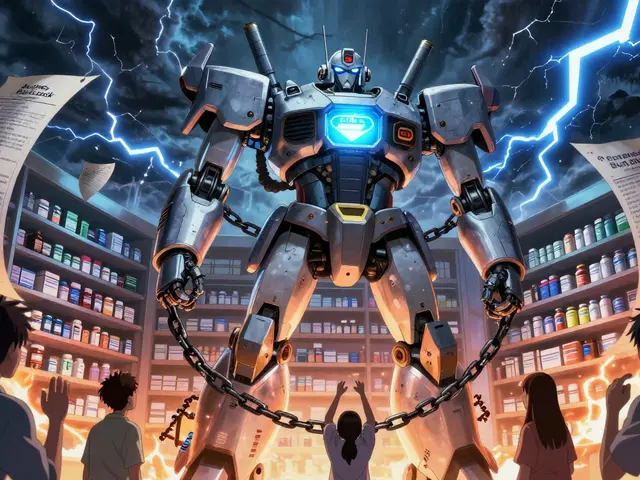
Just because a brand-name drug’s patent expires doesn’t mean you can walk into a pharmacy and buy the cheaper generic version the next day. In fact, it often takes years - sometimes more than two - before that generic actually becomes available. This isn’t a glitch in the system. It’s the system working exactly as designed, but not always in the way patients expect.
Patent Expiration Isn’t the Finish Line
The 20-year patent clock starts ticking when a drug is first filed, not when it hits the market. By the time a drug gets FDA approval, 8 to 10 years of that patent term are already gone. That leaves only 10 to 12 years of market exclusivity - and even that isn’t guaranteed. The FDA adds extra layers of protection called regulatory exclusivity that can delay generics even after the patent runs out.For example, if a drug is a new chemical entity (NCE), it gets 5 years of exclusivity. If the manufacturer did new clinical studies for a new use, that adds another 3 years. If it’s an orphan drug for a rare condition? That’s 7 years. And if they tested it in kids? Add 6 more months. These protections stack up. One drug might have a patent expiring in 2026, but due to overlapping exclusivities, no generic can legally enter until 2030.
The ANDA Process: Faster, But Not Instant
Generic manufacturers don’t need to repeat expensive clinical trials. Instead, they file an Abbreviated New Drug Application (ANDA) to prove their version is bioequivalent - meaning it works the same way in the body. Sounds simple, right? Not quite.The FDA’s average review time for an ANDA is over 25 months. That’s more than two years just waiting for approval. And that’s only if there are no legal roadblocks. Many generic companies file ANDAs before the patent expires, but they can’t sell the drug until every patent challenge is settled. That’s where things get messy.
Patent Thickets and Legal Delays
Brand-name companies don’t just rely on one patent. They file dozens - for the active ingredient, the pill coating, the manufacturing method, how it’s taken, even the shape of the tablet. The average drug has 14.2 patents listed in the FDA’s Orange Book. This is called a patent thicket.When a generic company files a Paragraph IV certification - essentially saying, “Your patent is invalid or we don’t infringe” - the brand-name company can sue. That triggers a 30-month automatic stay, blocking the FDA from approving the generic. But here’s the twist: the 30-month stay rarely ends up being the main delay. Research shows generics typically launch 3.2 years after that stay expires. Why? Because the lawsuits drag on. The average court case takes over three years to resolve.
And it gets worse. Sometimes, brand-name companies pay generic makers to delay entry. These “reverse payment” settlements cost consumers $3.5 billion a year, according to the FTC. In 2021, the Supreme Court ruled these deals can violate antitrust laws - but they still happen.
Who Gets the First Shot? The 180-Day Exclusivity Trap
The first generic company to successfully challenge a patent gets 180 days of exclusive market access. No other generics can enter during that time. Sounds like a big win - and it is, if you’re the first filer.But here’s the catch: you have to launch within 75 days of FDA approval, or you lose it. Many companies don’t make it. Why? Manufacturing issues. Quality control. Scaling up production. FDA data shows 22% of first filers forfeit exclusivity because they can’t get the drug made fast enough. Another 10% lose it because of court rulings. That leaves only 68% who actually get to enjoy their 180-day monopoly.
Why Some Generics Take Longer Than Others
Not all drugs are created equal. Small molecule pills - like statins or blood pressure meds - usually see generics within 1.5 years of patent expiration. But complex drugs? That’s a different story.Biologics - like insulin or rheumatoid arthritis drugs - are made from living cells, not chemicals. They’re harder to copy. The law for these, called the BPCIA, requires a longer approval path. It takes an average of 4.7 years for a biosimilar to hit the market after the original patent expires.
Even among small molecules, delays vary. Cardiovascular drugs face the longest waits - 3.4 years on average. Dermatology drugs? Just 1.2 years. Why? It’s about complexity, market size, and how aggressively the brand-name company defends its patents.
Who Controls the Market? The Big Three
The generic drug market isn’t full of small players. It’s dominated by three companies: Teva, Viatris, and Sandoz. Together, they control 45% of the U.S. generic market. That means a handful of firms decide which patents to challenge, which drugs to make, and when to launch.That’s why some drugs get generics quickly - because a big player has the resources to fight the legal battle. Others sit on shelves for years because no one wants to risk the cost and time. High-revenue drugs - those making over $1 billion a year - face an average of 17 patent challenges. Lower-revenue drugs? Only 8. The bigger the prize, the more lawyers get involved.
What’s Changing? New Rules, New Tools
The system isn’t static. In 2023, the FDA launched new initiatives to speed things up. The GDUFA II program aims to cut review times for complex generics from 36 to 24 months. So far, only 62% of applications have met that goal.The CREATES Act of 2019 stopped brand-name companies from blocking generic makers from getting samples of the drug - a tactic used to delay development. The Orange Book Transparency Act of 2020 forced companies to list patents more accurately, cutting down on disputes by 32% in its first year.
Even AI is getting involved. The FDA is testing machine learning to predict bioequivalence faster, potentially cutting development time by 25%. And biosimilars? They’re expected to capture nearly half the biologic market by 2030, saving $150 billion annually.
But here’s the hard truth: patent evergreening is still common. In 2024, a Brookings study found that 68% of brand-name drugs get a new patent within 18 months of the original expiring - often for tiny changes like a new coating or dosage form. These aren’t meaningful improvements. They’re legal maneuvers to keep generics out.
Why This Matters to You
In 2023, generic drugs made up 92% of all prescriptions in the U.S. But they accounted for only 16% of total drug spending. That’s $373 billion saved every year. But every month a generic is delayed, patients pay more. The Congressional Budget Office estimates a one-year delay on a top-selling drug costs Medicare $1.2 billion.For someone taking a $1,000-a-month brand-name drug, waiting 18 months for the generic means paying $18,000 more than they should. That’s not just a number. It’s a choice between medication and rent. Between refills and groceries.
The FDA approved 1,165 generics in 2021. But only 62% reached the market within six months of approval. Why? Because patents, lawsuits, and manufacturing delays don’t care about your health. They care about money.
So when you hear “patent expired,” don’t assume the generic is ready. It might be months - or years - away. And until the system changes, that gap between legal permission and real access will keep hurting people who can’t afford the brand.
Why don’t generic drugs become available immediately after the patent expires?
Even after a patent expires, generic manufacturers must still get FDA approval through the ANDA process, which takes an average of over two years. They also face legal delays if brand-name companies file lawsuits over remaining patents or exclusivity rights. Some drugs have multiple layers of protection - like regulatory exclusivity or orphan drug status - that delay entry even after the patent runs out.
What is the Hatch-Waxman Act and how does it affect generics?
The Hatch-Waxman Act of 1984 created the modern system for generic drugs. It lets companies skip costly clinical trials by proving bioequivalence to the brand-name drug. It also gives the first generic company to challenge a patent 180 days of exclusive sales. But it also lets brand-name companies sue to delay approval for up to 30 months. It was meant to balance innovation and competition - but in practice, it’s often used to extend monopolies.
What is a Paragraph IV certification?
A Paragraph IV certification is a legal statement a generic company files with its ANDA, claiming that a brand-name drug’s patent is either invalid or won’t be infringed. This triggers a 30-month automatic stay on FDA approval if the brand-name company sues. It’s the main legal tool generics use to enter the market early - but it also starts the clock on expensive lawsuits.
Why do some generic drugs take longer to launch than others?
Complex drugs - like biologics, injectables, or those with tricky delivery systems - take longer to develop and approve. Drugs with many patents (patent thickets) face more lawsuits and delays. High-revenue drugs attract more challenges, but also more legal resistance. Cardiovascular drugs average 3.4 years of delay; dermatology drugs just 1.2. Market size and patent strategy drive the difference.
Can the FDA speed up generic approval?
Yes, but only so much. The FDA has tools like the GDUFA program to reduce review times - aiming for 24 months instead of 36 for complex generics. It’s also using AI to predict bioequivalence faster. But the FDA can’t override patents or lawsuits. Its power ends where the courts begin. Real speed depends on legal reform, not just regulatory tweaks.
How do reverse payment settlements delay generics?
A reverse payment settlement happens when a brand-name company pays a generic manufacturer to delay launching its version. The FTC says these deals cost consumers $3.5 billion a year. In 2021, the Supreme Court ruled they can violate antitrust laws - but they still occur, especially in high-value drug markets. These deals can delay entry by over two years.
What’s the difference between a generic and a biosimilar?
Generics are exact copies of small-molecule drugs made from chemicals. Biosimilars are similar - but not identical - copies of complex biologic drugs made from living cells. Because biologics are harder to replicate, biosimilars require more testing and have a longer approval path. They take an average of 4.7 years to reach market after the original patent expires, compared to 1.5 years for small-molecule generics.
Why do some generic companies fail to launch even after FDA approval?
Many struggle with manufacturing. Scaling up production, meeting FDA quality standards, and fixing supply chain issues can take months. First-filer companies have only 75 days after approval to launch or they lose their 180-day exclusivity. About 22% of first filers forfeit exclusivity because they can’t get the drug made on time.
What Comes Next?
The path from patent expiration to generic availability is long, tangled, and expensive. It’s not broken - it’s designed that way. But the cost isn’t paid by corporations. It’s paid by patients, by families, by taxpayers.Until patent thickets are broken, reverse payments are banned, and the FDA gets real power to enforce timelines, the gap between legal permission and real access will remain. And for millions of Americans, that gap is the difference between health and hardship.

Nancy Carlsen
December 6, 2025 AT 17:35Wow, this hit home. My mom’s insulin costs $800/month and the generic? Still not here after 2 years. 😔 We’re not just talking about money-we’re talking about people skipping doses just to pay rent. Thank you for laying this out so clearly. 💪
Ted Rosenwasser
December 7, 2025 AT 02:16Let’s be honest-this isn’t about innovation. It’s corporate greed dressed up as IP law. The 180-day exclusivity loophole? A legal shell game. And don’t get me started on the Orange Book manipulation. These aren’t bugs-they’re features. And the FDA? Complicit.
Helen Maples
December 8, 2025 AT 07:53Incorrect. The Hatch-Waxman Act was designed to balance innovation and access. The problem isn’t the law-it’s the abuse of it. Patent thickets, reverse payments, and manufacturing delays are the culprits-not the system itself. Fix the enforcement, not the framework.
Ashley Farmer
December 9, 2025 AT 16:29I just want to say-this isn’t just policy. It’s life or death for so many. I’ve seen friends choose between insulin and groceries. If you’re reading this and you’re healthy, please don’t look away. This is the kind of thing that breaks communities.
David Brooks
December 10, 2025 AT 22:10THIS IS A SCAM. A FULL-ON, CORPORATE, BIG PHARMA CON. I’m not even mad-I’m just speechless. We’re literally paying people to NOT make cheaper drugs. 🤯 3.5 BILLION DOLLARS A YEAR DOWN THE DRAIN. WHO’S NEXT? WATER? AIR?!
Jennifer Anderson
December 11, 2025 AT 12:32so like… if the patent expires but the brand still owns the recipe or whatever, how’s the generic even made? like, do they just copy it? or is it all secret? 🤔
Sadie Nastor
December 12, 2025 AT 00:06it’s wild how something so simple-like a pill-can be tangled up in so much legal mess. i just want to feel safe taking my meds without worrying if i can afford them next month. 🌱
Nicholas Heer
December 13, 2025 AT 17:19THEY’RE ALL IN ON THIS. FDA, BIG PHARMA, EVEN THE SUPREME COURT. IT’S A GLOBAL BANKING CONSPIRACY TO KEEP THE MASSES MEDICATED AND BROKE. YOU THINK THEY WANT YOU HEALTHY? NO. THEY WANT YOU DEPENDENT. 180-DAY EXCLUSIVITY? THAT’S A TRAP FOR THE GULLIBLE. THE REAL GAME IS IN THE PATENT THICKETS-AND THEY’RE WRITTEN IN LUXURY CARS AND PRIVATE JETS.
Sangram Lavte
December 14, 2025 AT 14:33Interesting. In India, generics come out much faster after patent expiry. We have strong generic manufacturers and less litigation. Maybe the US system needs more competition and less legal interference.
Oliver Damon
December 14, 2025 AT 15:54There’s a deeper philosophical tension here: innovation vs. access. We reward R&D with monopolies, but at what moral cost? If a drug saves lives, is it ethical to lock it behind 14 patents and 3-year court battles? The system is rational-but not just. We need to recalibrate the social contract around health.
Kurt Russell
December 16, 2025 AT 01:15THIS IS WHY WE NEED TO REFORM THE SYSTEM-NOW. PEOPLE ARE DYING BECAUSE OF RED TAPE. THE FDA CAN’T DO IT ALONE. WE NEED POLICY CHANGE, PUBLIC PRESSURE, AND A MOVEMENT. DON’T JUST SIT THERE-CALL YOUR REP. SHARE THIS. MAKE SOME NOISE.
Stacy here
December 16, 2025 AT 10:36Let’s be real: this isn’t about science. It’s about capitalism with a side of legal theater. The drug companies aren’t innovating-they’re gaming. And the FDA? They’re the bouncer at a club where only the rich get in. Wake up. This is a class war disguised as pharmaceutical policy.
Kyle Flores
December 16, 2025 AT 18:11my uncle took a generic for his blood pressure and saved $1,200 a month. he cried when he found out it was the same stuff, just cheaper. we gotta fix this. not for the companies-for the people.
Ryan Sullivan
December 17, 2025 AT 12:28Pathetic. The entire system is a monument to mediocrity. You have a nation that prides itself on innovation, yet allows a handful of corporations to weaponize bureaucracy to extract rent from the sick. This isn’t capitalism. It’s feudalism with a pharmacy counter.