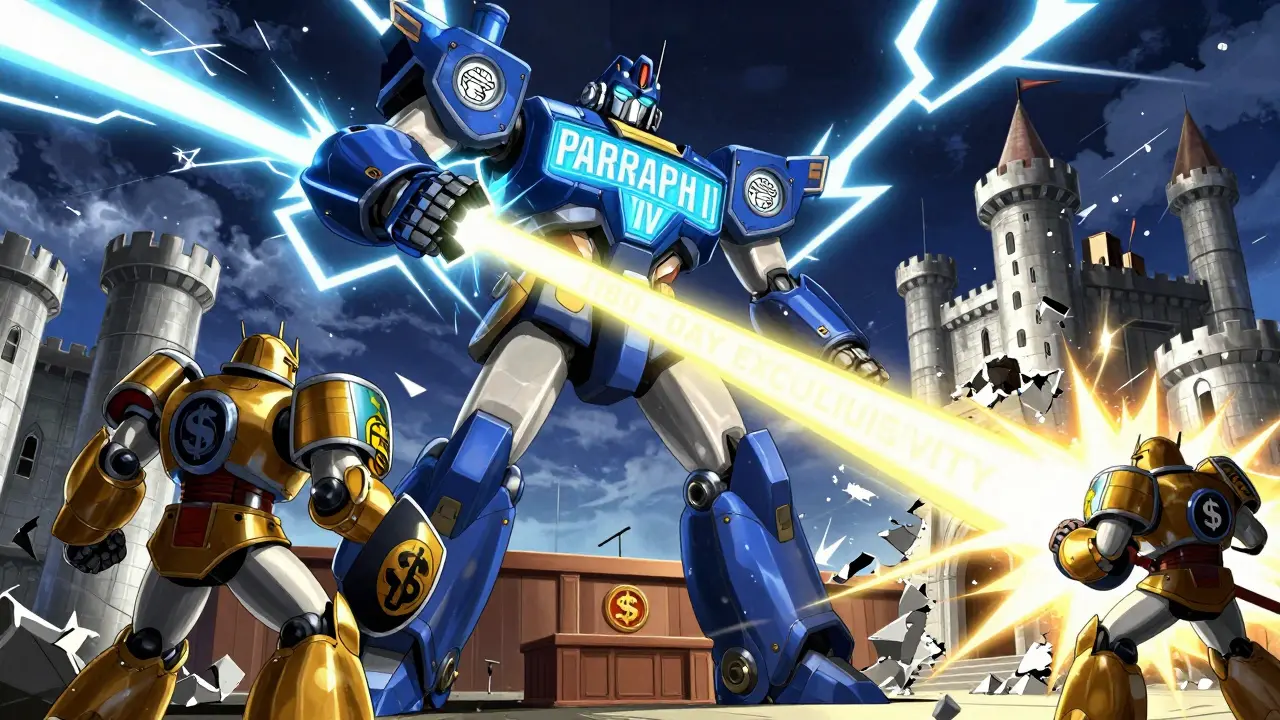
When a brand-name drug’s patent is about to expire, the race to bring out a cheaper generic version begins - not with a factory, but in a courtroom. The key to unlocking that race? A legal maneuver called Paragraph IV certification. It’s not a drug, not a regulation, not even a form. It’s a bold legal challenge that lets generic drugmakers say: ‘Your patent is invalid, and we’re going to prove it.’ And if they win, they get a 180-day monopoly on the generic version - while everyone else waits.
What Is Paragraph IV, Really?
Paragraph IV isn’t a law. It’s a clause in a law - specifically, Section 505(j)(2)(A)(vii)(IV) of the Federal Food, Drug, and Cosmetic Act, added by the Hatch-Waxman Act of 1984. That’s a mouthful. But here’s what it means in plain terms: when a generic drug company wants to sell a copy of a brand-name medicine, they file an Abbreviated New Drug Application (ANDA) with the FDA. Instead of repeating all the clinical trials the original maker did, they prove their version is bioequivalent - same active ingredient, same dose, same effect. But here’s the catch: if the brand-name drug still has active patents listed in the FDA’s Orange Book, the generic company has to say how they’re not breaking those patents. That’s where the certifications come in. - Paragraph I: The patent expired. - Paragraph II: The patent will expire on a specific date - we’ll wait. - Paragraph III: We’re waiting until the patent expires. - Paragraph IV: We’re challenging the patent. It’s invalid, unenforceable, or we won’t infringe it. Only Paragraph IV triggers a legal firestorm. By making this statement, the generic company isn’t just asking for approval - they’re legally declaring an act of infringement. That’s intentional. It forces the brand company to respond. And if they don’t respond fast enough, the generic can move forward without delay.The 45-Day Clock and the 30-Month Stay
Once a Paragraph IV notice is filed, the brand-name company has exactly 45 calendar days to sue for patent infringement. That’s not a suggestion. It’s a deadline. Miss it, and the FDA can approve the generic immediately. But if they sue? That’s when the real game begins. The moment the lawsuit is filed, the FDA is forced into a 30-month regulatory stay. That means they can’t approve the generic - no matter how good the application is - until either: - The court rules in favor of the generic company, or - The 30 months run out, or - The case settles. This stay isn’t about protecting patients. It’s about protecting profits. It gives brand companies time to drag out litigation, hoping the generic company runs out of money or loses nerve. But here’s the twist: the 30 months don’t start when the lawsuit is filed. They start when the brand company receives the Paragraph IV notice. That’s why timing matters. Some generics file right after a patent is listed. Others wait - calculating the exact moment the brand company is most vulnerable.What Happens in Court?
Most Paragraph IV cases never go to trial. About 76% settle. But when they do go to court, it’s not about whether the drug works. It’s about the patent’s language. The whole case hinges on claim construction - what the patent actually protects. This is decided in a Markman hearing, where the judge interprets the technical wording of the patent claims. If the judge says the patent only covers a specific chemical form, and the generic uses a different one, the generic wins. If the patent covers a method of use - say, taking the drug once a day - and the generic is meant to be taken twice, that might be non-infringement. Generic companies usually attack patents on two fronts: - Invalidity: The patent shouldn’t have been granted in the first place. Maybe the invention was obvious. Maybe someone already did it before. Prior art is their best friend. - Non-infringement: Even if the patent is valid, our drug doesn’t cross the line. We didn’t copy what’s protected. One of the most famous examples? Barr Laboratories vs. Eli Lilly over Prozac. Barr claimed Eli Lilly’s patent on fluoxetine was invalid because the chemical structure had been disclosed earlier. The court agreed. Barr got to launch first - and made hundreds of millions during their 180-day exclusivity window.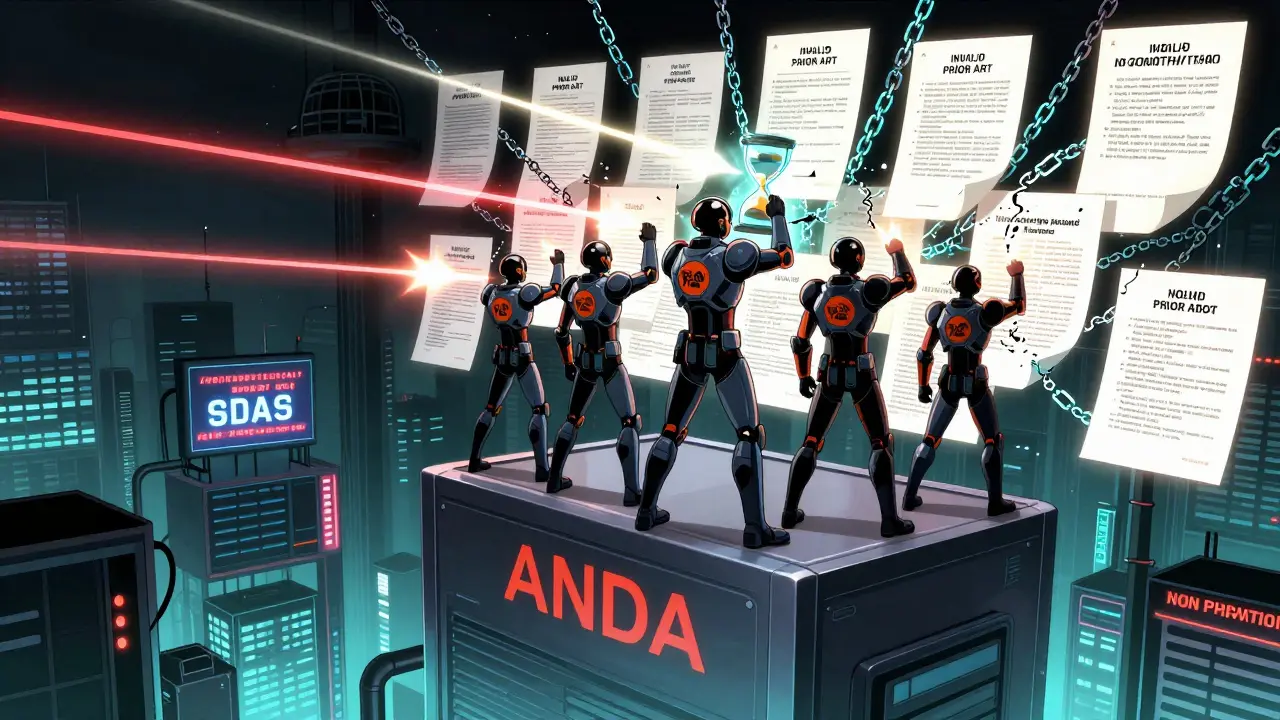
Why the 180-Day Exclusivity Matters
The real prize isn’t just getting approval. It’s being the first to file a successful Paragraph IV challenge. That company gets 180 days of exclusive rights to sell the generic - no competition. During that time, they can charge more than other generics. Often, they charge 80-90% less than the brand, but still 2-3 times what other generics will later charge. This incentive is why so many generic companies race to be first. In 2014, the FTC found that 87% of Paragraph IV filers were aiming for that first-to-file spot. The payoff is huge. Evaluate Pharma’s data shows the first filer captures 70-80% of the entire generic market during those six months. That’s why companies spend millions on legal teams, patent analysts, and scientific consultants before even filing.The Cost of Playing the Game
Paragraph IV litigation isn’t cheap. The average cost? $7.8 million per case, according to Winston & Strawn LLP. Compare that to a patent challenge at the USPTO (Inter Partes Review), which runs about $2.1 million. Why the difference? Because Paragraph IV happens in federal district court - full discovery, expert witnesses, depositions, trial prep. It’s a full-blown lawsuit. And the risks? They’re massive. If the generic company loses, they can be hit with damages for willful infringement. Mylan once owed Novartis $1.1 billion after losing a challenge to Gleevec’s patent. That’s not a typo. That’s a company-ending fine. Even if they win, the cost of getting ready is staggering. Generic makers must invest $15-25 million in manufacturing, quality control, and supply chain setup - all while the lawsuit is still going. They can’t wait until approval to start production. They have to be ready to ship on Day 1.Patent Thickets and the Battle Against Evergreening
Brand companies aren’t sitting still. They’ve learned how to game the system. Instead of one patent, they now file multiple - sometimes five or six - covering everything: the molecule, the salt form, the pill coating, the dosage schedule, the method of use. This is called a “patent thicket.” In 1984, when Hatch-Waxman passed, the average drug had 1.2 patents listed in the Orange Book. By 2020, that number had jumped to 4.8. The Congressional Research Service found that 72% of new drugs approved between 2015 and 2020 had three or more patents. That’s not innovation - it’s obstruction. These secondary patents are often weak. But they’re enough to trigger multiple 30-month stays. A company might file a Paragraph IV challenge on the main patent, only to be hit with a second lawsuit over a formulation patent. The generic company has to fight on two fronts - and the clock keeps ticking. Take Humira. AbbVie filed over 100 patents on the drug. Generic challengers tried again and again. Most failed. The patents kept getting renewed, extended, or reinterpreted. The result? Humira stayed without generic competition for over 20 years.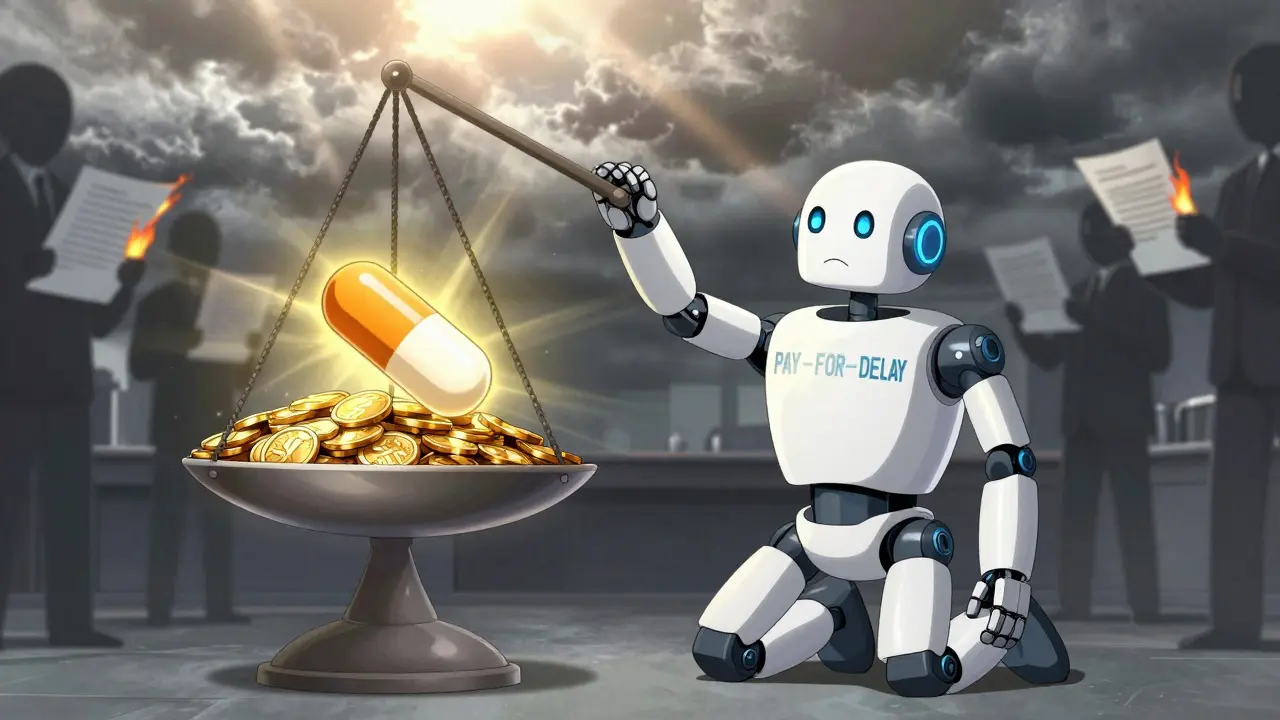
Settlements, Pay-for-Delay, and the FTC’s Fight
Most Paragraph IV cases settle. But many of those settlements aren’t fair. Sometimes, the brand company pays the generic company to delay entry. This is called “pay-for-delay.” It looks like this: “We’ll pay you $500 million to not launch your generic for five years.” The brand company saves billions in lost sales. The generic company pockets the cash. Patients? They pay more for longer. The Supreme Court called this practice “anti-competitive” in FTC v. Actavis (2013). But it didn’t stop it. The FTC says these deals still happen - just in more hidden ways. In 2023, the FTC listed reforming Paragraph IV to stop patent thicketing as a top priority.What’s Changing Now?
The landscape is shifting. The 2022 Inflation Reduction Act lets Medicare negotiate drug prices - which could reduce the financial incentive for brand companies to fight generics. The 2023 CREATES Act makes it harder for brand companies to block generic makers from getting drug samples needed for testing. The FDA also tightened rules in 2022, requiring Paragraph IV challengers to address every single Orange Book patent - not just the obvious ones. That makes filing more complex, but it also prevents brand companies from hiding behind “forgotten” patents. Meanwhile, more generic companies are teaming up with the USPTO. They’re filing Inter Partes Reviews (IPRs) at the same time as Paragraph IV suits. It’s a two-pronged attack: one in court, one at the patent office. The Patent Trial and Appeal Board reported a 47% jump in coordinated filings in 2022.Why This Matters to You
This isn’t just legal jargon. It’s about your medicine bill. Between 2009 and 2019, generic drugs that entered through Paragraph IV challenges saved U.S. consumers $1.68 trillion. A successful challenge can drop a drug’s price by 79% within six months, according to Harvard’s Dr. Margaret Kyle. But when the system is gamed - when patents are piled up, when settlements delay entry, when lawsuits cost millions - patients pay the price. The goal of Paragraph IV was to balance innovation with access. Today, it’s tilted too far toward the big pharma side. The next time you pick up a generic pill and wonder why it’s so cheap, remember: someone fought a patent battle to make it possible. And that fight? It’s still going on.What is a Paragraph IV certification?
A Paragraph IV certification is a legal statement filed by a generic drug company with its ANDA application, claiming that a brand-name drug’s patent is invalid, unenforceable, or won’t be infringed. This triggers a patent lawsuit and can lead to early generic market entry if the generic wins.
What happens after a Paragraph IV notice is filed?
The brand-name company has 45 days to file a patent infringement lawsuit. If they do, the FDA must delay approval of the generic for up to 30 months - unless the court rules in favor of the generic before then. The 30-month clock starts when the brand company receives the notice, not when the lawsuit is filed.
Why do generic companies risk filing a Paragraph IV challenge?
The first generic company to successfully challenge a patent gets 180 days of market exclusivity, during which no other generics can enter. This allows them to capture the majority of the market and recoup their legal and manufacturing costs - often earning hundreds of millions in revenue.
How often do Paragraph IV challenges succeed?
About 65% of Paragraph IV challenges result in generic approval, according to a 2021 study of over 1,700 cases. This is higher than the success rate for patent challenges at the USPTO, which stands at around 35%.
What’s the difference between Paragraph IV and biosimilar patent disputes?
Paragraph IV applies to small-molecule generic drugs under the Hatch-Waxman Act and includes a 30-month stay and 180-day exclusivity. Biosimilars, governed by the BPCIA, follow a different process called the “patent dance,” with no automatic stay and 12 months of exclusivity - not 180 days.
Are pay-for-delay deals still happening?
Yes. Although the Supreme Court ruled them anti-competitive in 2013, brand and generic companies still structure settlements to delay generic entry - often using indirect payments, licensing deals, or distribution agreements to achieve the same result.
How do patent thickets affect Paragraph IV challenges?
Patent thickets - multiple overlapping patents on a single drug - make Paragraph IV challenges harder and more expensive. Generic companies must challenge each patent individually, triggering multiple 30-month stays and increasing legal risk. This tactic has extended average drug exclusivity from 12.1 years in 1995 to 14.7 years in 2022.



Carolyn Benson
December 18, 2025 AT 04:19So let me get this straight - we’ve turned healthcare into a high-stakes poker game where the only winners are the lawyers and the shareholders? The system was designed to lower prices and increase access, but now it’s a maze of patents, delays, and payoffs. The real drug isn’t in the pill - it’s in the legal briefs. And patients? We’re just the collateral damage.
Aadil Munshi
December 18, 2025 AT 23:31Bro, Paragraph IV is the only reason I can buy my diabetes meds for $4 instead of $400. But you know what’s wild? The same pharma giants who scream ‘innovation!’ when they get a new patent are the ones filing 100+ patents on one drug just to keep generics out. It’s not capitalism - it’s corporate feudalism. And the FDA? They’re just the bouncer letting the rich kids into the club.
Also, 76% settle? Yeah, because the generics are broke and the big boys have infinite cash. The 180-day monopoly sounds fair until you realize it’s just a temporary VIP pass before everyone else gets priced out again.
Frank Drewery
December 20, 2025 AT 18:25This is such an important topic, and you laid it out so clearly. I’ve been on a few of these generics over the years, and never knew the story behind them. It’s wild to think that someone had to risk millions - and sometimes their entire company - just so I could afford my blood pressure med. We don’t talk enough about these behind-the-scenes battles that literally save lives.
Danielle Stewart
December 21, 2025 AT 21:31For anyone thinking this is just legal jargon - it’s not. This is about whether your child gets their asthma inhaler this month or not. The 180-day exclusivity window isn’t greed - it’s the only incentive that makes these multi-million-dollar legal gambles worth it for small generic manufacturers. Without it, Big Pharma would win every time. We need to protect this tool - not gut it.
mary lizardo
December 22, 2025 AT 05:33It is regrettable that the author employs such a demonstrably biased and emotionally charged lexicon throughout this piece. The phrase ‘legal firestorm’ is not only hyperbolic but ideologically loaded. Furthermore, the assertion that ‘the 30 months don’t start when the lawsuit is filed’ is technically accurate, yet presented without acknowledging the legitimate proprietary interests of innovators. The term ‘evergreening’ is a pejorative mischaracterization of legitimate patent extensions under existing statutory frameworks. One must question the journalistic integrity of an article that frames corporate litigation as moral failure.
Adrienne Dagg
December 23, 2025 AT 10:03So basically, if you’re rich, you get to patent the color of the pill. 😒
And if you’re poor, you pray someone with a law degree and a death wish challenges it. 💊😭
Glen Arreglo
December 24, 2025 AT 14:16I’ve worked with generic manufacturers in India and the U.S. - the pressure they’re under is insane. They’re not just fighting patents, they’re fighting time, capital, and bureaucracy. And yet, they still deliver. The system is broken, but these companies? They’re the unsung heroes. We need to stop vilifying them and start protecting them.
shivam seo
December 25, 2025 AT 15:18Look, Australia’s got a different system - we get generics in weeks, not years, because we don’t let pharma play these games. Why does the U.S. insist on turning healthcare into a courtroom drama? It’s not innovation - it’s just greed dressed up in a suit. And the fact that you’re even surprised by pay-for-delay? That’s the real tragedy.
benchidelle rivera
December 26, 2025 AT 09:38While the emotional framing of this piece resonates with many, we must not overlook the structural integrity of intellectual property law. The Hatch-Waxman Act was a carefully calibrated compromise - not a weapon. The rise in patent thickets reflects the complexity of modern pharmaceutical science, not malice. To dismantle Paragraph IV without addressing the underlying incentives for innovation is to risk the very next breakthrough drug. We must reform, not retaliate.