
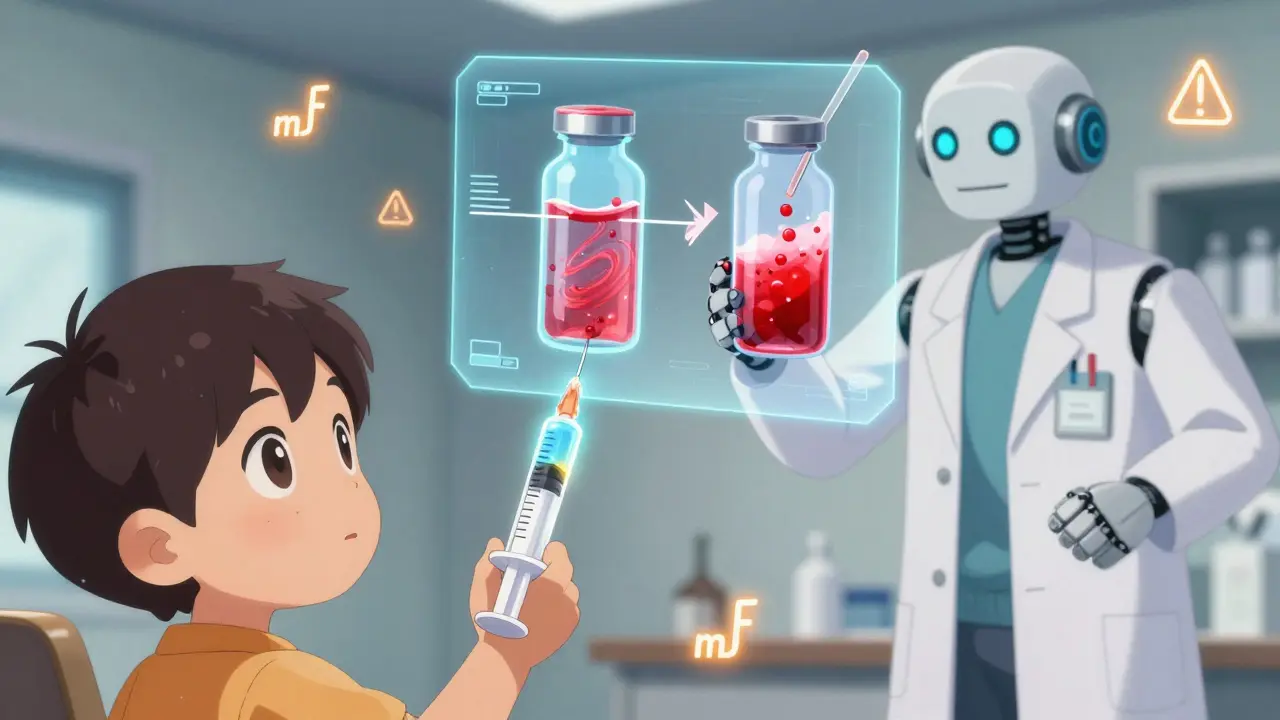
Getting the right dose of medicine for your child isn’t just important-it can be life-saving. A milliliter mistake can mean the difference between healing and harm. Too little, and the infection won’t clear. Too much, and you could send your child to the emergency room. And yet, studies show that about 7 in 10 parents make at least one dosing error when giving liquid medicine at home. Most of these mistakes happen because people use kitchen spoons, misread labels, or don’t know how to use the right tool.
Why Milliliters (mL) Are the Only Measurement That Matters
Stop using teaspoons and tablespoons. Ever. Even if the label says "1 tsp," don’t trust your kitchen spoon. A real teaspoon holds anywhere from 3.9 to 7.3 milliliters-not the standard 5 mL. That’s a 20% to 200% error right there. For a child, that’s dangerous. The CDC’s PROTECT initiative and the American Academy of Pediatrics have been clear since 2015: all pediatric liquid medications must be measured in milliliters only. No more "tsp," no more "tbsp." If your prescription says "1 tsp," ask the pharmacist to rewrite it in mL. Most pharmacies still mix units on labels, but you shouldn’t rely on them. Always double-check.
Confusing "mg" (milligrams) with "mL" (milliliters) is another deadly mix-up. One is a weight, the other is a volume. If a doctor prescribes 10 mg per mL and you think it’s 10 mL, you’ve given 100 times the right dose. That’s not a typo-it’s a tragedy waiting to happen. Always read the label twice. If you’re unsure, call the pharmacy. Don’t guess.
The Right Tools for the Job
Not all measuring tools are created equal. Here’s what actually works:
- Oral syringes (1-10 mL): The gold standard. They’re accurate, easy to control, and perfect for doses under 5 mL. Studies show they’re 94% accurate. Use the one that comes with the medicine-don’t reuse a syringe from another bottle.
- Dosing cups (5-30 mL): Okay for older kids who can drink from a cup, but only if the dose is 5 mL or more. For doses like 2.5 mL, error rates jump to nearly 70%. Don’t use them for small amounts.
- Droppers: Fine for newborns or tiny doses under 2 mL. Make sure the markings are clear and in mL.
- Medication spoons: Only if they’re labeled in mL and you’re sure they’re 5 mL. Most over-the-counter ones aren’t reliable.
- Kitchen spoons: Never use them. Not even once.
Some brands like NurtureShot and Medisana BabyDos use color-coding or built-in syringes to reduce mistakes. In one study, color-coded syringes cut dosing errors by 61%. If your pharmacy doesn’t give you a syringe, ask for one. Many now offer them for free.
How to Measure Accurately
Even the best tool won’t help if you don’t use it right. Follow these steps every time:
- Wash your hands before handling the medicine.
- Shake the bottle well if it says "shake before use." Antibiotics and other suspensions settle at the bottom. If you don’t shake, your child gets only half the dose.
- Draw up the exact amount in the oral syringe. Hold it vertically, eye-level, so you can see the liquid curve (meniscus) clearly. Read the line at the bottom of the curve-not above or below it.
- Don’t fill past the line. If you go over, throw it out and start over. Don’t try to squeeze it back out.
- Give the dose slowly into the side of the mouth, near the cheek. Avoid squirting it straight to the back of the throat-that can cause choking or gagging.
- Wash the syringe with warm water after each use. Let it air dry. Don’t store it with the cap on-moisture builds up and can breed bacteria.
For kids who spit out medicine, try mixing the dose with a small spoonful of applesauce, yogurt, or juice. Don’t mix it into a full bottle or bowl-you won’t know if they ate all of it. And never mix medicine into formula or breast milk unless the doctor says it’s safe.
Weight-Based Dosing: The Math You Need to Know
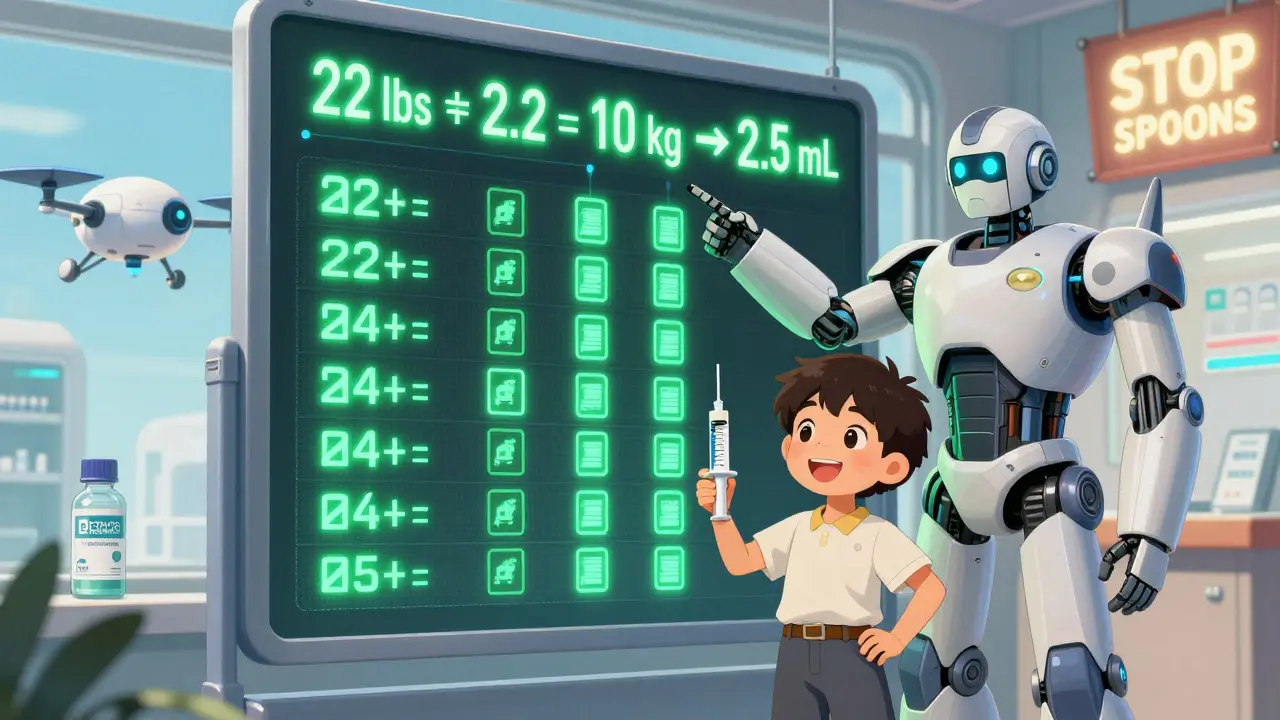
Many children’s medications are dosed by weight: milligrams per kilogram (mg/kg). That means you have to convert pounds to kilograms. Here’s the simple math:
1 kg = 2.2 lb
So if your child weighs 22 pounds:
22 ÷ 2.2 = 10 kg
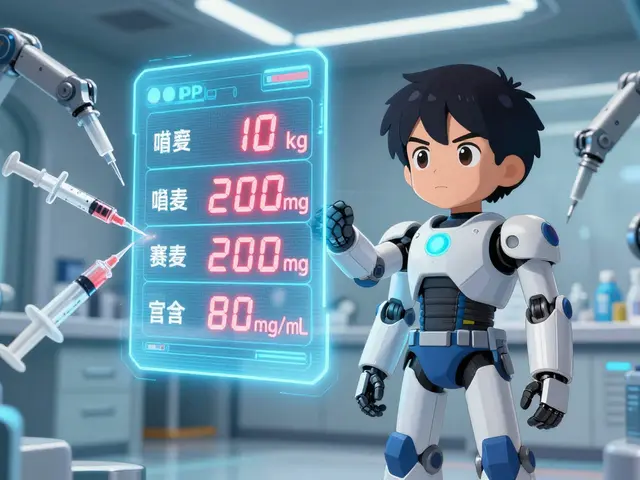
If the dose is 40 mg/kg/day in two doses:
40 mg × 10 kg = 400 mg total per day
400 mg ÷ 2 = 200 mg per dose
If the medicine is 400 mg per 5 mL:
200 mg is half of 400 mg → so you give 2.5 mL per dose.
Write this down. Keep a simple chart on your fridge. For example:
- Child weight: 24 lbs → 10.9 kg → Acetaminophen: 5 mL every 4-6 hours
- Child weight: 35 lbs → 15.9 kg → Amoxicillin: 7.5 mL every 12 hours
Pharmacies rarely give you this chart. You have to make it yourself. Use a sticky note or a note on your phone. Update it when your child gains or loses weight.
Common Mistakes and How to Avoid Them
Here’s what most parents get wrong-and how to fix it:
- Mistake: Using a dirty or shared syringe. Solution: Clean it after every use. Don’t let siblings share syringes.
- Mistake: Giving medicine based on age instead of weight. Solution: Always use weight. Two 4-year-olds can weigh 30 lbs and 50 lbs. They need different doses.
- Mistake: Forgetting to shake the bottle. Solution: Make shaking part of your routine-like turning on the light before giving medicine.
- Mistake: Giving two doses too close together because you think the first one didn’t work. Solution: Wait the full time between doses. If you’re unsure, call the doctor.
- Mistake: Using old medicine. Solution: Check the expiration date. Liquid antibiotics usually expire after 14 days once opened-even if the bottle says "use by 2027."
When to Call the Doctor or Pharmacist
Don’t wait until something goes wrong. Call if:
- The label says "tsp" or "tbsp" and doesn’t convert to mL.
- You’re unsure whether the dose is for weight or age.
- Your child vomits right after taking the medicine.
- You accidentally give too much.
- You can’t read the syringe markings.
Pharmacists are trained to help with this. Don’t feel bad asking. They’ve seen it all.
What’s Changing in 2026
Good news: things are getting better. The FDA is moving toward a rule that will require every pediatric liquid medication to come with a standardized mL-only oral syringe. By 2026, nearly all prescriptions will follow this standard. Apps like MedSafety use your phone’s camera to show you exactly where to fill the syringe. Hospitals are starting to hand out color-coded syringes at discharge. But until then, you’re still the last line of defense.
Low-income families are 3.2 times more likely to make dosing errors-often because they don’t get the right tools or instructions. If you’re struggling, ask your clinic or local health department. Many offer free dosing kits.
Final Reminder: When in Doubt, Stop and Call
Medication safety isn’t about being perfect. It’s about being careful. One wrong dose can have lasting consequences. But with the right tool, the right method, and the right questions, you can keep your child safe. Keep the syringe. Write down the dose. Shake the bottle. Measure at eye level. And never, ever use a kitchen spoon.
Can I use a kitchen teaspoon if I don’t have a syringe?
No. Kitchen teaspoons vary in size from 3.9 to 7.3 milliliters, while a standard teaspoon for medicine is exactly 5 mL. Using a kitchen spoon can lead to under- or overdosing by up to 200%. Always use the oral syringe or dosing tool that comes with the medicine.
What if the label says "1 tsp" but I only have an oral syringe?
Convert it: 1 teaspoon equals 5 milliliters. So if the label says "1 tsp," give 5 mL using your syringe. If the label doesn’t list mL, ask your pharmacist to rewrite the instructions in milliliters. Always insist on mL-only instructions for children’s medicine.
How do I know if I gave the right dose?
Check the prescription label for the dose in milliliters (mL), then compare it to your child’s weight. Most pediatric doses are based on mg per kg. If you’re unsure, use a dosing chart from a trusted source like HealthyChildren.org or write down the calculation yourself. When in doubt, call the pharmacy or your child’s doctor.
Why do some liquid medicines need to be shaken before use?
Many liquid medications, especially antibiotics, are suspensions. That means the active ingredient settles at the bottom of the bottle. If you don’t shake it, the first few doses may have little or no medicine. Always shake the bottle well for at least 10 seconds before each dose to ensure your child gets the full amount.
Can I use the same syringe for different medicines?
No. Always use a separate syringe for each medicine to avoid mixing ingredients. Even if you clean it, residue can remain and cause unexpected reactions. Keep labeled syringes for each medication-mark them with tape or a permanent marker if needed.
What should I do if I give my child too much medicine?
Call Poison Control immediately at 1-800-222-1222 (U.S.) or your local emergency number. Do not wait for symptoms to appear. Overdosing on common medications like acetaminophen or ibuprofen can cause liver damage or other serious harm, even if your child seems fine at first.


Solomon Ahonsi
February 2, 2026 AT 15:17This article is basically a lecture dressed up as advice. Who the hell has time to measure every damn dose with a syringe? I’ve been giving my kid medicine with a kitchen spoon for years and he’s fine. Stop scaring parents into panic mode.
George Firican
February 3, 2026 AT 19:42There’s a deeper philosophical layer here that most people miss. The real issue isn’t milliliters or spoons-it’s our collective surrender of agency to medical institutions. We’ve outsourced basic caregiving to pharmacists and labels, and now we’re paralyzed by fear of error. But if we took the time to understand the chemistry, the physics of volume, and the biology of pediatric metabolism, we wouldn’t need color-coded syringes. We’d need confidence. And that’s harder to teach than how to read a meniscus.
Matt W
February 3, 2026 AT 20:37I used to use spoons too-until my daughter threw up half a dose of amoxicillin because the syrup settled. Now I use the syringe every single time. It takes 10 seconds longer, but I sleep better. Also, wash the syringe after each use. Bacteria grow in that damp tip faster than you think.
Anthony Massirman
February 4, 2026 AT 12:39Stop using spoons. Use the syringe. Done.
Ansley Mayson
February 5, 2026 AT 07:32Canada and the US are still behind Europe on this. In Germany, pediatric meds come with calibrated syringes by law. Here we’re still arguing about teaspoons like it’s 1998. Lazy healthcare system. Lazy parents. Lazy regulators.
phara don
February 6, 2026 AT 14:43Does anyone know if the new FDA rule applies to OTC meds too? Like children’s Tylenol? I’ve been using the same cup for years and never realized it was inaccurate. 🤔
Murarikar Satishwar
February 8, 2026 AT 14:38Excellent breakdown. I’m from India and we rarely get oral syringes here. Most pharmacies give plastic cups with vague markings. I’ve started buying medical-grade syringes online-costs less than $2 and lasts for years. Also, write the dose on the bottle with a Sharpie. I keep a small notebook too. Simple, but it saves lives.
Bob Hynes
February 9, 2026 AT 14:16Man I just realized I’ve been using my kid’s old amoxicillin syringe for his cough syrup. Like… same one. For months. I’m gonna go wash it right now. Also, shaking the bottle? I thought that was just for show. Nope. Not anymore. Thanks for the wake-up call.
Eli Kiseop
February 9, 2026 AT 21:15So if the label says 1 tsp and I have a syringe I just use 5ml right. And dont forget to shake. Got it. Thanks
Sandeep Kumar
February 10, 2026 AT 12:00Why are we still talking about mL when the world uses grams? Metric system is a colonial relic anyway. My cousin in Mumbai gives medicine by drops-works fine. This whole post feels like American medical arrogance dressed as safety.
Gary Mitts
February 12, 2026 AT 07:36So if I give my kid 5mL instead of 1 tsp… am I now a better parent? Or just a guy who bought a $10 syringe to feel less guilty?
clarissa sulio
February 13, 2026 AT 08:42I love that this post says don’t use kitchen spoons but doesn’t mention that most pharmacies still print tsp on labels. Why are we blaming parents when the system is broken?
Bridget Molokomme
February 14, 2026 AT 07:30Wow this is so detailed I almost cried. I mean really who even uses a dosing cup anymore? I just pour it into a juice box and hope for the best
Vatsal Srivastava
February 15, 2026 AT 13:16Studies show 7 in 10 parents make errors? That’s because most parents aren’t pharmacists. This article reads like a lecture from someone who’s never held a screaming toddler at 3am with a spilled bottle of medicine. Real life isn’t a CDC pamphlet.
Monica Slypig
February 16, 2026 AT 10:02My son’s pediatrician told me to use a spoon. So I did. Now you’re telling me I was wrong? Who do I sue for this misinformation? I trusted the doctor. Not some random Reddit post with a syringe fetish