
Every year in the U.S., around 60,000 children end up in the emergency room after getting into medications they shouldn’t have. Most of these cases aren’t from pills left on a counter-they’re from pills tucked away in a drawer, on a shelf, or even in a purse. Child-resistant caps don’t work as well as you think. Half of kids aged 4 to 5 can open them in under a minute. If you keep opioids, benzodiazepines, or stimulants at home, a lockbox isn’t just a good idea-it’s a necessity.
What Counts as a High-Risk Medication?
Not all pills need a lockbox. But some do. These are the ones that can cause serious harm if taken by accident-or on purpose-by someone who isn’t supposed to have them.- Opioids: Hydrocodone (Vicodin, Norco), oxycodone (Percocet, OxyContin), fentanyl patches
- Benzodiazepines: Alprazolam (Xanax), diazepam (Valium), clonazepam (Klonopin)
- Stimulants: Dextroamphetamine-amphetamine (Adderall), methylphenidate (Ritalin)
Why Lockboxes Work Better Than Hidden Spots or Child-Resistant Caps
You might think, “I keep my meds on the top shelf” or “They’re in the medicine cabinet with the child-proof cap.” That’s not enough. A 2020 study found that 72% of children can find hidden medications within 30 minutes. Kids are curious. They climb. They look under pillows, in drawers, behind books. And child-resistant caps? They’re designed to slow down adults with arthritis-not determined 5-year-olds. Lockboxes are different. They’re physical barriers. No climbing. No guessing. No fiddling with caps. Just a locked container. Studies show households using lockboxes improve safe storage by 92% compared to those relying on caps or hiding spots. In one trial, families who got free lockboxes saw an 87% increase in consistent safe storage.Types of Lockboxes and What to Look For
Not all lockboxes are the same. Here’s what’s available and what you really need:- Key locks: Simple, cheap, reliable. But you need to keep the key somewhere safe-like on your keychain, not taped to the fridge.
- Combination locks: No keys to lose. Good for most households. Use a code no one can guess (not birthdays or addresses). Avoid 1234 or 0000.
- Biometric (fingerprint): Best for older adults or people with arthritis. No codes, no keys. Just touch and open. Costs a bit more, but worth it if someone struggles with dexterity.
Where to Put Your Lockbox
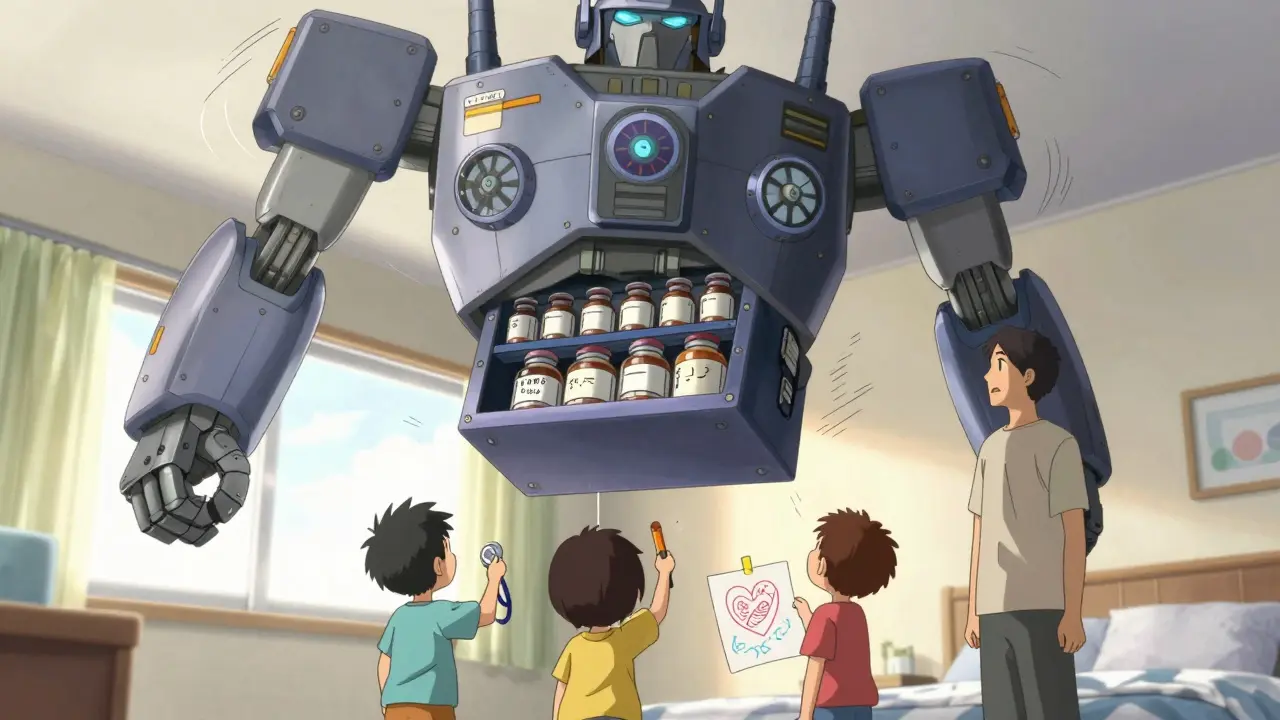
Location is just as important as the box itself. Don’t make the same mistake 62% of households do: placing it where kids can reach or move it.- Do: Mount it on a wall in a bedroom, home office, or closet. Use screws or heavy-duty adhesive strips.
- Do: Keep it at adult eye level or higher-out of a child’s reach.
- Don’t: Put it in the bathroom. Humidity ruins pills and can corrode locks.
- Don’t: Leave it on a nightstand, dresser, or under the sink. Kids notice those spots.
How to Set Up Your Lockbox (Step by Step)
Follow this simple 5-step process. It takes less than an hour.- List all high-risk meds: Go through every medicine cabinet. Look for opioids, benzodiazepines, stimulants. Don’t forget expired ones. Write them down.
- Pick the right lockbox: Choose size and type based on your household. Biometric if someone’s elderly. Combination if you’re tech-savvy. Key if you want simplicity.
- Choose the location: Mount it securely. Avoid bathrooms, kitchens, or children’s rooms.
- Set access rules: Only two people should know the code or have the key. Tell everyone in the house: “This box is locked. No one opens it but Mom and Dad.”
- Put meds inside and lock it: Transfer all high-risk pills. Don’t leave any behind. Then, lock it. Test it. Make sure it works.
Real Stories: What People Are Saying
One mom on Reddit said her 3-year-old nearly got into a fentanyl patch. After installing a Master Lock Medication Lockbox, she wrote: “Eight months later, zero incidents. I sleep better.” An 80-year-old man in Minnesota struggled with a combination lock. His caregiver switched to a fingerprint model. “It cost $35 more,” she said, “but now he can get his pills without asking for help every time.” A 2023 survey of 1,200 households found 78% of people who used lockboxes felt more at ease. Only 22% said it was inconvenient. Most of those complaints were about forgetting codes-not the box itself.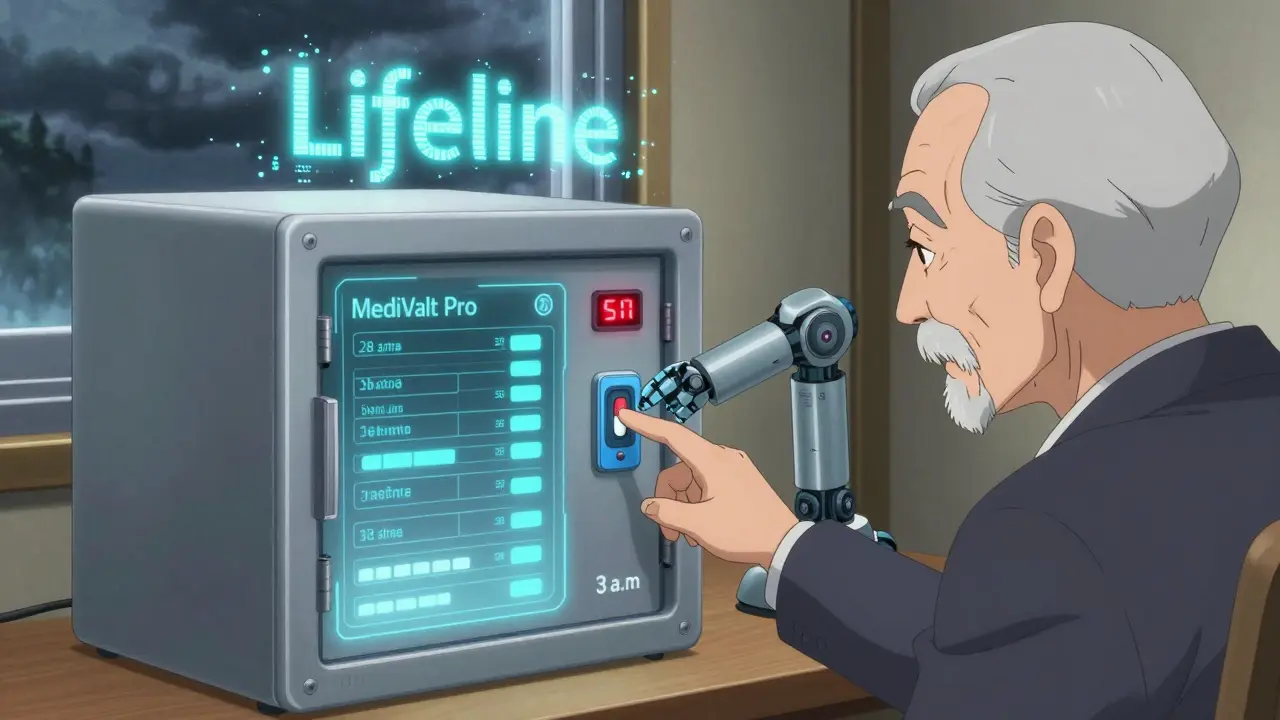
What About the Elderly or People With Arthritis?
A common concern: “My dad can’t turn a key or remember a four-digit code.” That’s real. About 15% of adults over 75 have trouble with traditional locks. The fix? Biometric lockboxes. They cost a little more-around $30 to $50-but they’re designed for this exact problem. Just press your finger. Open. Done. No keys. No codes. No frustration. If you can’t afford one, ask your pharmacist or local health department. Many states-including South Dakota, Oregon, and Minnesota-give away free lockboxes through public health programs. You don’t need insurance. You don’t need to qualify. Just ask.What’s New in 2026?
The technology is getting smarter. In May 2023, the FDA approved the first smart lockbox: the MediVault Pro. It records who opens it, when, and how many pills were taken. If someone tries to open it at 3 a.m., it sends an alert to a designated phone. The National Institute on Drug Abuse just funded $2.5 million to develop fingerprint-controlled dispensers that only release the exact dose prescribed. Imagine a box that gives your dad his 5mg oxycodone-but only one pill per day, at the right time. By January 2024, new homes built in the U.S. can earn a “Healthy Home” certification if they include a built-in medication lockbox. It’s becoming standard-like smoke detectors.Final Thoughts: It’s Not About Suspicion. It’s About Safety.
You don’t have to believe your child would take your pills. You don’t have to think your nephew is a drug seeker. You don’t have to assume your neighbor is going to sneak into your house. You just have to know: accidents happen. Curiosity is normal. And one unlocked pill can change everything. A lockbox costs less than a month’s supply of your medication. It’s small. It’s quiet. It doesn’t need Wi-Fi. It doesn’t need batteries (unless it’s biometric). And it works. If you keep opioids, benzodiazepines, or stimulants at home, you owe it to your family to lock them up. Not tomorrow. Not next week. Today.It’s not a luxury. It’s a lifeline.

Roshan Joy
January 10, 2026 AT 23:05Just got one of these lockboxes for my dad’s pain meds after my cousin nearly swallowed a Xanax pill last year. 😅 So simple, but it’s the difference between sleep and panic. Thanks for the post!
Adewumi Gbotemi
January 12, 2026 AT 05:51This is so important. In my village, people keep pills in tin boxes under the bed. No one thinks it’s dangerous until it’s too late. Lockbox is the way.
Michael Patterson
January 12, 2026 AT 07:17Okay but like… why are we still talking about this like it’s 2010? I mean, yeah lockboxes are good, but come on. The real issue is that we’re still letting pharma companies pump out opioids like they’re candy. And now we’re putting bandaids on a gunshot wound? Child-resistant caps don’t work? DUH. The system’s broken. You don’t fix a leaky roof by putting a plastic bag over the kid’s head. #StopThePillMill
Madhav Malhotra
January 12, 2026 AT 09:44Love this! In India, we don’t talk about this enough. My aunt keeps her insulin and painkillers in her purse-next to her snacks. I showed her this guide and she bought a lockbox last week. Now she calls it her ‘meds safe’ 😄
Jennifer Littler
January 12, 2026 AT 13:02As a clinical pharmacist, I’ve seen too many pediatric ingestions. The data here is spot-on. Child-resistant caps are a compliance illusion. Lockboxes are the only evidence-based solution for home storage of CNS depressants and stimulants. Also-biometric models are underrated. Elderly patients with tremors or arthritis benefit immensely. No more fumbling with keys or forgetting codes. It’s not just safety-it’s adherence.
Jason Shriner
January 14, 2026 AT 02:15Wow. A whole post about locking up your drugs. I’m so glad we’ve reached the point where we treat parents like paranoid criminals instead of, I dunno, adults who maybe just forgot to put the pills away. Next up: mandatory childproofing of your toothpaste. Or your grandma’s knitting needles. 🤡
Alfred Schmidt
January 16, 2026 AT 00:23YOU THINK THIS IS ENOUGH?!?!? I HAVE A 2-YEAR-OLD WHO CAN OPEN A SAFE WITH A TONGUE DEPRESSOR! I BOUGHT A $120 LOCKBOX WITH A BATTERY BACKUP AND A WIFI ALERT SYSTEM AND STILL I’M NOT SLEEPING! WHY ISN’T THIS MANDATED BY LAW?!?!?!
Vincent Clarizio
January 17, 2026 AT 09:48Look, I get it. Lockboxes are good. But let’s be real-this isn’t about kids. It’s about the 18-year-old cousin who comes over every weekend and ‘accidentally’ finds your Adderall. Or the ex who shows up unannounced. Or the roommate who thinks it’s fine to ‘borrow’ your Valium because ‘they’re stressed.’ Lockboxes don’t stop people who want to steal. They just make it a little harder. The real solution? Don’t keep them at all. Or better yet-get rid of the prescriptions entirely. Why are we still normalizing this? It’s not medicine. It’s a cultural addiction.
Sam Davies
January 18, 2026 AT 18:37Lockboxes? How quaint. In London, we just use a locked drawer in the study. The kind with brass hinges and a key. Nothing says ‘I’m responsible’ like a proper English cabinet. These plastic contraptions are so… American. And frankly, a bit tacky. Still, I suppose if you’re the type who keeps your morphine next to your cereal, maybe it’s the only thing standing between you and tragedy. How tragic.
Christian Basel
January 19, 2026 AT 04:16Lockbox? Yeah right. That’s just a Band-Aid on a systemic failure. Why aren’t we talking about reducing opioid prescriptions? Or better prescribing protocols? Or telehealth monitoring? Or pill counts? This is like putting a seatbelt on a horse-drawn carriage and calling it progress.
Alex Smith
January 20, 2026 AT 02:22Okay but… what if you’re the person who needs the meds? Like, what if you’re in chronic pain and you need to take your oxycodone at 3 a.m. because your back is killing you? Now you’ve got a lockbox you can’t open without waking up your partner? This feels like safety theater. We’re not helping people who need meds-we’re just making them jump through hoops. Just sayin’.
Matthew Miller
January 20, 2026 AT 05:13This post is dangerously naive. You think a lockbox stops overdose? Please. The real killers are the doctors who overprescribe, the pharmacies that don’t track refills, and the families who let their teens ‘borrow’ meds like it’s a loaner bike. You’re not protecting your kid-you’re pretending you’re in control. Spoiler: you’re not. And your lockbox is just a prop for your guilt.
Priya Patel
January 20, 2026 AT 09:48My mom used to keep her Xanax in a cookie jar. I still laugh about it… until I remember she almost gave it to my little cousin at a birthday party. 😭 We got her a lockbox last Christmas. Now she calls it her ‘magic safe’ and lets me open it when I visit. Best gift ever. ❤️
Sean Feng
January 21, 2026 AT 19:37Lockbox. Done. Next.
Priscilla Kraft
January 22, 2026 AT 11:47Just got my fingerprint lockbox from the free program at my local health clinic! It was so easy to set up. My grandma can use it now without help, and I don’t have to stress every time I leave the house. Seriously, if you’re reading this and you have high-risk meds-just do it. It takes 10 minutes. Your family will thank you. 💙