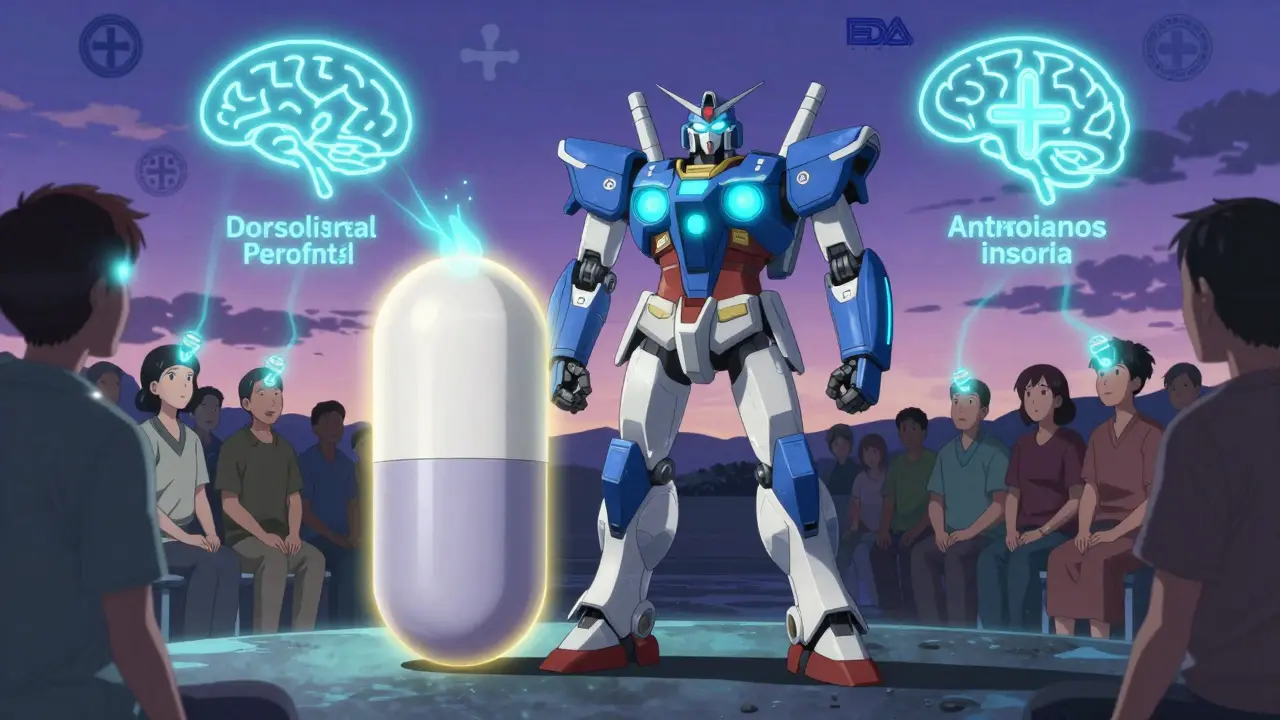
When you pick up a prescription, do you ever wonder if the pill in your hand works because of what’s inside - or because of what you believe is inside? It’s not just a philosophical question. For millions of people taking generic medications, their perception of the drug - its price, packaging, label, or even the color of the pill - can change how well it works. This isn’t magic. It’s science. And it’s called the placebo effect.
What Happens When a Generic Feels Like a Brand
In 2016, researchers gave 87 students identical placebo tablets. Half were told they were taking Nurofen - a well-known brand of ibuprofen. The other half were told they were taking generic ibuprofen. Both groups had headaches. After taking the pills, those who believed they had Nurofen reported pain relief equal to actual ibuprofen. The group told they had the generic? Their pain dropped - but only about half as much. The pills were identical. The only difference was the label. This isn’t an outlier. Similar studies have shown the same pattern across painkillers, antidepressants, and even blood pressure meds. When patients think they’re taking a brand-name drug, their body responds as if it’s getting more medicine. The brain, in real time, boosts the effect. Brain scans show stronger activity in areas linked to expectation - the dorsolateral prefrontal cortex, the anterior insula - when people believe they’re taking a premium product. The body doesn’t just feel better. It physiologically reacts better.The Dark Side: When Belief Makes Things Worse
But perception doesn’t just boost results. It can also wreck them. This is the nocebo effect - the flip side of the placebo. When people expect side effects, they often get them. Even if the pill has no active ingredient. In one study, patients were given dummy pills labeled as statins - cholesterol drugs known to cause muscle pain. Nearly one in five quit the trial because they felt muscle aches. They weren’t taking real statins. They were taking sugar pills. But their brains, wired by warnings and media stories, turned harmless twinges into real pain. Spinal cord scans confirmed it: the pain signals were stronger in those who believed they were taking a risky drug. Even price plays a role. In a famous experiment, people were given identical creams. One group was told it cost $2.50 per dose. The other was told it cost 10 cents. Both creams were placebo. The expensive group reported twice as much pain relief - and also reported twice as many side effects. The same cream, same chemistry, different outcomes. All because of price.Why Generics Get the Short End of the Stick
Generics are chemically identical to brand-name drugs. They contain the same active ingredient, in the same dose, and meet the same FDA standards. But they don’t look the same. They’re often smaller, differently colored, and lack the marketing muscle of big pharmaceutical brands. Patients notice. And they assume less. A 2022 Consumer Reports survey found 63% of Americans believe brand-name drugs are superior. Forty-one percent said they have less confidence in generics. That’s not just a belief - it’s a barrier to treatment. Data shows patients are 27% more likely to stop taking a generic antidepressant within the first month than a brand-name version - even though blood tests confirm identical drug levels. In psychiatry, where up to 40% of drug response comes from placebo effects, this gap matters most. If a patient believes their generic isn’t as good, their brain won’t activate the pathways that help the drug work. The result? Less relief. More frustration. More visits to the doctor. More costs.
What Works: Fixing the Perception Problem
The good news? You can change perception - without changing the pill. One simple trick: spend two extra minutes explaining equivalence. A 2020 JAMA study found that when doctors clearly say, “This generic has the same active ingredient as the brand, and it’s been tested to work just as well,” patient adherence jumps by 18-22%. No new drugs. No new costs. Just better communication. Packaging matters too - but not how you think. Adding “FDA-approved equivalent to [Brand Name]” to the label increased patient confidence by 34%. Enhancing the design with fancy colors or logos? That didn’t help. In fact, one study found plain packaging led to less anxiety than flashy generic packaging. The key isn’t making generics look premium. It’s making them look trustworthy. Avoid phrases like “just a generic.” Don’t mention price unless asked. Saying “this costs less” triggers the nocebo effect - patients report more side effects. Instead, say: “This is the same medicine, approved by the FDA, and used by millions.”Real Stories, Real Impact
Online forums are full of these stories. On Reddit, a pharmacy student wrote: “I’ve had patients tell me their generic antidepressant ‘doesn’t work as well’ - even though their blood levels show it’s identical to the brand.” Another user, a pharmacist, countered: “When I explain the science - that generics must be within 8-13% of the brand’s absorption - many patients report better results. It’s not the drug. It’s the story.” One woman in Bristol told her GP she couldn’t take her generic blood pressure pill because “it made me feel dizzy.” She’d switched from the brand after her insurance changed. Her blood pressure was normal. Her heart rate was fine. But she kept feeling unwell. Her doctor asked: “What did you think would happen when you switched?” She said: “I thought it wouldn’t be strong enough.” After a 10-minute chat about equivalence, her symptoms vanished. No new meds. Just a new belief.
What’s Changing - and What’s Next
The FDA now advises doctors to avoid language that undermines generics. The European Medicines Agency has standardized generic packaging across the EU to reduce confusion. Some companies are testing “expectation-optimized” generics - using colors and fonts linked to trust in cross-cultural studies. Blue and white, for example, are consistently associated with safety and reliability. Researchers at Oxford recently tested a new approach: showing patients a 90-second video explaining how placebo effects work. After watching it, patients taking generics reported 28% better outcomes. The video didn’t change the pill. It changed the mind. The future may involve personalized approaches - identifying patients who are more suggestible to placebo effects using brain scans or psychological tests. Those people could get extra support: tailored explanations, visual aids, even brief mindfulness exercises before taking medication.Bottom Line: The Pill Is the Same. The Mind Is Not.
Generics aren’t inferior. They’re identical. But perception isn’t. And when perception shapes biology - as it clearly does - then the mind becomes part of the treatment. The placebo effect with generics isn’t about tricking people. It’s about respecting how deeply belief affects health. A pill doesn’t just contain chemistry. It carries meaning. And that meaning matters.Health systems save billions by using generics. But they’ll save even more if they help patients believe in them.


Malikah Rajap
January 18, 2026 AT 19:43Wow, this is profound-really, the mind is the most underutilized pharmaceutical device we have? I mean, if your brain can make sugar pills feel like magic, then why are we still spending billions on branding instead of psychology? The placebo isn’t a loophole-it’s the blueprint.
Phil Hillson
January 19, 2026 AT 01:41So you’re telling me Big Pharma doesn’t want us to know this because if people realized generics work just as well they’d stop paying $200 for a bottle of ibuprofen? Classic. They’re not selling medicine-they’re selling fear and branding. And we’re all the suckers.
sujit paul
January 19, 2026 AT 23:10One must contemplate the ontological weight of this phenomenon: if identity is constructed through perception, and perception alters biochemistry, then the self is not a fixed entity but a dynamic interplay of semiotic cues-label, color, price-and the body obediently follows the script written by culture and advertising. The pill is merely a vessel; the meaning, the true active ingredient.
Josh Kenna
January 21, 2026 AT 02:42I’ve seen this firsthand-my mom switched to generic Xanax and swore it didn’t work, kept complaining about ‘not feeling right.’ We sat down, I showed her the FDA equivalence data, and within a week she said she felt calmer than ever. Same pill. Different belief. That’s the real win. Why don’t doctors do this more?!
Valerie DeLoach
January 21, 2026 AT 04:00This is why cultural context matters so much. In some communities, white pills with bold lettering are seen as ‘strong.’ In others, blue is calming, green is natural. If we design generics with cultural trust in mind-not just cost-we don’t just improve adherence, we honor dignity. Health equity isn’t just access-it’s psychological safety too.
Christi Steinbeck
January 22, 2026 AT 14:47Let’s stop pretending this is just about pills. This is about trust in systems. When people feel gaslit by insurance companies or confused by labels, their bodies react. Fix the narrative, fix the outcome. Simple. Powerful. Why isn’t this standard in every clinic?
Lewis Yeaple
January 24, 2026 AT 04:06It is a well-documented fact that the placebo effect accounts for up to 30% of therapeutic efficacy in certain pharmacological interventions. The notion that perception influences physiological response is not speculative-it is empirically validated across hundreds of controlled trials. The failure to integrate this into clinical practice is a systemic oversight of monumental proportions.
Jacob Hill
January 25, 2026 AT 09:01Wait, so if I tell someone their $0.10 cream is $2.50… they feel better AND get side effects? That’s wild. So the same pill can be a miracle or a menace depending on the label? I’m starting to think medicine should come with a therapist.
Jackson Doughart
January 25, 2026 AT 15:54It’s not magic. It’s neurobiology. The brain doesn’t distinguish between chemical and psychological triggers-they both fire the same receptors. That’s why explaining equivalence isn’t just ‘nice’-it’s clinical. The most effective drug in the world fails if the patient believes it’s weak. We treat the mind as an afterthought. We shouldn’t.