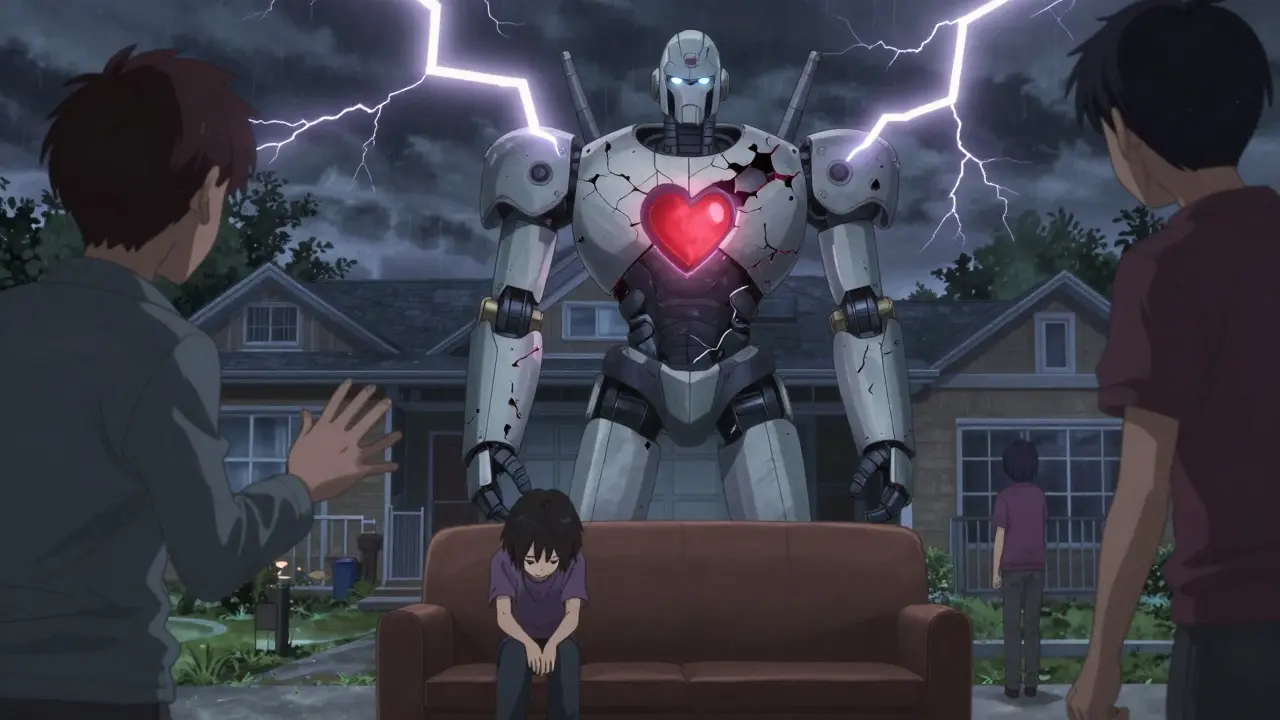
When a teenager stops eating, skips school, or shuts down in front of the TV for weeks, it’s easy to blame moodiness. But if those signs last longer than two weeks and show up with irritability, hopelessness, or talk of not wanting to live, it’s not just a phase. Child and adolescent depression is real, serious, and treatable - but only if families know where to turn.
Unlike adult depression, teen depression doesn’t always look like sadness. It might show up as anger, school refusal, risky behavior, or sudden drops in grades. And while some parents rush to medication, others resist it entirely, hoping talk therapy alone will fix things. The truth? Neither approach works best alone. The most effective path combines family therapy and, when needed, carefully managed medication.
What Does Depression Look Like in Kids and Teens?
Depression in children under 12 often shows up as physical complaints - stomachaches, headaches, or constant fatigue - with no medical cause. In teens, it’s more likely to look like withdrawal, defiance, or self-harm. The DSM-5 criteria require at least five symptoms over two weeks: low mood, loss of interest, weight changes, sleep problems, fatigue, feelings of worthlessness, trouble concentrating, or thoughts of death.
But here’s what most people miss: depression in teens doesn’t happen in a vacuum. It grows in the soil of family dynamics. A parent’s criticism, a sibling’s rivalry, a household where emotions are buried - these aren’t just background noise. They’re part of the problem.
Why Family Therapy Isn’t Just ‘Talking It Out’
Family therapy isn’t about blaming parents or forcing everyone to sit in a circle and share feelings. It’s a structured, evidence-based process that changes how the family functions as a system.
Attachment-Based Family Therapy (ABFT), for example, focuses on repairing broken emotional bonds between teens and caregivers. A teen who feels unheard may act out because they’re desperate for connection - not because they’re being ‘difficult.’ ABFT helps parents learn to listen without fixing, to validate without judging. In one 2022 study, teens in ABFT showed significantly lower suicidal thoughts than those in standard care.
Structural family therapy looks at power and roles. Is the teen running the household? Is a parent acting like a child? These imbalances create stress that feeds depression. Strategic therapy uses clever interventions - like asking a teen to ‘keep being depressed’ to help the family understand their pain - to break destructive patterns.
Studies show these approaches work best when families are willing to change. Parents who learn to reduce criticism and increase warmth see their teen’s symptoms drop faster. But it’s not easy. Many families walk away after the first few sessions because it’s emotionally messy. That’s normal. Healing isn’t tidy.
When Medication Makes Sense - and When It Doesn’t
Fluoxetine (Prozac) and escitalopram (Lexapro) are the only two antidepressants approved by the FDA for teens as of 2023. Why only these two? Because they’re the only ones shown to be safer and more effective than placebo in clinical trials for adolescents.
But here’s the catch: antidepressants don’t work for everyone. About 40% of teens don’t respond to the first SSRI they try. And they take 4 to 6 weeks to start working - a long time when you’re in crisis.
The FDA’s black box warning - the strongest safety alert - tells doctors to watch for increased suicidal thoughts in the first few weeks of treatment. That doesn’t mean the drug causes suicide. It means the energy to act on dark thoughts can return before the mood lifts. That’s why medication should never start without close monitoring.
Side effects like nausea, headaches, sleep issues, or emotional numbness lead 32% of teens to quit. But for those with moderate to severe depression - especially if they’re not sleeping, not eating, or can’t get out of bed - medication can be life-saving.

Combining Therapy and Medication: The Gold Standard
The Agency for Healthcare Research and Quality reviewed dozens of studies and found one clear winner: combining therapy and medication leads to better outcomes than either alone.
Why? Therapy teaches coping skills and fixes family patterns. Medication lifts the fog enough for those skills to stick. A teen who can’t focus because of depression won’t benefit much from talk therapy - until their brain chemistry shifts.
In the Treatment for Adolescents with Depression Study (TADS), 71% of teens who got both CBT and fluoxetine improved significantly after 12 weeks. Only 60% improved with therapy alone, and 48% with medication alone.
Family therapy adds another layer. When parents learn how to support without smothering, and teens feel safe expressing pain, medication becomes more effective. One 2023 study showed teens in family therapy had fewer hospital readmissions and better school attendance than those on meds alone.
What Families Really Say - The Good, the Bad, and the Ugly
Online forums and parent groups tell stories you won’t find in journals.
On Reddit, one teen wrote: ‘My mom cried in therapy. She said she didn’t know how to talk to me without yelling. That was the first time I felt like she actually saw me.’
Another parent on NAMI’s forum said: ‘We learned to say “I hear you” instead of “Just cheer up.” Three months later, my daughter started laughing again.’
But not all experiences are positive. Some families report therapists who take sides - siding with the teen against the parent, or vice versa. Others say their spouse refused to attend sessions, making therapy pointless. And some teens feel trapped: ‘It felt like my parents were being coached to pretend they cared.’
The key? Authentic participation. If one parent is checked out, or the teen doesn’t trust the therapist, nothing sticks. That’s why the best programs start with a family assessment - not just the teen’s symptoms, but how the whole system operates.
Barriers to Getting Help
Even when families know what to do, getting help is hard.
There are only 8,500 certified child and adolescent family therapists in the U.S. for 42 million teens. Waitlists can be 12 to 18 months long. Rural areas have even fewer options. Insurance doesn’t always cover family therapy - even though it’s cheaper long-term.
Cost-wise, family therapy runs about $12,500 per quality-adjusted life year saved. Medication alone? $18,200. But if you can’t access therapy, the savings don’t matter.
Telehealth is helping. Platforms like SparkTorney and Limbix now offer virtual family sessions. Early data shows 72% of teens complete the full course online - higher than in-person. That’s a game-changer for families who can’t take time off work or drive hours for appointments.
What Comes Next? The Future of Treatment
The National Institute of Mental Health just funded $4.7 million to expand ABFT in 15 community clinics. Early results show a 58% drop in suicidal thoughts in just 12 weeks.
Researchers are also looking at genetics. The Adolescent Brain Cognitive Development Study found certain gene patterns can predict whether a teen will respond to SSRIs - with 68% accuracy. That could mean future treatment plans start with a saliva test, not trial and error.
By 2030, experts predict family therapy will be first-line treatment for nearly half of all adolescent depression cases - up from less than a third today. Why? Because the data keeps proving it works. And because families, when supported, are the most powerful healing tool a teen has.
What Should You Do Right Now?
If you suspect your child or teen is depressed:
- Don’t wait. Depression doesn’t get better on its own.
- Start with your pediatrician. Ask for a depression screening - it’s now recommended for all teens 12 and up.
- If depression is confirmed, ask: ‘Can we try family therapy first?’ Especially if family conflict is high.
- If symptoms are severe (suicidal thoughts, self-harm, refusal to eat), medication may be needed right away - but always with therapy.
- Find a therapist trained in ABFT, structural, or strategic family therapy. Ask about their credentials and experience with teens.
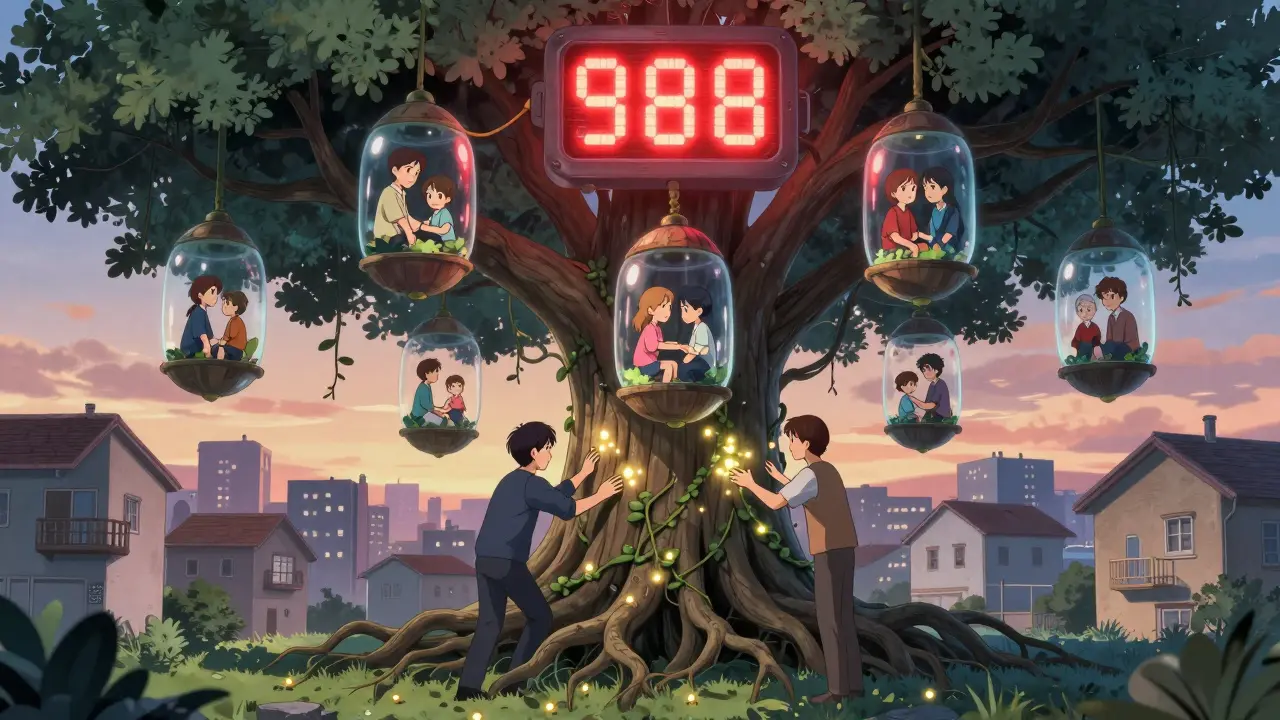
- Use 988 for crisis support. It’s free, confidential, and available 24/7.
There’s no magic fix. But there is a path - and it starts with understanding that healing isn’t just about the teen. It’s about the whole family learning to breathe together again.
Can family therapy replace medication for teen depression?
For mild to moderate depression, family therapy alone can be enough - especially if family conflict is a major factor. But for moderate to severe cases, especially with suicidal thoughts or extreme withdrawal, medication is often necessary to stabilize mood enough for therapy to work. The most effective approach combines both.
How long does family therapy take to work?
Most family therapy programs last 12 to 16 weeks, with weekly sessions. Some approaches, like strategic or structural therapy, show improvement in as few as 8 sessions. Attachment-Based Family Therapy (ABFT) usually takes longer - around 16 to 20 sessions - because it works on deeper emotional wounds. Progress isn’t always linear, but most families report noticeable changes in communication and mood within 8 to 12 weeks.
Are antidepressants safe for teens?
Fluoxetine and escitalopram are the only two antidepressants FDA-approved for teens, and they’ve been shown to be safer than others in clinical trials. The FDA’s black box warning about increased suicidal thoughts applies to the first few weeks of treatment - not the long term. With close monitoring by a doctor, the benefits outweigh the risks for teens with moderate to severe depression. Side effects like nausea or insomnia are common but usually fade after a few weeks.
What if my teen refuses to go to therapy?
You don’t need the teen’s full cooperation to start family therapy. Many programs begin with parents and caregivers only. The therapist can work with you to change your own responses, which often shifts the family dynamic enough to draw the teen in. Sometimes, just seeing parents take the issue seriously - and change how they communicate - makes the teen feel safer to join later.
How do I find a qualified family therapist?
Look for therapists certified by the American Association for Marriage and Family Therapy (AAMFT). Ask if they’ve been trained in evidence-based models like ABFT, structural, or strategic family therapy. Check if they’ve worked specifically with depressed teens. Many community mental health centers offer sliding-scale fees. You can also call SAMHSA’s National Helpline at 1-800-662-4357 for free referrals.
Is family therapy covered by insurance?
Many insurance plans cover family therapy under mental health benefits, especially since the 2016 21st Century Cures Act requires parity between mental and physical health coverage. But coverage varies. Call your insurer and ask: ‘Do you cover family therapy for adolescent depression under CPT code 90847?’ If they say no, ask for a written denial - you can often appeal.
Final Thoughts: Healing Starts at Home
Depression in teens doesn’t vanish with a pill or a single therapy session. It fades when the home becomes a place of safety, not stress. When parents learn to listen without fixing, when siblings stop competing for attention, when silence turns into honest talk - that’s when real change happens.
Medication can lift the weight. But only family can teach the teen they’re not alone under it.

Oladeji Omobolaji
January 22, 2026 AT 04:13Man, this hit different. I grew up in Lagos with zero talk about mental health, and now I see my cousin going through this. No one knew what to do-just told him to pray harder. This post? It’s the first time I’ve seen someone actually explain how family stuff ties into it.
dana torgersen
January 22, 2026 AT 22:19Okay so-like-why is it always ‘family therapy’? Like, what if the family IS the problem? My sister tried it and her mom kept saying ‘I didn’t know I was hurting you’-but then she did it again next week…?? I’m not saying therapy’s bad, I’m saying… maybe sometimes the system needs to be dismantled, not fixed??
Janet King
January 24, 2026 AT 15:30Family therapy and medication are not mutually exclusive. Evidence supports combination treatment for moderate to severe adolescent depression. The American Academy of Pediatrics recommends this approach. Access remains unequal, but the data is clear.
Anna Pryde-Smith
January 24, 2026 AT 17:54THEY DIDN’T EVEN MENTION THE FACT THAT THERAPISTS GET PAID MORE FOR MEDS THAN FOR FAMILY SESSIONS. THIS IS A SYSTEMIC PROBLEM. INSURANCE PUSHES DRUGS BECAUSE THEY’RE CHEAPER TO COVER THAN 16 WEEKS OF THERAPY. DON’T LET THEM GASLIGHT YOU INTO THINKING IT’S ‘FOR THE KID’S SAKE’.
Stacy Thomes
January 26, 2026 AT 03:00I cried reading this. My 15-year-old stopped eating for 3 months. We started meds and therapy together. It wasn’t magic. But after 10 weeks, she asked for ice cream and laughed. That’s the moment I knew-we were finally on the same team. You’re not alone.
Dawson Taylor
January 26, 2026 AT 19:06Combining pharmacological and systemic interventions aligns with biopsychosocial models of care. The TADS study remains the most robust evidence base. Reduction in hospitalization rates supports cost-effectiveness despite upfront barriers.
Laura Rice
January 28, 2026 AT 00:21My kid didn’t speak for 6 months. We did ABFT. The therapist made my husband say ‘I’m sorry I made you feel small’-and he cried. I cried. My daughter looked at him like she was seeing him for the first time. That’s not therapy. That’s resurrection.
Sallie Jane Barnes
January 28, 2026 AT 12:17If you’re reading this and you’re a parent who thinks ‘my kid just needs to snap out of it’-please, just read the part about physical symptoms in kids under 12. Headaches. Fatigue. Stomachaches. It’s not laziness. It’s not rebellion. It’s pain.
Andrew Smirnykh
January 29, 2026 AT 01:29In my country, we don’t have access to any of this. But I shared this with my cousin in Michigan. She’s now in therapy. That’s how change spreads-not through policy, but through stories. Thank you for writing this.
charley lopez
January 29, 2026 AT 03:18SSRI efficacy in adolescents is modest (d = 0.31), with significant heterogeneity in response. The NIMH-funded ABFT expansion is promising, but longitudinal outcomes remain underpowered. Telehealth adherence rates are encouraging but lack control for socioeconomic confounders.