Imagine taking your daily heart medication or a painkiller for a headache, only to discover it contains no active ingredients-or worse, something lethal like fentanyl. This isn't a scene from a thriller; it is the reality for millions of people worldwide. Counterfeit medications are deliberately and fraudulently mislabeled products that pose a severe threat to public health. According to the World Health Organization (WHO), these illicit drugs cause an estimated 500,000 deaths annually from malaria and pneumonia alone in Sub-Saharan Africa. In developed nations, while the rate is lower at approximately 1%, the financial scale is staggering, representing a $200 billion annual criminal enterprise.
The rise of internet pharmacies has made this problem more accessible and dangerous. The FDA documented its first major online counterfeit case in 1998 involving fake Viagra, but today's threats are far more sophisticated. With Interpol's Operation Pangea 2023 reporting seizures from over 113,000 websites, knowing how to identify counterfeit medication is no longer just a precaution-it is a survival skill. Whether you are buying prescription drugs online or picking up a refill at your local pharmacy, understanding the red flags can save your life.
The Price Trap: When Deals Are Too Good to Be True
The most obvious indicator of a fake drug is the price. Legitimate pharmaceutical companies operate with thin margins and strict supply chain controls. According to Truemed's 2024 industry analysis, legitimate pharmaceuticals rarely discount more than 20% below the standard market rate. If you see a website offering popular medications like Ozempic, Xanax, or Lisinopril at 50% to 80% off, raise your guard immediately.
Counterfeiters rely on desperation and cost-saving desires. A 2024 survey by Consumer Reports found that among adults who purchased medications online, those who bought from sites offering prices 60% below retail had an 87% chance of receiving a counterfeit product. In contrast, sites pricing within 20% of retail had a counterfeit rate of only 0.3%. Remember, if the price looks suspiciously low, the risk is likely high. DEA operations have consistently shown that deep discounts are the primary lure used by illegal online pharmacies to attract victims.
Packaging Inconsistencies: The First Line of Defense
Even if the price seems reasonable, the packaging often gives away the truth. Packaging inconsistencies are the most common visual indicator, identified in 78% of counterfeit cases according to the FDA's 2023 database. You don't need a laboratory to spot these errors; you just need a keen eye.
- Spelling Errors: Present in 63% of counterfeit cases. Look for misspelled words, awkward grammar, or incorrect capitalization on labels and inserts.
- Missing or Incorrect Batch Numbers: Found in 41% of cases. Every legitimate drug has a unique lot or batch number printed clearly on the box and bottle.
- Misplaced Expiry Dates: Seen in 37% of cases. Check if the date format matches what you expect from previous purchases.
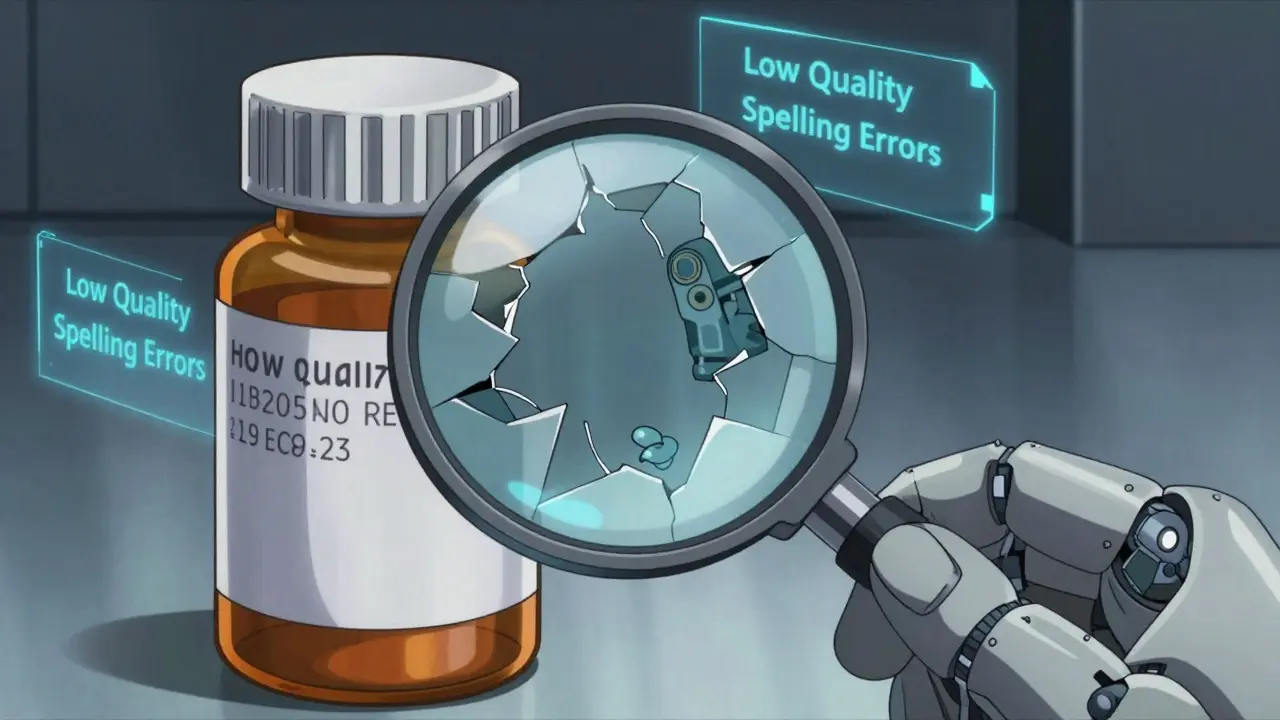
- Low-Quality Printing: The NCBI's 2023 detection technology review notes that counterfeits often show visible pixelation when viewed under 10x magnification. Even without a microscope, look for blurry text, faded colors, or smudged ink.
Dr. Theresa Michele, Director of the FDA's Division of Drug Information, emphasizes that even microscopic differences in embossing patterns can indicate counterfeits. Legitimate manufacturers use precision tooling that is difficult to replicate. If the foil seal feels loose, the cardboard feels flimsy, or the plastic bottle is unusually thin, do not take the medication.
Physical Characteristics: Examining the Tablet or Capsule
Once you open the package, examine the medication itself. Legitimate pharmaceuticals maintain precise specifications regulated by standards like the USP General Chapter <1210>. Tablets should not vary more than 5% in weight or 2% in diameter. They should be uniform in color and shape.
Red flags include:
- Cracking or Bubbling: Coatings should be smooth. Cracks, bubbles, or crumbliness suggest poor manufacturing quality.
- Color Variations: If your usual blue pill arrives green, or if there are speckles where there shouldn't be, suspect foul play.
- Smell and Taste: Reddit's r/pharmacy community, with over 128,000 members, documents thousands of user reports. Common complaints include tablets having a chemical smell different from previous refills or dissolving too quickly in water.
A simple solubility test can help. Legitimate tablets generally do not fully dissolve in 30 minutes of gentle agitation in water. If your pill disintegrates into powder within two minutes, it may lack the proper binding agents or active ingredients. Dr. Roger Bate's 2023 study showed that 98.7% of counterfeit antimalarials failed disintegration testing, whereas 100% of legitimate products met standards.
Online Pharmacy Verification: Trusting the Source
Where you buy matters as much as what you buy. The internet is flooded with illegal pharmacies. As of January 2025, only 6,214 websites were verified by the National Association of Boards of Pharmacy (NABP) using the secure .pharmacy domain. In contrast, Interpol identified over 35,000 illegal online pharmacies in 2024.
To verify an online pharmacy:
- Check for the .pharmacy Domain: This is a verified credential issued by NABP. It ensures the site meets rigorous safety standards.
- Require a Prescription: 92% of verified counterfeit incidents involved online pharmacies that did not require a valid prescription. If a site sells controlled substances like opioids or benzodiazepines without asking for a doctor's note, it is almost certainly illegitimate.
- Contact Information: Legitimate pharmacies provide a physical address and a phone number. Use Google Maps to verify the location exists and is not a residential home or empty lot.
The FDA's 2024 advisory states that consumers should immediately suspect products purchased from online sources that bypass prescription requirements. Always cross-reference the pharmacy on the NABP's Verified Internet Pharmacy Practice Sites (VIPPS) list.
Sophisticated Threats: Fentanyl and AI-Generated Packaging
Counterfeiters are adapting. The DEA's 2024 report on Operation Press Your Luck revealed a terrifying trend: 100% of seized counterfeit opioid pills contained fentanyl. These pills were manufactured to match legitimate products' appearance within 0.1mm dimensional tolerance and exact color matching. However, they contained lethal doses ranging from 0.5mg to 2.3mg per tablet-equivalent to dozens of standard doses.
Furthermore, the WHO warned in November 2024 about "deep fake" medication packaging. AI-generated designs now fool 68% of consumers in initial visual inspections. These fakes replicate holograms with 95% visual accuracy but fail under microscopic analysis where legitimate holograms contain proprietary microtext visible only at 50x magnification.
This sophistication means relying solely on visual inspection is risky. The FDA is responding with new technologies like 'PharmMark,' a mandatory microscopic marking system using luminescent nanoparticles visible under UV light, required for controlled substances by December 2026. Until then, vigilance is your best defense.
Step-by-Step Verification Protocol
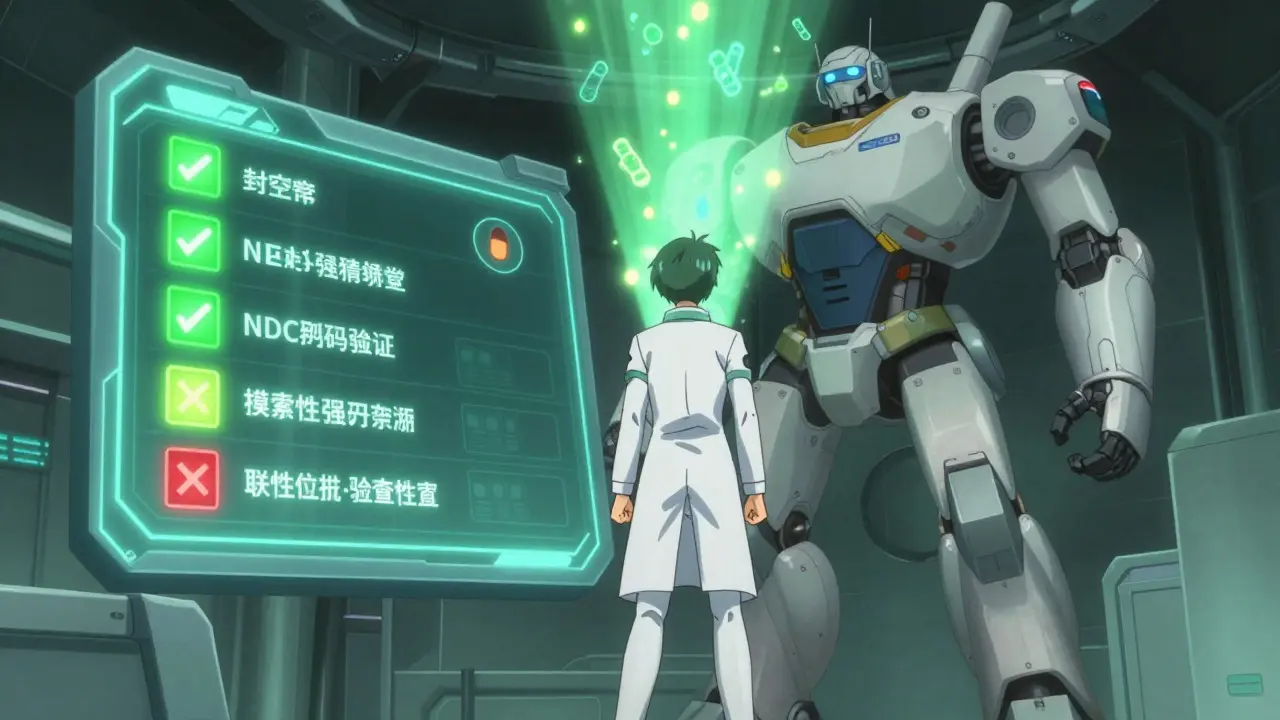
If you suspect your medication might be fake, follow this six-step examination protocol mandated by the FDA's 2024 guidelines:
- Check Packaging Seal Integrity: Tamper-evident features should show irreversible damage if opened. If the seal looks reapplied or intact despite the box being opened, discard it.
- Verify NDC Code: Enter the National Drug Code (NDC) on the box into the FDA's National Drug Code Directory. Ensure the manufacturer and product name match exactly.
- Confirm Lot Number: Call the manufacturer's hotline (found on their official website, not the box) to verify the lot number. Pfizer reports that 37% of counterfeit lot numbers do not exist in their system.
- Visual Comparison: Compare your tablet to reference images available on the manufacturer's website. Over 89% of top 200 drugs have official reference photos.
- Solubility Test: Perform the gentle agitation test in water. Note the time it takes to dissolve.
- Report Suspicions: Report any doubts to the FDA MedWatch program within 24 hours. This helps authorities track trends and issue alerts.
Healthcare professionals are also being trained. The DEA's Pharmacist Verification Certification Program has trained over 14,000 pharmacists since September 2023, reducing counterfeit dispensing incidents by 63% in participating pharmacies. Ask your pharmacist to verify unusual batches.
What are the most common signs of counterfeit medication?
The most common signs include unusually low pricing (more than 20% off), spelling errors on packaging, missing or invalid batch numbers, poor print quality, and physical abnormalities in the tablet such as cracking, discoloration, or unusual smell. Additionally, purchasing from online pharmacies that do not require a prescription is a major red flag.
How can I verify if an online pharmacy is legitimate?
Look for the .pharmacy domain, which is verified by the National Association of Boards of Pharmacy (NABP). Ensure the site requires a valid prescription, provides a physical address and phone number, and appears on the NABP's VIPPS list. Avoid sites offering extreme discounts or selling controlled substances without medical oversight.
What should I do if I suspect my medication is fake?
Stop taking the medication immediately. Do not flush it down the toilet. Contact your healthcare provider for alternative treatment. Verify the lot number with the manufacturer. Finally, report the incident to the FDA MedWatch program to help protect others. Keep the packaging and remaining pills for evidence.
Are counterfeit drugs always ineffective?
Not necessarily. Some counterfeit drugs contain incorrect amounts of active ingredients, making them less effective or dangerously potent. Others may contain entirely different substances, such as fentanyl in opioid pills or amphetamines in erectile dysfunction drugs. The danger lies in the unpredictability of dosage and composition.
Which medications are most frequently counterfeited?
According to recent data, cardiovascular drugs, erectile dysfunction medications (like Viagra), weight loss drugs (like Ozempic), and specialty pharmaceuticals with high monthly costs are the most targeted. Controlled substances like opioids and benzodiazepines are also heavily counterfeited due to high demand and profit margins.