
When we talk about prescription medication labels is the official labeling on dispensed drugs that provides dosage, patient identity, and specific administration instructions , we aren't just talking about the name of the drug and how many pills to take. The "special instructions" are the nuanced rules that tell you how, when, and under what conditions to take the drug. According to research by Dr. Terry C. Davis, nearly half of primary care patients misunderstand these instructions. This isn't just a minor annoyance; medication errors cost the healthcare system billions every year and, more importantly, put patients at risk.
Common Special Instructions and What They Actually Mean
Not every instruction is as straightforward as it seems. To avoid mistakes, you need to know the specific intent behind the pharmacy's wording. Here are the most common directives you'll encounter and the practical way to follow them:
- Take with food: This usually means taking the medication during or shortly after a meal to prevent stomach irritation or to help the body absorb the drug better.
- Take on an empty stomach: This generally requires taking the drug at least one hour before eating or two hours after your last meal. This is often because food can block the medication from entering your bloodstream.
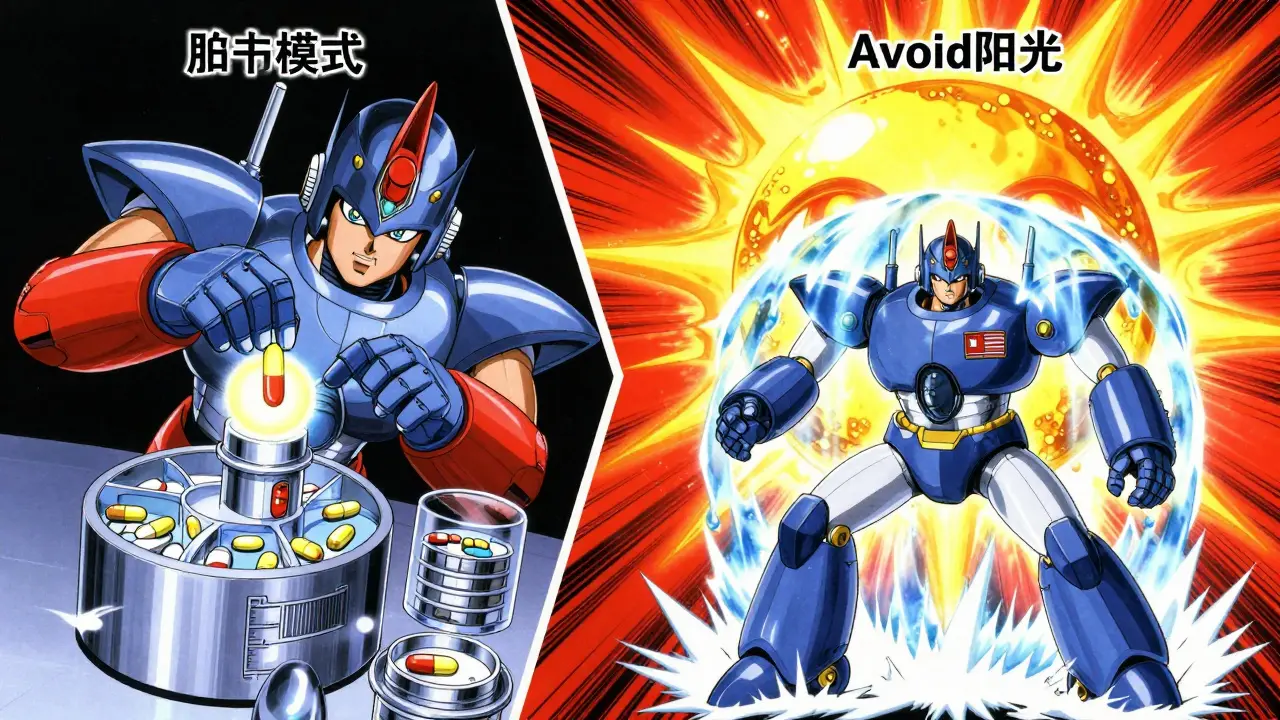
- Avoid sunlight: Some drugs make your skin hypersensitive to UV rays. This means you should wear sunscreen, hats, and protective clothing to avoid severe burns.
- Shake well before use: This is common for suspensions where the active ingredient settles at the bottom. If you don't shake it, you might get too little of the drug in your first few doses and a dangerous amount in the last one.
- Do not crush: Many pills have a "time-release" or "enteric coating." If you crush or chew them, the entire dose hits your system at once instead of slowly over 12 or 24 hours, which can be toxic.
- Refrigerate: Some medications break down at room temperature. Keeping them in the fridge ensures the chemical stability of the drug.
Where to Find These Instructions
One of the biggest hurdles is actually finding the instructions. A Consumer Reports survey revealed that over half of users struggle to locate these warnings. They aren't always in the same place. Depending on your pharmacy, you might find them in three different spots:
| Location | Frequency | What to Look For |
|---|---|---|
| Primary Label | 32% | The main white sticker with your name and dosage. |
| Supplemental Sticker | 47% | Small, colorful "auxiliary labels" (e.g., a yellow sticker saying "May cause drowsiness"). |
| Printed Inserts | 21% | The long fold-out paper provided by the pharmacist. |
Because instructions are scattered, it's easy to miss a critical warning. For example, the FDA is the United States Food and Drug Administration, the federal agency responsible for protecting public health by ensuring the safety and efficacy of drugs requires specific font sizes and contrast ratios to make these labels readable, but that doesn't help if you don't know where to look.
The Danger of Timing Misinterpretations
Timing is where many people trip up. When a label says "every 12 hours," it implies a strict schedule to maintain a consistent level of the drug in your blood. However, about 53% of patients misinterpret this, often taking doses too close together. If you take a dose at 8 AM and then another at 6 PM because you "felt it wearing off," you are increasing the risk of side effects and toxicity.
This is especially dangerous for high-risk medications. The Medication Guides are FDA-mandated handouts for specific drugs where a deep understanding of the medication is critical to prevent serious adverse effects . These guides are provided for about 12% of all prescription drugs and offer a deeper dive into why the special instructions are so strict.
How to Ensure You're Taking Your Medicine Correctly
Since pharmacy counseling is often rushed-averaging only about two minutes per patient-you have to be your own advocate. To reduce the risk of error, use a verification process similar to the one recommended by the Dana-Farber Cancer Institute.
- Scan all locations: Check the main label, the small colored stickers, and the paper insert. Don't assume the main label has everything.
- Ask for a "Plain English" explanation: If you see "take with food," ask your pharmacist, "Does this mean a full meal or just a snack?" Clarifying these terms can reduce errors significantly.
- Use a system: Don't rely on memory. Use a Pill Organizer is a storage container with separate compartments for different days and times to ensure medication adherence . This simple tool can reduce timing errors by nearly 50%.
- Request large-print labels: If you struggle to read the 10-point font, almost all pharmacies can provide larger text upon request.
Overcoming Health Literacy Barriers
It is important to acknowledge that not everyone finds these labels easy to read. About 36% of U.S. adults have basic or below-basic health literacy, meaning they struggle to understand health-related information. For these individuals, the misinterpretation rate for special instructions jumps to 62%. This is an area where the American Pharmacists Association is the professional organization representing pharmacists in the US, focusing on improving pharmacy practice and patient safety is pushing for more standardized language and visual icons, similar to the systems used in Europe.
If English isn't your first language, the risk is even higher. Studies show that Spanish-speaking patients misinterpret "take with food" instructions over three times more often than English speakers. In these cases, asking for a translated label or using a translation app to verify the specific "special instruction" can be life-saving.
What should I do if I missed a special instruction?
If you realize you've been taking a medication incorrectly (e.g., taking a "do not crush" pill crushed), contact your pharmacist or doctor immediately. Do not stop taking the medication abruptly without consulting them, but let them know so they can assess if there was any adverse effect or a loss of efficacy.
Does "take with food" mean I need a full meal?
Not necessarily. For many drugs, a small snack or a glass of milk is enough to protect the stomach lining. However, for some, a full meal is required for the drug to be absorbed. Always ask your pharmacist for the specific requirement for your medication.
Why are some instructions on stickers and not the main label?
Auxiliary stickers are used to highlight critical warnings-like "Avoid Sunlight" or "Do Not Drink Alcohol"-so they stand out visually from the standard dosage text. They act as a secondary alert system to catch your eye.
Can I ask for my instructions in a different language?
Yes. Most pharmacies can provide labels in multiple languages or provide translated Medication Guides. If your pharmacy cannot, you can request a translated summary from your prescribing physician.
What happens if I ignore the "refrigerate" instruction?
Medications that require refrigeration are chemically unstable at room temperature. If left out, the drug may lose its potency (meaning it won't work) or, in some cases, break down into harmful byproducts. If you accidentally leave a refrigerated med out, call your pharmacist to see if the drug is still safe to use.
Next Steps for Patient Safety
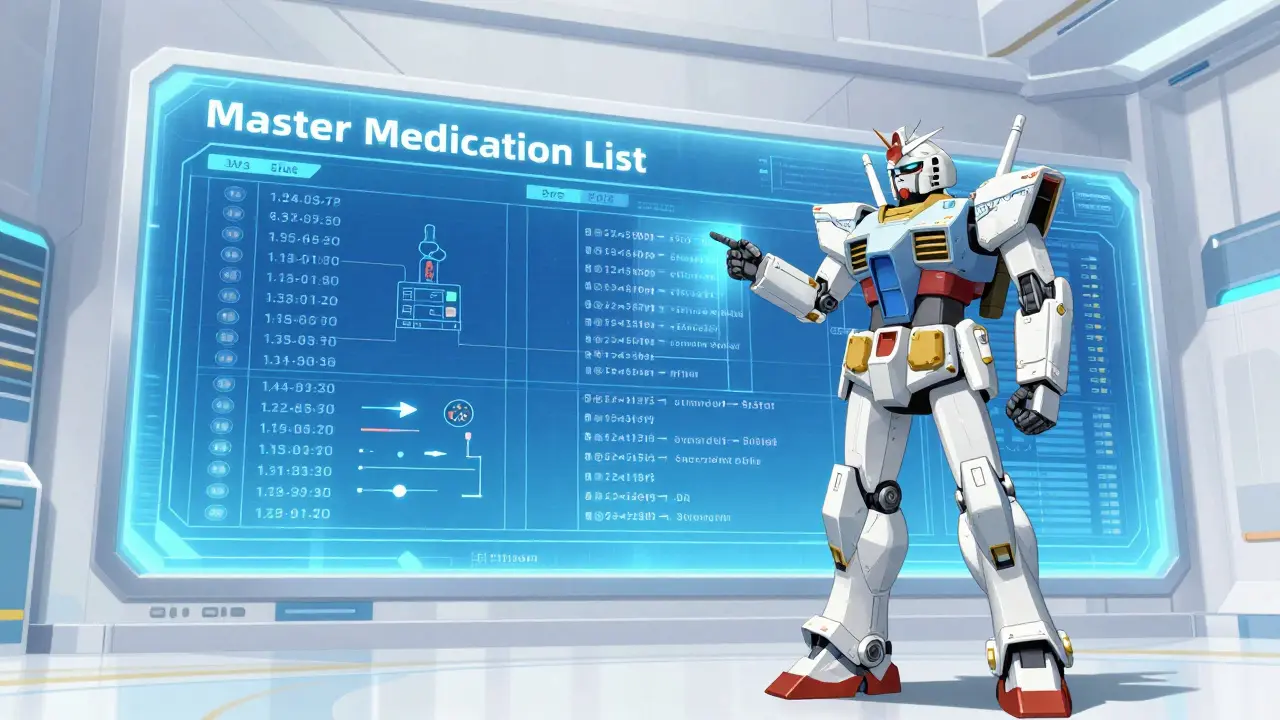
If you are managing multiple medications, the best thing you can do is create a "Master Medication List." Write down each drug, its dosage, and every single special instruction associated with it in one clear place. This removes the need to squint at small bottles every time you take a dose.
For those who struggle with timing, try using medication reminder apps. These provide a digital alert that prevents the common error of taking doses too close together. If you have a caregiver, ensure they are also trained on these special instructions, as they are often the ones managing the pill organizer and may not have seen the original pharmacy labels.


Anantha Lakshmi
April 21, 2026 AT 21:14This is such a helpful reminder for everyone! 🌟 Taking a moment to double-check these little labels can honestly change your whole health journey. Let's all stay safe and proactive! ✨🙌
Rick Brewster
April 23, 2026 AT 08:32one must ponder if the very act of compartmentalizing our wellness into tiny stickers is just another manifestation of the modern industrial complex reducing the human experience to a series of binary instructions lacking in any real ontological depth i mean really why do we trust the typography of a pharmacy label more than the intuitive wisdom of the body which has evolved over eons to signal its own needs without needing a 10 point font to tell it when to eat a cracker before a pill it is simply tragic how we have outsourced our consciousness to the fda
Ajinkya Joshi
April 23, 2026 AT 16:24Imagine being so incompetent that you need a guide to understand "shake well." Truly a testament to the peak of human intelligence in this century. 🙄
Ally Warren
April 24, 2026 AT 02:50The intersection of health literacy and systemic failure is fascinating. We focus on the patient's ability to read a label rather than the pharmacy's failure to communicate effectively in a rushed two-minute window.
Divyanshu Giri
April 25, 2026 AT 11:35Keep it simple folks! Just grab a pill box and crush those goals! You got this! 🚀
Chidi Prosper
April 26, 2026 AT 18:27I totally agree with using a master list. It removes all the guesswork and stress when you are dealing with multiple prescriptions at once.
Odicha ude Somtochukwu
April 28, 2026 AT 10:07It is most commendable that the author emphasizes the need for translation services; for, language should never be a barrier to life-saving care!!!
RAJESH MARAVI
April 28, 2026 AT 15:43idk why anyone cares about the fda guidelines lol they probably just want us to be conffused so we buy more stuff. totally rigged system!! 🤡
Sarah Watters
April 30, 2026 AT 04:57Exactly. The labels are just a distraction from the real agenda anyway. They want us dependent on their "stabilized" chemicals that only work if you follow their weird little rules. Just another way for them to keep tabs on us and make sure we don't actually get healthy on our own terms. Don't even get me started on the refrigeration stuff, probably just to ensure the additives stay active for the surveillance side effects. Pure nonsense.
Mel Glick
April 30, 2026 AT 23:38Get your act together pharmacies! The font size is a joke and the way they hide the inserts is practically criminal. Fix it now!
Nicole Antunes
May 1, 2026 AT 09:36I find that using a digital reminder app really helps maintain a consistent routine. (✿◠‿◠) It is a wonderful way to support those who might struggle with memory or complex schedules.
Caroline Duvoe
May 2, 2026 AT 14:01everyone knows the inserts are trash and no one reads them anyway 🙄 just ask the pharmacist if u actually care 💅
Anastasios Kyriacou
May 4, 2026 AT 08:52too much reading lol just look for the colured stickers
Mayur Pankhi Saikia
May 5, 2026 AT 22:33The sheer audacitiy of suggesting a "pill organizer" as a panacea... truly... it is an insult to those of us who manage complex regimens with mere intellectual rigor!!!! And the typos in these guidelines are just... appalling!!!!