
Drug Metabolism Simulation Tool
Simulation Settings
This tool demonstrates how different biological profiles react to standard medication doses.
Simulation Results
Select your genetic profile and a medication above to see how variations in biology change treatment outcomes.
Imagine you and your neighbor take the exact same pill for back pain. For them, it brings immediate relief. For you, it makes your stomach turn and leaves you feeling dizzy. It’s frustrating when one person gets cured while another suffers, right? This isn’t just bad luck or a 'weak constitution.' Science tells us there are concrete biological reasons why medications affect people differently. Understanding these reasons can help you talk smarter with your doctor and avoid dangerous reactions.
Medications don't just float through your body aimlessly. They interact with complex systems that vary wildly from person to person. While doctors often try a 'one-size-fits-all' dose, that approach fails many people because of unique differences in genetics and environment. If we ignore these individual variations, the consequences can range from annoying rashes to life-threatening events.
The Reality of Adverse Drug Reactions
Before diving into why this happens, we have to look at how common the problem actually is. Adverse Drug Reactions (ADRs) are noxious and unintended responses to medicines that occur at normal doses. According to the World Health Organization, this isn't a rare glitch; it's a major health crisis.
In the United States, ADRs were historically reported as the fourth leading cause of death. That puts them ahead of heart disease in some contexts when viewed through hospital admission data alone. A review highlighted that 3.6% of European patients are admitted to hospitals specifically due to side effects from their medications. In those hospitals, another 10% develop new side effects while they are there. In the UK, the NHS reports that ADRs cost approximately £770 million annually. These aren't abstract numbers; they represent millions of real people dealing with nausea, bleeding risks, or organ damage simply because the drug didn't match their biology.
How Your Genes Control Drug Metabolism
The biggest driver of this variation lies in your DNA. We often think of genetics as determining things like eye color, but it also determines how your liver processes chemicals. This area of study is called Pharmacogenomics, defined as the science of how genes affect a person's response to drugs. Experts estimate that genetic factors account for anywhere between 20% to 95% of patient variability in response to individual drugs.
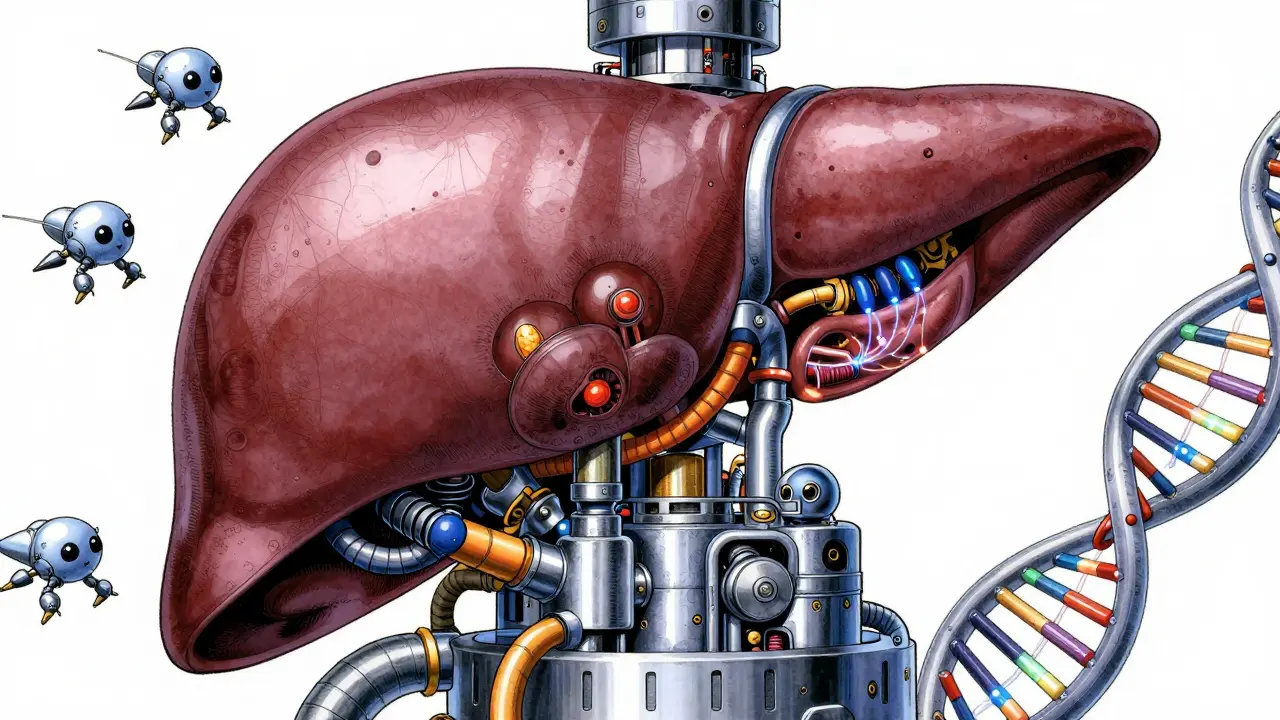
Your liver uses specific enzyme systems to break down drugs so your body can use them or get rid of them safely. The most famous of these are the Cytochrome P450 enzymes (specifically CYP2C9, CYP2C19, and CYP2D6). You inherit variants of these enzymes from your parents. Some people have standard versions that work normally. Others fall into extreme categories based on their genetic makeup.
- Poor Metabolizers: About 5-10% of Caucasians fall into this category for CYP2D6. Their bodies cannot break down certain drugs fast enough, causing toxic levels to build up.
- Ultra-Rapid Metabolizers: Found in 1-2% of Europeans but up to 29% of Ethiopians for CYP2D6. These individuals process drugs so quickly that the medicine disappears before it can help, rendering the treatment useless.
This creates a situation where a standard dose is poison to one person and water to another. Approximately 15% of all adverse drug reactions are directly attributable to interactions between drugs and these specific genes.
Real-World Drug Examples
To make this concrete, let's look at specific medications where genetics play a massive role. Knowing this history helps you understand what to watch out for in your own prescriptions.
| Drug | Gene Involved | Risk/Factor |
|---|---|---|
| Clopidogrel (Plavix) | CYP2C19 | Poor metabolizers get minimal benefit, increasing heart attack risk. |
| Warfarin (Coumadin) | CYP2C9, VKORC1 | Genetics explain 30-50% of dose variability, affecting bleeding risk. |
| NSAIDs (e.g., Ibuprofen) | Various inflammatory genes | High risk of GI complications in patients with specific gene variants. |
| Zafirlukast (Asthma) | 5-Lipoxygenase (5-LO) | Patients with 5-LO polymorphism respond poorly to this expensive drug. |
Warfarin is the classic example of genetic influence. It is used to thin the blood, but the margin for error is tiny. Too little, and you clot. Too much, and you bleed internally. Traditional dosing involves a guessing game with frequent blood tests. However, genetic testing for CYP2C9 and VKORC1 variants can explain up to 50% of why someone needs a lower or higher dose. Studies show that using genotype-guided dosing reduces time to reach a safe level by 27% and cuts major bleeding events by 31%.
Then there is Clopidogrel (often prescribed after heart attacks). This drug requires activation by the CYP2C19 enzyme to work. If you are a poor metabolizer-affecting 2-15% of various populations-the drug never activates. You are taking a daily pill that effectively does nothing. Testing can identify this immediately, allowing doctors to switch you to a safer alternative rather than waiting for a second heart attack to prove it failed.
Beyond Genes: Environmental and Physiological Factors
While genes set the stage, your current physical state plays a huge role too. Think of your genes as the script, but your physiology as the director changing lines on the fly.
Age is a primary factor. Older adults store larger amounts of fat-soluble drugs because body fat percentage increases significantly with age. Research indicates that elderly individuals may have 30-40% more fat tissue compared to young adults, altering how long drugs stay in the system. Additionally, kidney function naturally declines, meaning waste products linger longer.
Inflammation changes how your enzymes behave. If you are fighting off an infection or have chronic inflammation, your Cytochrome P450 enzyme activity can drop by 20-50%. Suddenly, a stable dosage becomes dangerously high because your liver has slowed its processing speed to save energy for healing.
Drug Interactions are another hidden variable. Taking multiple medications creates a web of complexity. For instance, Amiodarone (a heart rhythm drug) blocks the metabolism of warfarin. Doing so can increase warfarin concentrations by 100-300%, creating life-threatening bleeding risks. In scenarios involving five or more medications-which is common in elderly care-the rate of adverse reactions jumps to 300% higher than in younger, single-medication patients.

The Promise of Pharmacogenomic Testing
So, can we fix this? Yes, but adoption is tricky. The field of pharmacogenomics aims to shift medicine from reactive to proactive. Instead of guessing a dose and fixing the problems later, we test the genes first.
Data suggests this works. A 2022 study from Mayo Clinic tracking 10,000 patients found that those receiving pharmacogenomic testing had 32% fewer emergency department visits. Furthermore, their hospital stays were 26% shorter. In pediatric oncology, implementing testing reduced severe toxicity from mercaptopurine from 25% down to 12%. Dr. Mary Relling notes that this saves children from excruciating side effects during cancer treatment.
However, barriers exist. As of 2023, less than 10% of physicians routinely use these tests. There are three main reasons for this lag:
- Reimbursement: Insurance coverage is spotty. Only 18% of U.S. insurers provide comprehensive coverage for genetic panels.
- Knowledge Gaps: 68% of physicians report feeling unprepared to interpret the complex genetic reports.
- Complexity: Focusing on just a few enzymes explains a small fraction of all reactions. Most diseases involve polygenic interactions (many genes working together), making prediction harder.
Despite this, the industry is moving fast. The FDA has included pharmacogenomic info in labels for over 300 drugs. Costs are dropping, with panels falling from $2,000 per panel in 2015 to roughly $250 in 2023. This makes personalized medicine a reality for the average patient, not just research subjects.
Taking Action with Your Doctor
You don't need to be a scientist to protect yourself, but you do need to ask questions. When starting a new medication-especially blood thinners, antidepressants, or heart drugs-ask if your genetics might influence how you handle it.
If you have experienced strange side effects in the past, document them. Did you get a rash on penicillin? Did you get sedated by a mild sleeping pill? Tell your pharmacist. These historical clues often point to metabolic issues that a genetic test could confirm. With growing access to testing and tools like the FDA's Table of Pharmacogenetic Associations, more healthcare providers are ready to help you find the right match for your body.
What causes different side effects in different people?
Variations are caused by differences in genetics, particularly the enzymes that break down drugs (like CYP450), alongside environmental factors such as age, inflammation, and other medications being taken.
Is pharmacogenomic testing covered by insurance?
As of 2023, coverage varies significantly. Medicare recently expanded coverage for 17 high-risk medications, but private insurance only covers comprehensive testing in about 18% of cases. Always verify with your provider.
Can my genes change how I react to common painkillers?
Yes. Common drugs like NSAIDs can cause gastrointestinal complications in 1-2% of users annually, but risk rises to 30% in patients with specific genetic variants combined with steroid use.
How much does a pharmacogenomic test cost?
Prices have dropped drastically. A comprehensive panel now costs around $250, down from $2,000 in 2015, making personalized dosing increasingly affordable.



Austin Oguche
March 28, 2026 AT 20:58i really appreciate this breakdown of how our bodies process meds its wild how genetics play such a huge role i always thought it was just bad luck but seeing the science behind poor metabolizers makes me feel validated when i had issues with ibuprofen before
Shawn Sauve
March 30, 2026 AT 08:45Austin you make a great point there its important we advocate for ourselves without blaming doctors too harshly they work hard too 👍
Sarah Klingenberg
March 31, 2026 AT 08:32Wow the stat about hospital admissions being caused by side effects is pretty scary 😱 definitely gonna ask my doc about the testing now thanks for sharing this info 🌟
Paul Vanderheiden
March 31, 2026 AT 16:17you can do this folks dont let fear stop you from getting help the data is clear on this side we just need to talk to our medical teams about what works best for our unique biology keeping positive helps manage the stress too
walker texaxsranger
April 1, 2026 AT 19:26big pharma pushes these tests because they sell new panels while ignoring lifestyle factors epigenetic modifications matter more than static DNA sequences the narrative here is purely profit driven corporate interests prioritize shareholder value over patient outcomes via standard care pathways
kendra 0712
April 3, 2026 AT 19:10But wait!!! Does this mean supplements change things too???? Like grapefruit juice affects metabolism?? I need to know EVERYTHING about interactions!!!! Is it safe to ask for insurance coverage immediately???
Rohan Kumar
April 5, 2026 AT 18:34Oh sure now suddenly science wants to sell us $250 gene scans 💸 meanwhile we cant get basic healthcare covered by plans sigh the irony is not lost on me regarding who benefits from this tech rollout 😒
Tony Yorke
April 7, 2026 AT 02:37Get tested save yourself the suffering.
Jordan Marx
April 8, 2026 AT 08:49The cytochrome p450 enzyme system specifically cyp2d6 polymorphisms create significant inter-individual variability in pharmacokinetics which explains the therapeutic failure observed in ultra-rapid metabolizers versus toxic accumulation in poor metabolizers populations display distinct allele frequencies making ethnical considerations relevant to dosing strategies
Richard Kubíček
April 9, 2026 AT 16:10Perhaps the variation serves a purpose in evolution though obviously we want safety modern medicine meets ancient biology in this clash and hope guides us toward better outcomes for everyone involved
Monique Louise Hill
April 10, 2026 AT 11:57You really should be taking charge of your own body like that instead of waiting for symptoms to appear neglecting testing is irresponsible towards your family! 🙄👎
Monique Ball
April 11, 2026 AT 23:30Thank you for this incredibly detailed article because honestly understanding adverse drug reactions is vital for public safety! We must acknowledge that genetic testing isn't just a luxury item anymore! It is becoming a standard of care in many progressive clinics! Did you know that warfarin dosage can vary wildly based on vkorc1 variants? It changes bleeding risk significantly! Many patients suffer unnecessarily because doctors guess instead of testing! Insurance barriers are real but improving slowly across states! Always keep a record of past rashes or nausea episodes! Bring that list to your next appointment! Pharmacists are great resources for checking interactions! If you take five plus meds ask for a review immediately! Knowledge empowers patients to make informed choices! Never ignore a strange reaction you have! Document everything for future visits! Your health matters above all! 💊🩺📊
tyler lamarre
April 12, 2026 AT 05:54Most of you clearly lack the education required to interpret the nuances of pharmacogenomic data without oversimplifying the biochemistry involved typical layperson discourse unfortunately
Kameron Hacker
April 14, 2026 AT 03:07Please refrain from derogatory remarks regarding the audience's comprehension capabilities as this thread aims to educate not belittle individuals seeking medical clarity for their personal well-being
Debra Brigman
April 14, 2026 AT 10:21The alchemy of the blood sings through our veins revealing secrets hidden deep within cellular architecture where the silent symphony of enzymes conducts a delicate ballet of toxicity and relief against the backdrop of our biological destiny