
Imagine a patient on a stable heart medication. They switch to a cheaper generic version of the same drug combination. The label says it is therapeutically equivalent. But suddenly, their blood pressure spikes, or they experience unexpected side effects. This isn't just a hypothetical scenario; it’s a real challenge in modern pharmacy practice.
The concept of therapeutic equivalence is the principle that different drug products with identical active ingredients can be safely substituted for one another sounds straightforward. However, when you introduce combination products-drugs containing two or more active ingredients-the math gets messy. Managing different doses in these combinations requires more than just checking a box. It demands a deep understanding of pharmacokinetics, regulatory codes, and the subtle differences between manufacturers.
Understanding Therapeutic Equivalence in Combinations
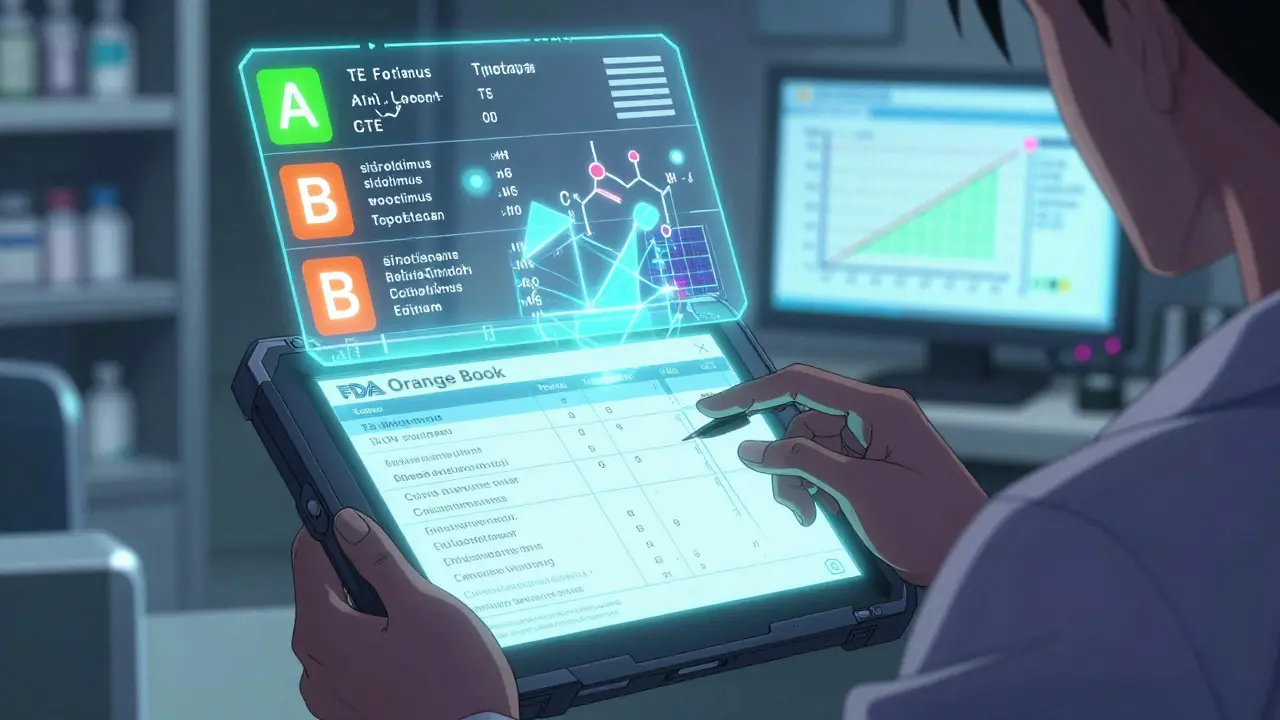
To manage therapeutic equivalents effectively, we first need to define what we are dealing with. The U.S. Food and Drug Administration (FDA) defines therapeutic equivalence through its Orange Book is a publication listing approved drug products with therapeutic equivalence evaluations. For a product to receive an 'A' rating, indicating it is therapeutically equivalent to the reference listed drug (RLD), it must meet three strict criteria:
- It is approved as safe and effective.
- It is a pharmaceutical equivalent, meaning it contains the identical amount of the identical active drug ingredient in the identical dosage form and route of administration.
- It meets compendial standards for strength, quality, purity, and identity.
While this definition works well for single-ingredient drugs, combination products introduce complexity. Consider a combination of sirolimus and topotecan. Sirolimus might produce a maximum effect of 69.8% reduction in vascular smooth muscle proliferation, while topotecan achieves 88.9%. Because their efficacies differ, you cannot simply add their doses together. You must calculate dose equivalents using specific formulas, such as $beq(a)=CB\gamma(1+CAa)^{-1}$, where $\gamma$ represents the efficacy ratio. Without this calculation, substituting one manufacturer's combination for another could lead to under-dosing or toxicity.
The TE Code System: Decoding the Alphabet
When you look up a drug in the FDA Orange Book, you will see a TE code. This multi-letter format is your primary tool for determining if a substitution is safe. The first letter is critical:
- 'A' Ratings: These signify therapeutic equivalence. You can generally substitute these generics for the brand-name RLD with confidence.
- 'B' Ratings: These indicate unresolved questions about bioequivalence or clinical effectiveness. Substitution here requires caution and often physician approval.
For traditional Abbreviated New Drug Applications (ANDAs), you will typically see 'A' ratings. However, for 505(b)(2) New Drug Applications (NDAs) or Petitioned ANDAs, the rating might be 'B' if there are differences in inactive ingredients that could influence bioequivalence. For example, if a generic combination uses a different disintegrant like croscarmellose sodium versus sodium starch glycolate, it might affect how the drug dissolves in the stomach, altering absorption rates even if the active ingredients are identical.
| Rating Type | Meaning | Substitution Risk | Typical Application |
|---|---|---|---|
| A Rating | Therapeutically Equivalent | Low | Standard ANDAs |
| B Rating | Not Demonstrated Equivalent | Moderate to High | 505(b)(2) NDAs, Complex Formulations |
| NTI Specific | Narrow Therapeutic Index | High (Requires Monitoring) | Warfarin, Levothyroxine combinations |
Narrow Therapeutic Index (NTI) Drugs: The Danger Zone
Some drugs have a very small window between being effective and being toxic. These are known as Narrow Therapeutic Index (NTI) drugs. Examples include warfarin, levothyroxine, and phenytoin. When these drugs are part of a combination product, the margin for error shrinks dramatically.
The FDA recognizes this risk by requiring a narrower acceptance range for bioequivalence studies for NTI drugs. While standard generics must fall within an 80-125% range for Area Under the Curve (AUC) and Maximum Concentration ($C_{max}$), NTI drugs must stay within a tighter 90-111% range. Despite this, a 2018 study in the *Journal of Clinical Endocrinology & Metabolism* found that 12% of patients experienced adverse events when switching between therapeutically equivalent levothyroxine products. This highlights that even with an 'A' rating, biological variability and formulation differences can impact patient outcomes.
If you are managing a patient on an NTI combination, do not assume automatic interchangeability. Monitor closely for signs of toxicity or loss of efficacy, especially during the first few weeks after a switch.
Practical Challenges in Pharmacy Practice
On the ground, pharmacists face daily challenges with therapeutic equivalents. Confusion often arises with fixed-dose combinations like amlodipine/benazepril. A pharmacist with over a decade of experience reported frequent confusion when substituting different strengths of this combination, leading to multiple dose-related errors in a six-month period. The issue? Not all manufacturers offer every strength, forcing substitutions that require careful dose conversion calculations.
Another common pitfall involves psychiatric medications. Only 72% of psychiatric medication combinations are considered therapeutically equivalent compared to 98% of statin combinations. This lower rate reflects the complex pharmacokinetics of psychotropic drugs, where small changes in absorption can significantly alter mood stabilization or seizure thresholds.
Consider the case of Vytorin (ezetimibe/simvastatin). A nurse practitioner reported that switching a patient from the brand name to a generic equivalent resulted in a 15% increase in LDL cholesterol. While both products had 'A' ratings, subtle differences in excipients or manufacturing processes may have affected bioavailability. This underscores the importance of monitoring lipid panels after any switch, regardless of the TE code.

Best Practices for Managing Substitutions
To minimize risks and ensure patient safety, healthcare systems should implement robust protocols for managing therapeutic equivalents in combinations. Here is a practical approach based on FDA guidance and industry best practices:
- Verify Active Ingredients and Strengths: Ensure the generic has the exact same active ingredients and dosages as the prescribed RLD. Do not assume similar names mean similar compositions.
- Check the TE Code: Always consult the latest FDA Orange Book. Look for 'A' ratings. If you see a 'B' rating, consult the prescriber before substituting.
- Monitor NTI Drugs Closely: For combinations containing NTI drugs, maintain a 72-hour monitoring period after switching. Use standardized conversion tables and consider barcode scanning to prevent dispensing errors.
- Educate Patients: Inform patients that while the pill may look different, it is intended to work the same way. Encourage them to report any new side effects immediately.
- Train Staff Regularly: Implement comprehensive training programs. The University of California Health System found that a 40-hour training program reduced substitution errors by 65%. Focus on recognizing high-risk combinations and proper documentation.
The Future of Therapeutic Equivalence
The landscape of therapeutic equivalence is evolving. The FDA is developing machine learning algorithms to predict potential therapeutic inequivalence in combinations based on formulation differences. Preliminary tests show 89% accuracy in identifying problematic substitutions, which could revolutionize how we assess generic safety.
Additionally, there is a push towards more nuanced ratings, such as proposed 'A*' designations for combinations with demonstrated bioequivalence across multiple strengths. As personalized medicine advances, we may see therapeutic equivalence determinations incorporating pharmacogenomic data by 2030, accounting for individual metabolic differences in combination therapy response.
Until then, vigilance remains key. By understanding the nuances of dose equivalence, respecting the limitations of TE codes, and prioritizing patient monitoring, we can harness the cost-saving benefits of generics without compromising care.
What does an 'A' rating in the FDA Orange Book mean?
An 'A' rating signifies that the drug product is therapeutically equivalent to the Reference Listed Drug (RLD). This means it has been proven to be bioequivalent and can be safely substituted for the brand-name product with the expectation of producing the same clinical effect and safety profile.
Why are Narrow Therapeutic Index (NTI) drugs harder to substitute?
NTI drugs have a very small margin between therapeutic and toxic doses. Small variations in bioavailability, which are allowed within standard generic ranges, can lead to significant clinical differences. Therefore, they require stricter bioequivalence standards (90-111% vs. 80-125%) and closer patient monitoring upon substitution.
Can two drugs with the same TE code still cause different effects?
Yes. While TE codes indicate regulatory equivalence, differences in inactive ingredients (excipients) can affect dissolution rates or absorption in some patients. Additionally, individual patient factors like metabolism and gut health can influence how a specific formulation performs, leading to varied clinical outcomes despite identical TE ratings.
How should pharmacists handle dose conversions in combination products?
Pharmacists should use standardized conversion tables and verify calculations carefully. For combinations with differing efficacies, simple additive models may fail. It is crucial to check if the components interact synergistically or antagonistically and to monitor patients closely for any changes in efficacy or side effects after the switch.
What is the role of the FDA Orange Book in generic substitution?
The FDA Orange Book serves as the primary resource for healthcare professionals to determine therapeutic equivalence. It lists approved drug products along with their TE codes, helping pharmacists and prescribers decide which generics can be safely substituted for brand-name drugs to reduce costs without sacrificing quality.