
Every year, millions of Americans skip doses, switch medications mid-course, or stop taking prescriptions altogether-not because they don’t want to get better, but because they can’t afford them. Generic drugs are the quiet heroes here: just as effective as brand-name versions, often costing 80% less. But here’s the catch: patients don’t always know they’re eligible for them. That’s where pharmacists, trained in Medication Therapy Management (MTM), step in-not just to fill prescriptions, but to fix broken medication journeys.
What Is Medication Therapy Management (MTM)?
MTM isn’t just another pharmacy service. It’s a structured, patient-centered process designed to make sure every drug a person takes is necessary, safe, and working as it should. Defined by the American Pharmacists Association in 2008, MTM involves a full review of all medications-prescription, over-the-counter, even supplements-regardless of where they were prescribed. The goal? To eliminate duplication, catch harmful interactions, and stop patients from paying more than they have to.Unlike the typical 1.7-minute interaction at the pickup window, MTM sessions last 20 to 40 minutes. Pharmacists sit down with patients, ask about symptoms, side effects, and costs, and then build a plan. This isn’t guesswork. They use tools like the Medication Appropriateness Index (MAI), which checks 10 key criteria: Is the drug right for the condition? Is the dose correct? Is it affordable? And crucially-is there a generic alternative that works just as well?
The Pharmacist’s Edge: Why They’re the Best at Generic Drug Optimization
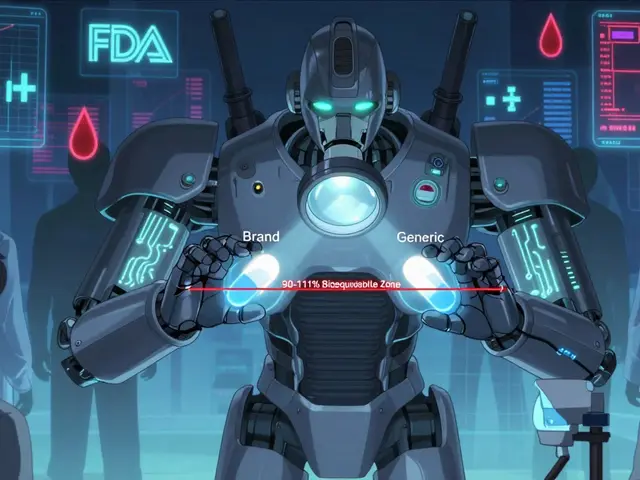
Doctors prescribe. Nurses monitor. But pharmacists? They know the fine print of every pill. The FDA’s Orange Book rates drug equivalents: an “A” rating means a generic is therapeutically interchangeable with the brand. But not all generics are created equal. For drugs with a narrow therapeutic index-like warfarin or levothyroxine-small differences in absorption can matter. That’s where a trained pharmacist comes in. They don’t just swap pills. They evaluate bioequivalence, check for formulation differences, and monitor lab results after a switch.And then there’s the cost. A 2022 study by HealthPartners found that when pharmacists proactively recommended generic substitutions during MTM sessions, patients saved an average of 32% on their monthly drug bills. One patient cut her $400 monthly brand-name inhaler to $15 with no loss in effectiveness. Another saved $287 a month by switching three medications to generics. These aren’t outliers-they’re the norm in well-run MTM programs.
Pharmacists also tackle myths. Many patients believe generics are “weaker” or “made overseas.” In reality, the FDA requires generics to have the same active ingredient, strength, dosage form, and route of administration as the brand. They’re held to the same manufacturing standards. But patients won’t trust a switch unless a pharmacist explains it clearly. That’s part of the job.
How MTM Beats Traditional Pharmacy Services
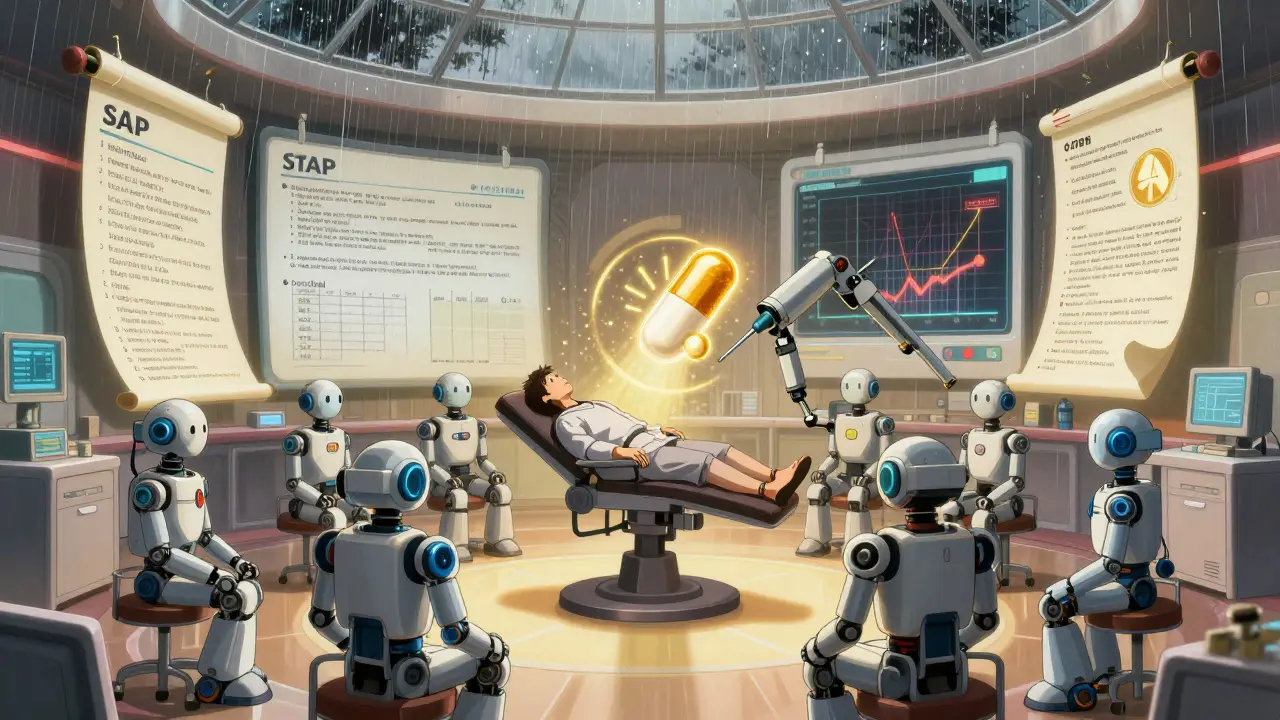
Traditional pharmacy work is transactional: receive script, count pills, hand over bag. MTM is transformational. A 2017 study in PMC5614414 found that during a single Comprehensive Medication Review, pharmacists identified an average of 4.2 medication-related problems per patient. These included duplicate therapies, unneeded drugs, and-most frequently-missed opportunities for generic substitution.Compare that to a typical pharmacy visit. In most cases, a pharmacist only sees one drug at a time. They might notice a potential interaction if it’s glaring. But without a full picture, they’re flying blind. MTM gives them the full map. They see that a patient is taking two different blood pressure meds from two different doctors. That one’s brand-name, the other’s generic. The patient doesn’t know they’re both doing the same thing. The pharmacist connects the dots-and saves money.
And the results? Studies show pharmacist-led MTM reduces hospital readmissions by 23% within 30 days. Medication errors drop by 61%. Adherence improves by nearly 19 percentage points on average. That’s not just better health-it’s fewer ER visits, fewer ambulance rides, fewer missed workdays.
Who Gets MTM? And Why Isn’t Everyone Using It?
Medicare Part D beneficiaries who take multiple chronic medications and spend over $5,000 a year on drugs are automatically eligible. In 2022, 12.7 million seniors received MTM through Medicare. But only about a third of eligible patients actually participate. Why? Lack of awareness. Many think MTM is just a “medication review” they’ll get in the mail. Others assume their pharmacy doesn’t offer it.Reimbursement is another roadblock. Medicare pays $50 to $150 per Comprehensive Medication Review. Commercial insurers? Often $25 to $75. For a 30-minute session, that’s barely above minimum wage after overhead. Many small pharmacies can’t justify the time unless they’re paid properly. That’s why MTM is more common in chain pharmacies, health systems, and telehealth platforms-where volume and infrastructure make it feasible.
Even when offered, patients don’t always show up. One survey found only 15-25% of eligible Medicare patients complete their MTM session. That’s a huge gap. Pharmacists can’t fix what they can’t reach.
How Pharmacists Make It Work: Tools, Training, and Documentation
Doing MTM well takes more than good intentions. Pharmacists need training. Most complete 40-60 hours of specialized education before offering services. Certifications like BCPS (Board Certified Pharmacotherapy Specialist) or BCACP (Board Certified Ambulatory Care Pharmacist) signal deeper expertise.They also need systems. Standardized tools like the SOAP format (Subjective, Objective, Assessment, Plan) help structure notes. For example:
- Subjective: “Patient says she skips her statin because it costs $120/month.”
- Objective: “Script for atorvastatin 20mg brand; generic available at $12/month. LDL 110 mg/dL.”
- Assessment: “Cost is barrier to adherence. Generic is therapeutically equivalent (Orange Book A rating).”
- Plan: “Switched to generic. Contacted prescriber for new script. Follow-up in 30 days.”
Documentation isn’t just paperwork. It’s communication. When a pharmacist sends a note to a primary care doctor about switching a patient to a generic, it’s a safety net. It prevents the doctor from prescribing the brand again unknowingly.
Integration with electronic health records (EHRs) is still limited-only 38% of community pharmacies have seamless access. That slows things down. But the trend is moving toward digital. Telehealth MTM is now standard, with 63% of programs offering virtual visits since the pandemic.

Real Impact: What Patients Are Saying
Patient stories tell the real story. On HealthPartners’ portal, one wrote: “My MTM pharmacist found I was paying $500 a month for three drugs that had generics costing $15 each. I cried. I didn’t know I could switch. Now I can afford my insulin.”On Reddit, a pharmacist shared: “A woman came in crying because she had to choose between her brand-name asthma inhaler and groceries. We found a generic with the same active ingredient. She paid $15 instead of $400. She hugged me. That’s why I do this.”
Surveys back this up. In a 2022 APhA Foundation study of 1,247 MTM participants:
- 89% said they understood their meds better
- 76% took them more consistently
- 68% saved money through generic switches
- Average monthly savings: $214.37
That’s not just a win for the patient. It’s a win for the whole system. A 2022 review of 47 studies found MTM saved $1,247 per patient per year in total healthcare costs. And 37% of those savings came directly from better generic use.
The Future: Where MTM Is Headed
MTM is no longer optional. By 2025, 78% of health systems plan to expand pharmacist roles in medication management. The Pharmacist Medicare Benefits Act, though not yet law, could open MTM access to 38 million more people if passed. Pharmacists are also starting to use pharmacogenomics-testing how a patient’s genes affect drug metabolism-to decide whether a brand or generic is truly the best fit.And the data keeps getting stronger. Employers see a $3.17 return for every $1 spent on MTM. Health systems report fewer readmissions and lower overall spending. The Bureau of Labor Statistics expects pharmacist jobs to grow 4.6% through 2032-largely because of clinical roles like MTM.
The biggest hurdle? Payment. Until reimbursement catches up to the value pharmacists deliver, many will keep skipping MTM. But the evidence is clear: when pharmacists lead MTM, patients get better, spend less, and stay out of the hospital.
Can any pharmacist offer Medication Therapy Management?
Not automatically. While all pharmacists can dispense medication, MTM requires specialized training and often certification (like BCPS or BCACP). Pharmacists must also work under state-specific practice agreements-only 42 states have explicit authority for MTM as of 2023. Most MTM services are offered in chain pharmacies, clinics, or through telehealth platforms that have the infrastructure and reimbursement setup.
Are generic drugs really as good as brand-name ones?
Yes. The FDA requires generics to have the same active ingredient, strength, dosage form, and route of administration as the brand. They must also meet the same strict manufacturing standards. The only differences are in inactive ingredients (like fillers or dyes), which rarely affect how the drug works. For most medications, generics are just as effective. The FDA’s Orange Book rates them as “A” (therapeutically equivalent) or “B” (possibly different). Pharmacists use this to guide safe substitutions.
Why don’t more people use MTM services?
Two big reasons: lack of awareness and poor reimbursement. Many patients don’t know MTM exists or think it’s something they’ll get automatically in the mail. Pharmacies often don’t promote it because insurance pays too little-sometimes as low as $25 per session. That makes it hard to justify the time, especially in small or independent pharmacies. Even when offered, only 15-25% of eligible Medicare patients complete the review.
How much money can MTM save me?
On average, patients save $214 per month through generic substitutions recommended during MTM. In some cases, savings exceed $300 a month. One study showed 37% of total cost savings from MTM came from switching to generics. For patients on multiple chronic meds, that can mean hundreds or even thousands saved annually. The goal isn’t just to cut costs-it’s to make sure you can afford to keep taking your meds.
Is MTM only for Medicare patients?
No. While Medicare Part D requires MTM for eligible beneficiaries, commercial insurers and employer-sponsored plans also offer MTM services. About 85 million Americans are covered through private plans. Some health systems offer MTM to all patients with complex medication regimens, regardless of insurance. The service is expanding beyond seniors to include people with diabetes, heart disease, asthma, and other chronic conditions.


Juan Reibelo
January 25, 2026 AT 06:58Pharmacists are the unsung heroes of the healthcare system-and MTM is their superpower. I’ve seen it firsthand: my grandma switched from a $300/month brand-name pill to a $12 generic after her pharmacist sat down with her for 30 minutes. She cried. Not from sadness-from relief. That’s not a transaction. That’s human care.
asa MNG
January 25, 2026 AT 23:45bro i just got my meds from cvs and the girl behind the counter was like ‘hey u can get this generic for 15 bucks lol’ and i was like… wait what?? 😱 i’ve been paying 400 for 3 years??? 😭 i’m gonna go cry in the parking lot lmao
Sushrita Chakraborty
January 27, 2026 AT 03:28It is truly remarkable how pharmacists, through structured Medication Therapy Management, are able to bridge the gap between clinical efficacy and socioeconomic accessibility. The FDA’s rigorous standards for generic drugs ensure therapeutic equivalence, and the documented savings-averaging $214 per month-are not merely financial, but existential for many patients. This model deserves expansion, not reduction.
Sawyer Vitela
January 28, 2026 AT 15:30MTM saves money? Sure. But 37% of savings from generics? That’s cherry-picked. What about bioequivalence variance in levothyroxine? Or the 2018 FDA recall of 5 generic valsartan batches? You’re ignoring risk for savings.
Darren Links
January 28, 2026 AT 19:46America’s healthcare system is broken, but pharmacists are the only ones trying to fix it while getting paid minimum wage. Meanwhile, CEOs get bonuses for cutting costs. I’m tired of people acting like generics are ‘cheap drugs.’ They’re the same pills. Same FDA. Same science. Just cheaper because corporations aren’t charging for a logo.
Kevin Waters
January 29, 2026 AT 21:30This is exactly why I became a pharmacist. I used to think my job was just counting pills. Then I did my first MTM session and realized I was helping someone choose between insulin and rent. That’s not a job. That’s a calling. And we need way more of these programs-especially in rural areas where pharmacies are the only healthcare left.
Himanshu Singh
January 30, 2026 AT 03:30Life is like a medicine cabinet-sometimes you have too many bottles, and you forget which one does what. A good pharmacist? They’re the one who sorts them, labels them right, and says, ‘You don’t need this one.’ Peace comes from clarity. 🙏
Jamie Hooper
January 31, 2026 AT 03:41so i went to my local pharmacy and asked if they did mtm and they said ‘nah we just give you the pills and hope you dont die’ 🤡 i swear to god this country is a joke
Husain Atther
February 2, 2026 AT 03:03The fact that only 15-25% of eligible patients participate in MTM is not a failure of patients-it’s a failure of systems. If a service is not actively promoted, easily accessible, and financially incentivized, then it is not truly available. We must redesign access, not blame participation.
Helen Leite
February 2, 2026 AT 11:24Generics are made in China. The FDA lets them in because they’re bribed. My cousin’s aunt’s neighbor took a generic and her heart stopped. Coincidence? I think not. 💉☠️
Marlon Mentolaroc
February 4, 2026 AT 06:09Let’s be real-MTM works because pharmacists are the only ones with the time to actually read your chart. Doctors? They’re rushing through 20 patients an hour. Nurses? Overworked. Pharmacists? They’re the only ones who care enough to notice you’re taking two of the same thing. It’s not magic. It’s just attention.
Gina Beard
February 5, 2026 AT 04:42Money is the only language the system understands. So we give pharmacists $50 to save someone $3,000 a year. The math doesn’t lie. But the system? It’s still asleep.