
NSAID GI Bleeding Risk Calculator
Risk Assessment
This calculator helps you understand your risk of gastrointestinal bleeding while taking NSAIDs based on the American College of Gastroenterology guidelines.
Risk Assessment Result
Every year, millions of people reach for ibuprofen, naproxen, or diclofenac to ease joint pain, headaches, or muscle soreness. These drugs-non-steroidal anti-inflammatory drugs, or NSAIDs-are among the most commonly used medications in the world. But behind their convenience lies a quiet, serious danger: gastrointestinal bleeding. For many, especially older adults or those with chronic conditions, taking an NSAID isn’t just a quick fix-it’s a gamble with their digestive tract.
How NSAIDs Damage the Gut
NSAIDs work by blocking enzymes called COX-1 and COX-2. COX-2 helps control pain and inflammation, which is why these drugs are effective. But COX-1 plays a different role: it protects the stomach lining by promoting mucus and blood flow. When NSAIDs shut down COX-1, that protective layer breaks down. The stomach and upper intestine become vulnerable to acid, leading to erosions, ulcers, and sometimes life-threatening bleeding.You don’t need to have a diagnosed ulcer for this to happen. In fact, research from the Cleveland Clinic Journal of Medicine shows that 86% of patients with NSAID-related lower GI bleeding never had a peptic ulcer. The damage can be silent-slow, steady blood loss that leads to iron deficiency anemia, fatigue, or dizziness. Some people notice black, tarry stools. Others feel nothing until they collapse from internal blood loss.
The Numbers Don’t Lie
A 2020 meta-analysis in JAMA Internal Medicine found that NSAID use increases the risk of upper gastrointestinal bleeding or perforation by 3.2 to 4.2 times. That’s not a small increase. It’s like flipping a coin and doubling your odds of getting hit by a car.And it’s not just prescription NSAIDs. A 2021 review found that 26% of people take over-the-counter NSAIDs at doses higher than recommended-and most never tell their doctor. In the UK, where over-the-counter ibuprofen is sold in 200mg tablets, it’s easy to take two or three a day for chronic back pain without realizing you’re crossing into danger territory.
Not All NSAIDs Are Created Equal
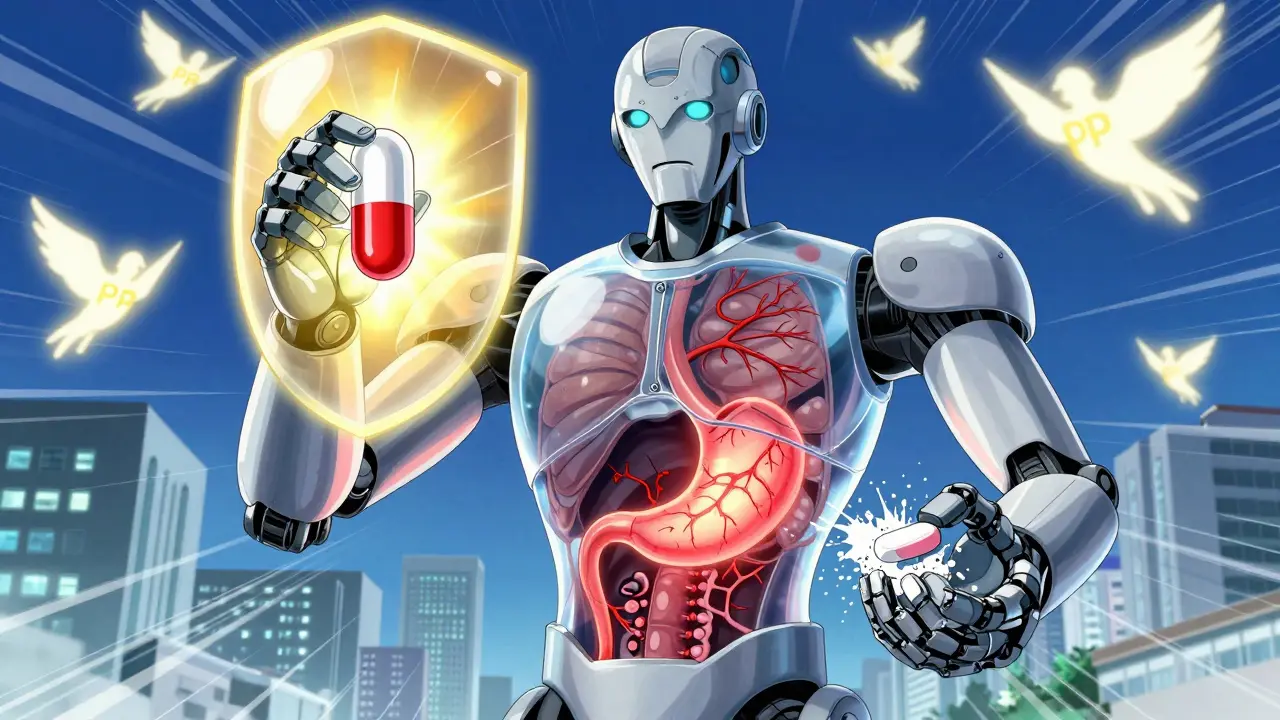
Some NSAIDs are riskier than others. Non-selective ones like naproxen and diclofenac are more likely to cause bleeding because they block both COX-1 and COX-2. Selective COX-2 inhibitors-like celecoxib-spare COX-1, so they’re gentler on the stomach. A 2000 Lancet study showed celecoxib caused half the number of serious ulcers compared to ibuprofen.But here’s the catch: COX-2 inhibitors come with their own risk. The APPROVe trial in 2004 linked rofecoxib (Vioxx) to a nearly twofold increase in heart attacks. That drug was pulled from the market. Celecoxib still exists, but it carries a black box warning from the FDA for cardiovascular risk. So you’re trading one danger for another.
Who’s Most at Risk?
Not everyone who takes NSAIDs ends up in the ER. But certain factors stack the deck against you:- Age over 65 (risk doubles every decade)
- History of peptic ulcer or GI bleeding
- Taking blood thinners like warfarin or aspirin
- Using corticosteroids (like prednisone) at the same time
- Taking more than one NSAID
- Having heart, kidney, or liver disease
Dr. John D. Wolfe, who led key research in the 1990s, found that having just two of these risk factors triples your chance of bleeding. If you’re a 72-year-old with arthritis, on low-dose aspirin for heart protection, and taking naproxen daily? You’re in the danger zone.
How to Protect Yourself
The good news? There are proven ways to reduce this risk.Proton pump inhibitors (PPIs) like omeprazole, esomeprazole, or pantoprazole are the gold standard. A 2017 Cochrane review of over 13,000 patients showed PPIs cut NSAID-related ulcer complications by 75%. If you’re on NSAIDs long-term and have one or more risk factors, starting a PPI at the same time isn’t optional-it’s essential.
Misoprostol is another option, but it’s tough to tolerate. Up to 20% of users get diarrhea, and many stop taking it. It’s rarely used today unless someone can’t take a PPI.
Combination drugs like Vimovo (naproxen + esomeprazole) are now available. A 2022 trial found they cut ulcer complications from 25.6% down to just 7.3% compared to naproxen alone. For high-risk patients, this is a game-changer.
Real People, Real Consequences
Online forums tell stories that data alone can’t capture. On Reddit, a caregiver described how their 78-year-old mother needed three blood transfusions after months of unexplained fatigue. The cause? Occult bleeding from daily ibuprofen for knee pain. No stomach pain. No black stools. Just low hemoglobin-and a near-death experience.On the other side, Drugs.com reviews show that 78% of people taking celecoxib report minimal stomach issues. But 42% of arthritis patients surveyed by the Arthritis Foundation quit NSAIDs entirely because of nausea, bloating, or dark stools. They didn’t want to risk it.
What Doctors Should Do
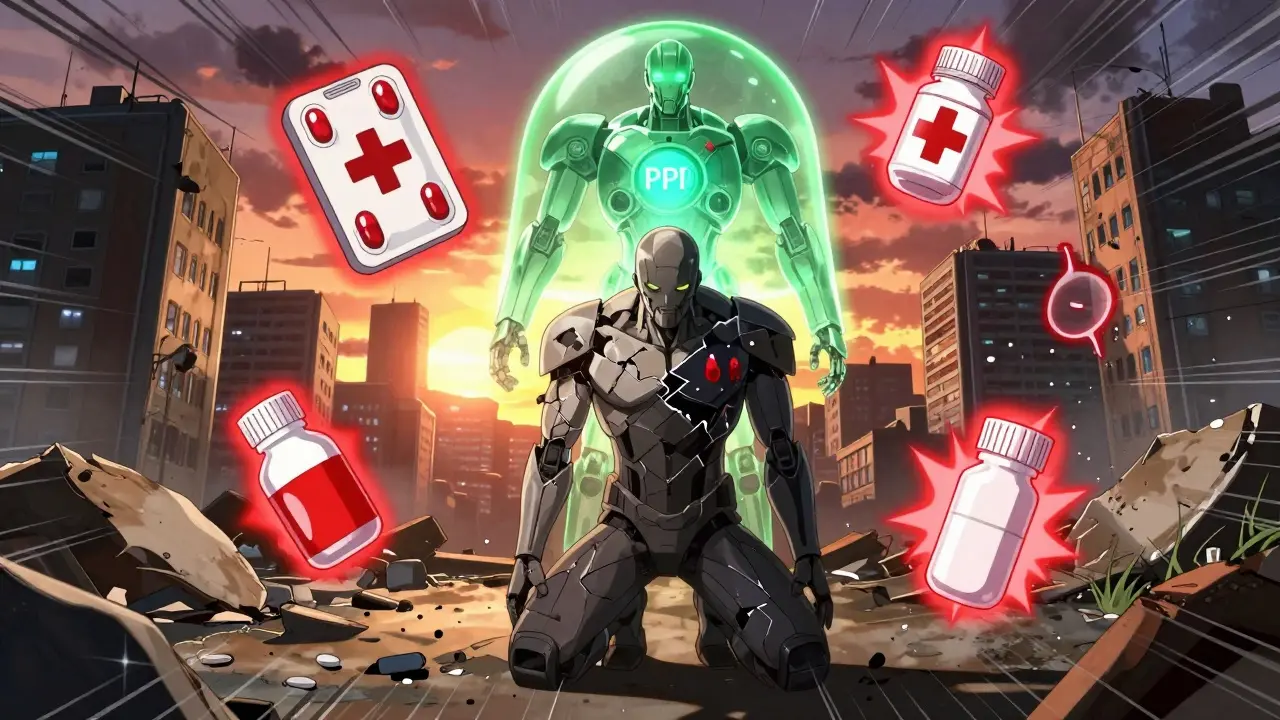
The American College of Gastroenterology recommends a simple scoring system: assign points for age >70 (2), prior ulcer (2), anticoagulant use (2), or corticosteroid use (1). A score of 2 or more means high risk-and you need gastroprotection before starting NSAIDs.For someone with a history of bleeding, guidelines say COX-2 inhibitor + PPI is the safest combo. It’s not perfect, but it’s the best we have. And for people with just one risk factor, short-term use at the lowest effective dose is now the standard.
The Bigger Picture
In the U.S., NSAID-related GI complications cause 107,000 hospitalizations and 16,500 deaths each year. The cost? $2.2 billion annually. Globally, the NSAID market is worth over $11 billion. That’s a lot of money spent on pain relief that’s putting people in danger.And yet, NSAIDs aren’t going away. They’re cheap, effective, and work for millions. The future lies in smarter use: combination pills, new drugs like CINODs (which release nitric oxide to protect the gut), and better patient education. But until then, the burden falls on the person taking the pill.
What You Should Do Today
If you’re taking NSAIDs regularly:- Ask your doctor if you’re at risk. Don’t assume you’re fine just because you feel okay.
- If you’re over 65, have a past ulcer, or take blood thinners, insist on a PPI.
- Track your symptoms: fatigue, dark stools, abdominal pain, or unexplained anemia? Tell your doctor immediately.
- Don’t double up on NSAIDs. No combination of ibuprofen + naproxen + aspirin is safe.
- Consider alternatives: physical therapy, acetaminophen (for pain), or topical gels for localized pain.
NSAIDs aren’t evil. They’re tools. But like any tool, they can cut you if you don’t use them with care. The goal isn’t to stop them entirely-it’s to use them wisely.



Sandy Wells
March 22, 2026 AT 07:43I take ibuprofen every day for my back and never thought twice about it. Guess I'm just lucky. Or dumb. Either way, no bleeding so far. Maybe I'll start a PPI when I feel like it. Probably never.
Timothy Olcott
March 22, 2026 AT 21:35LMAO so now we're gonna make people take pills to counteract pills?? 🤡 NSAIDs are fine. People just got too weak. My grandpa took aspirin for 50 years and still lifted weights at 80. Stop coddling yourselves.
Desiree LaPointe
March 23, 2026 AT 10:07Oh honey. You took two naproxen because your 'knee was a little sore' and now you're surprised you're anemic? 🤦♀️ This isn't a medical mystery. It's a behavioral one. You bought a toaster oven and expected it to double as a microwave. Don't blame the appliance when you misuse it.
Jackie Tucker
March 24, 2026 AT 16:02The tragedy isn't the NSAIDs. It's the cultural surrender to quick fixes. We've outsourced our pain management to chemistry because movement, rest, and mindfulness require... effort. And effort? That's so last century. We'd rather bleed internally than stretch our hamstrings.
matthew runcie
March 25, 2026 AT 12:03Solid breakdown. I've been on celecoxib for years with no stomach issues. Still, I get my blood checked yearly. Just because you feel fine doesn't mean you're fine. Better safe than sorry.
shannon kozee
March 27, 2026 AT 07:14PPIs work. They're cheap. If you're over 65 and on NSAIDs, just take one. No drama. No debate. Just do it.
trudale hampton
March 27, 2026 AT 11:05I used to take naproxen daily. Started on omeprazole after a scary Hgb drop. Best decision I made. No more fatigue. No more black stools. Just life. Seriously, if you're at risk, don't wait for collapse.
Nishan Basnet
March 29, 2026 AT 06:03In India, we call this 'medicine without wisdom.' People buy painkillers like candy. I once saw a man take five diclofenac tablets because his headache didn't go away. He ended up in the ER with a perforated ulcer. No one taught him it wasn't a game. Education matters more than prescriptions.
Allison Priole
March 31, 2026 AT 03:10I read this whole thing and felt so seen. My mom had that silent bleed thing. She just got tired and passed out at the grocery store. Turned out she'd been taking Advil for 12 years. We didn't know. She didn't know. Now she's on a PPI and uses a heating pad. We're all just trying to get through the day, right?
Casey Tenney
March 31, 2026 AT 12:3016,500 deaths a year. And we still sell these like candy. This isn't negligence. This is corporate greed. Pharma knows. Doctors know. You? You're just the mark.
Bryan Woody
April 1, 2026 AT 20:36I was a skeptic until I saw my uncle in the ICU. NSAID + warfarin + age 76 = disaster. He didn't even feel it coming. Now he's on celecoxib + pantoprazole. Still in pain? Yeah. Still alive? Also yeah. Sometimes the trade-off is worth it. Don't be a hero. Be smart.
Chris Dwyer
April 2, 2026 AT 03:08You're not weak for needing help. You're wise for asking. If you're reading this, you're already one step ahead. Start small. Talk to your doc. Maybe try a topical gel. Maybe cut back. Maybe just get a massage. You don't have to suffer. And you don't have to die for a little relief.