
Imagine this: You have three different pills for blood pressure, two for diabetes, and a handful of vitamins. The instructions are on tiny labels you can barely read. One day, you forget which one goes with breakfast and which goes at night. Sound familiar? You are not alone. Millions of people struggle to keep track of their medications, leading to missed doses, side effects, or worse-hospital visits.
The solution isn't just another pill organizer. It is a Medication Action Plan. Think of it as your personal roadmap for health. Unlike a simple list that tells you *what* you are taking, an action plan tells you *how* to take it, *why* you are taking it, and *what to do* if things go wrong. It is a living document created with your healthcare team to help you stay safe and healthy.
What Exactly Is a Medication Action Plan?
A Medication Action Plan (MAP) is more than paper; it is a strategy. According to the American Pharmacists Association, it is a patient-centric document containing specific actions for tracking progress in self-management. It emerged from broader safety initiatives, like the German Federal Ministry of Health's standardized plans introduced in 2016, which aimed to inform both patients and professionals about complete medication regimens.
In the United States, these plans are a core part of Medication Therapy Management (MTM), established under Medicare Part D. An MAP sits alongside four other elements: the Personal Medication Record (a full list of all drugs), the Comprehensive Medication Review, interventions/referrals, and documentation. While a medication list is static, an MAP is dynamic. It includes measurable goals, such as "take 90% of evening doses correctly," and specific steps to get there, like placing a pillbox next to your toothbrush.
Why You Need One (And Who Needs It Most)
You might think, "I know my meds." But data suggests otherwise. Adverse drug events cost the U.S. healthcare system $42 billion annually. A significant portion of these are preventable. If you manage chronic conditions like diabetes, heart disease, or asthma, the complexity increases. The Institute for Healthcare Improvement found that when patients actively create their MAPs, adherence rates jump by 25-40%.
Who benefits most?
- Patients on multiple medications: If you take three or more prescribed medicines, the risk of interaction rises sharply.
- Elderly adults: Metabolism changes with age, making dosing precision critical.
- Those with complex routines: Shift workers or parents juggling schedules often miss doses without a structured plan.
- Mental health patients: Consistency is key for psychiatric medications to work effectively.
Even if you feel fine, an MAP acts as insurance. It catches small errors before they become big problems.
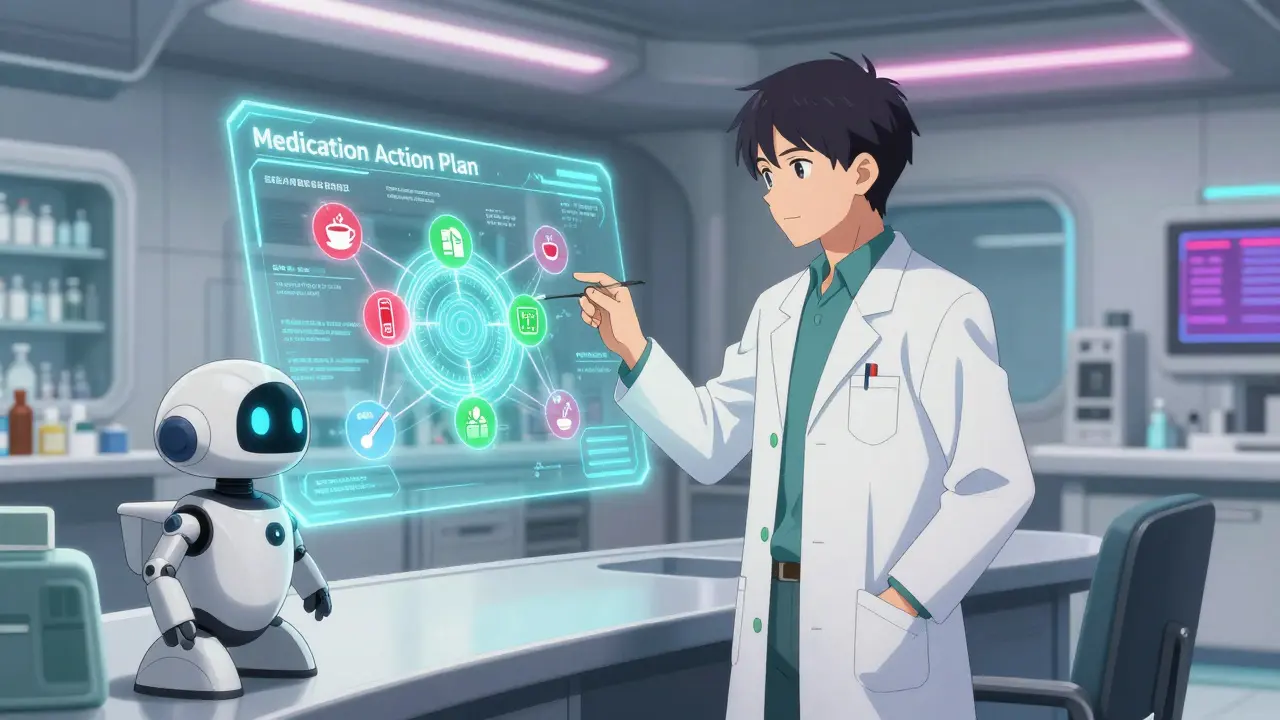
Step-by-Step: Building Your Plan with Your Care Team
Creating an MAP is a collaborative effort. It is not something a doctor hands you and walks away from. Here is how to build it effectively.
1. Gather Everything (The "Brown Bag" Review)
Before your appointment, bring every single substance you put in your body. This includes prescription drugs, over-the-counter pain relievers, herbal supplements, vitamins, and even topical creams. Cambridge Biotherapies notes that initial assessments must include potential drug allergies and current medical history. Missing a bottle of ibuprofen or a St. John’s Wort supplement can lead to dangerous interactions that your pharmacist needs to spot.
2. Schedule a Comprehensive Medication Review (CMR)
This is not a quick check-up. A CMR typically takes 30 to 60 minutes. During this time, your pharmacist or clinician will review your entire regimen. They look for duplications (taking two drugs that do the same thing), interactions, and unnecessary medications. For example, you might be taking a generic and a brand-name version of the same drug without realizing it.
3. Identify Barriers and Goals
This is where the "action" part comes in. Be honest about your struggles. Do you forget doses because you travel often? Are pills too large to swallow? Does nausea make you skip morning meds? Dr. John Fanikos, a pharmacy expert, emphasizes that effective plans reflect daily routines. If you hate waking up early, don't schedule a med for 6 AM. Schedule it for when you actually get up. Set a goal: "I will take my morning meds with coffee every day."
4. Create the Document Together
Your care team should draft the plan using clear, non-medical language. Avoid jargon. Instead of "administer sublingually," write "place under tongue." Include "if-then" scenarios. For instance: "If I miss my dose, take it as soon as I remember unless it is within 4 hours of the next dose." Visual aids help. Color-code sections for different conditions. Use pictures if reading is difficult.
5. Review and Update Regularly
An MAP is not set in stone. The American Academy of Family Physicians recommends quarterly reviews. Life changes-new jobs, new doctors, new symptoms. Your plan must evolve. In Germany, pharmacists update plans during dispensing. In the U.S., you should request updates whenever a new prescription is added.
| Feature | Standard Medication List | Medication Action Plan (MAP) |
|---|---|---|
| Purpose | Inventory of drugs | Guide for self-management |
| Content | Name, dose, frequency | Goals, barriers, troubleshooting steps |
| Creation | Often generated by pharmacy software | Co-created with patient and pharmacist |
| Flexibility | Static | Dynamic, updated based on lifestyle |
| Outcome Focus | Compliance | Adherence and health outcomes |
Overcoming Common Hurdles
Even with the best intentions, sticking to a plan is hard. Here is how to handle common issues.
"I forget everything." Tie medications to existing habits. Brushing teeth, eating dinner, watching the evening news. Use technology. Apps linked to your MAP can send reminders. Sixty-three percent of major pharmacy chains now offer apps that sync with your plan.
"It costs too much." Many patients worry about the price of consultations. However, if you have Medicare Part D, you are eligible for free MTM services if you take eight or more chronic medications and have projected annual drug costs above $4,430 (2024 figures). The 2023 CMS rule expanded eligibility to those with five or more chronic meds. For private insurance, ask if MTM is covered. Even out-of-pocket costs are often lower than the cost of a hospital visit for a preventable error.
"My doctors don't talk to each other." Fragmented care is a major barrier. Your MAP helps bridge this gap. Carry a copy to every appointment. Show it to specialists. It ensures everyone sees the full picture. In integrated systems, electronic health records can now share these plans via FHIR standards, but until then, you are the coordinator.

Real-Life Success Stories
Consider Maria, a 68-year-old diabetic. She struggled with her insulin and oral meds, leading to erratic blood sugar levels. Her previous approach was a printed sheet she ignored. With her pharmacist, she created a visual MAP. She drew a coffee cup for morning doses and a plate for evening ones. She placed the chart on her fridge. Within three months, her adherence rose from 65% to 95%, and her A1C levels stabilized.
Or consider James, who took opioids for back pain. His MAP included strict rules: "Take only when pain exceeds 7/10" and "Call doctor if constipation lasts >2 days." This clarity prevented overuse and managed side effects proactively.
These stories highlight a key point: Personalization works. Generic templates fail. As a Johns Hopkins study noted, pre-printed plans showed no improvement in adherence. Your plan must fit *your* life.
Looking Ahead: Technology and Trends
The future of medication management is digital and interactive. Smartphone apps are transforming static papers into smart tools. Imagine getting a notification: "You missed your 8 PM dose. Take it now?" with a link to log it. The Office of the National Coordinator for Health IT is working on standards to make these plans shareable across all healthcare platforms.
Moreover, the focus is shifting toward greater patient engagement. The National Action Plan for Adverse Drug Event Prevention calls for tools that empower families. For children with life-threatening conditions, Medical Action Plans are already standard in schools. Adults deserve the same level of support.
Investing in a Medication Action Plan is investing in your health. Every dollar spent on comprehensive medication management generates $12.30 in reduced healthcare costs, according to the Congressional Budget Office. That is a return on investment you can count on.
Is a Medication Action Plan the same as a medication list?
No. A medication list is simply an inventory of what you are taking. A Medication Action Plan (MAP) includes that list but adds specific strategies, goals, and troubleshooting steps to help you take them correctly and safely. It explains *why* you take each med and *what to do* if you miss a dose or experience side effects.
How do I know if I am eligible for a free Medication Action Plan?
If you have Medicare Part D, you likely qualify if you take five or more chronic medications (updated from eight in 2023) and have high drug costs. Private insurance plans vary; check your policy or ask your pharmacist. Many community pharmacies offer these services regardless of insurance, though fees may apply.
Who creates the Medication Action Plan?
It is a collaborative effort led by a pharmacist or clinician during a Comprehensive Medication Review (CMR). However, you play a crucial role. Your input about your daily routine, challenges, and preferences shapes the plan. Without your active participation, the plan is unlikely to succeed.
How often should I update my Medication Action Plan?
Ideally, review it quarterly or whenever there is a change in your health status, new prescriptions, or lifestyle. If you start a new medication, add it immediately. If a side effect persists, discuss adjustments with your care team.
Can I use a Medication Action Plan for my child?
Yes. For children with chronic or life-threatening conditions, Medical Action Plans are essential. They ensure teachers, coaches, and caregivers know exactly what to do in emergencies or for daily maintenance. Organizations like PAVE provide templates for school settings.