
Pediatric Safety Network Impact Simulator
Research Parameters
Projected Research Outcomes
With only 1 site, the study lacks the volume to distinguish between random noise and a real safety signal.
For decades, doctors treated children like small adults when it came to medication dosing and safety monitoring. This approach was dangerous because kids metabolize drugs differently than grown-ups. Their organs are still developing, and their bodies react in unique ways that can trigger unexpected side effects. To fix this gap, the medical community created structured frameworks known as pediatric safety networks. These aren't just loose groups of researchers chatting at conferences. They are rigorous, multi-institutional systems designed specifically to track how treatments affect young patients in real-world settings.
If you have ever wondered why certain medications carry specific warnings for children, or how we know a new therapy is safe for a teenager versus a toddler, the answer lies in these collaborative networks. They pool data from multiple hospitals and states to spot patterns that single clinics would miss. Today, we look at how these networks operate, the specific models that drive them, and why they are essential for protecting the next generation.
The Core Structure of Pediatric Safety Networks
At their heart, pediatric safety networks are about scale and standardization. A single hospital might treat only a handful of children with a rare condition each year. That sample size is too small to detect rare but serious adverse events. By connecting dozens of sites, these networks create a massive dataset that allows statisticians to find signals in the noise.
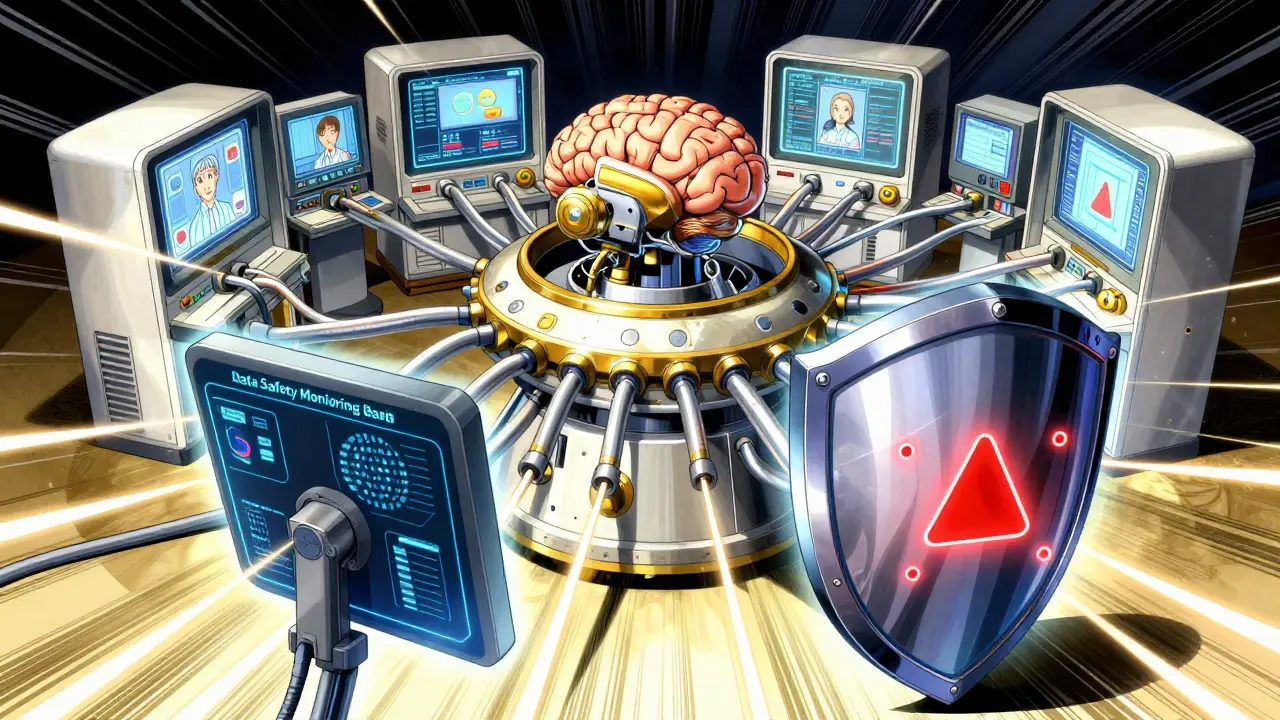
The structure usually follows a hub-and-spoke model. You have clinical sites-the actual hospitals where patients are treated-that feed data into a central Data Coordinating Center (DCC). The DCC acts as the brain of the operation. It doesn't just collect numbers; it designs the studies, creates the data forms, and performs the complex statistical analyses needed to determine if a side effect is linked to a treatment or just a coincidence.
This setup requires strict governance. You can't have every hospital recording data differently. If one site records "rash" and another records "skin irritation," the system breaks down. Therefore, these networks enforce standardized terminology and protocols. This ensures that when the Data Coordinating Center runs an analysis, the results are comparable across all participating institutions.
Case Study: The CPCCRN Model
To understand how this works in practice, let's look at the Collaborative Pediatric Critical Care Research Network (CPCCRN). Established by the Eunice Kennedy Shriver National Institute of Child Health and Human Development (NICHD), this network was built to tackle a specific problem: there was very little evidence-based guidance for treating critically ill children.
The CPCCRN didn't just ask hospitals to "try harder." It set up a formal cooperative agreement mechanism (U01) involving seven major Clinical Sites and a dedicated Data Coordinating Center. Each clinical site had a clear job: propose feasible protocols, enroll patients, and follow strict guidelines. But the real power came from the collaboration. The network mandated that all sites engage cooperatively. If one site hit a roadblock in enrolling patients, others could step in.
A key feature of the CPCCRN was its Data and Safety Monitoring Board (DSMB). This isn't a rubber stamp committee. The DSMB actively monitors adverse events in real-time. If a protocol shows signs of causing harm, the board has the authority to pause or stop the study immediately. This layer of protection is crucial when dealing with vulnerable populations who cannot advocate for themselves during critical illness.
The network also solved the problem of slow recruitment. In traditional trials, finding enough participants can take years. The CPCCRN allowed the DCC and NICHD to identify qualified investigators at non-network sites who could enroll patients. This accelerated data collection, meaning safety findings reached the medical community faster.
Beyond the Hospital: The Child Safety CoIIN
Not all safety issues happen inside an ICU. Some risks are environmental or behavioral. This is where the Child Safety Collaborative Innovation and Improvement Network (CoIIN) comes in. Managed by the Children's Safety Network with support from the Health Resources and Services Administration (HRSA), CoIIN took a different approach.
Instead of focusing on drug side effects in hospitals, CoIIN focused on injury prevention and broader child safety outcomes across entire states. Its second cohort ran from 2017 to 2019, engaging 16 states and forming 34 active strategy teams. The goal wasn't just to count injuries but to test interventions that could prevent them.
The methodology here relied on "change packages." These were bundles of evidence-based strategies, programs, and metrics provided to state teams. Teams used worksheets and forms to collect real-time data on how well these strategies worked. For example, a team might implement a new program to address dating violence among teens. By tracking the data, they could see if the intervention reduced incidents or, conversely, if it had any unintended negative consequences.
This model highlights a critical aspect of safety research: unintended consequences. Sometimes, a well-meaning policy can backfire. CoIIN’s structure allowed states to establish baselines, look at the data, and pivot if something wasn't working. One state program, after analyzing their initial data, decided to integrate a stronger focus on sexual violence into their existing "Green Dot" sessions because the baseline data revealed gaps in their original approach.
Comparing Approaches: Clinical vs. Community Networks
While both CPCCRN and CoIIN aim to improve child health, their methods reflect the nature of the risks they monitor. Understanding the difference helps clarify how comprehensive pediatric safety really is.
| Feature | CPCCRN (Critical Care) | CoIIN (Child Safety) |
|---|---|---|
| Primary Focus | Pharmacological side effects & treatment efficacy in ICU | Injury prevention & behavioral safety outcomes |
| Data Source | Hospital electronic health records & trial protocols | State-level reports & community intervention metrics |
| Governance | Data and Safety Monitoring Board (DSMB) | Strategy Teams & State Partnerships |
| Speed of Insight | Rapid detection of acute adverse events | Long-term trend analysis & policy adjustment |
| Limitation | Limited to acute care settings | Relies on self-reported state data |
The CPCCRN excels at catching immediate, life-threatening reactions to medications or procedures. Its centralized data management allows for the pooling of rare events that might be invisible at a single site. However, it is constrained by the hospital walls. Once a child leaves the ICU, the CPCCRN's direct monitoring often ends.
Conversely, CoIIN captures the broader picture of a child's life outside the hospital. It can track how a new bike helmet law affects head injuries over three years. But it lacks the granular, patient-level precision of a clinical trial. It relies heavily on the accuracy of state reporting and the consistency of local implementation.

Challenges in Implementation
Running these networks isn't easy. The biggest hurdle is often human behavior, not technology. Participating in a network requires a significant time commitment. CoIIN strategy teams reported spending 15 to 20 hours a month just on data collection and coordination. For busy clinicians and public health officials, that is a heavy lift.
There is also the challenge of standardization versus flexibility. In the CPCCRN, the requirement for all sites to participate cooperatively sometimes created tension. Academic centers have different research priorities. Forcing them to align on a single protocol can feel restrictive. However, the formal governance structure, including voting mechanisms for the Steering Committee, provided a way to resolve these conflicts without breaking the network.
Data quality is another persistent issue. If a nurse enters data incorrectly, or if a hospital uses a different coding system for diagnoses, the central analysis becomes skewed. Both networks invested heavily in training and tools to mitigate this. The CPCCRN's DCC developed specific data forms to minimize ambiguity. CoIIN provided detailed "change packages" with step-by-step guides for tracking metrics. Despite these efforts, ensuring consistent data entry across dozens of independent institutions remains a constant battle.
The Future of Collaborative Safety Research
The landscape of pediatric safety research is evolving. While specific funding cycles like the original CPCCRN RFA may expire, the infrastructure they built lives on. The lessons learned from these early networks have informed newer initiatives, such as the Pediatric Trials Network funded by NICHD through UG3/UH3 mechanisms.
We are moving toward more integrated data systems. The future isn't just about separate networks for critical care or injury prevention. It's about creating seamless pipelines that can follow a child's health journey from birth through adulthood. This longitudinal view is critical for understanding long-term side effects that don't appear until years after exposure.
Experts like Carole M. Lannon and Laura E. Peterson have noted that these networks provide a platform for generating evidence where traditional randomized controlled trials are impractical or unethical. As we face new challenges, from emerging infectious diseases to complex chronic conditions, the ability to collaborate quickly and safely will remain our best tool for protecting children.
The value of these networks is clear. They turn isolated observations into actionable knowledge. They ensure that when a doctor prescribes a medication or implements a safety program, they are doing so with the best available evidence. And most importantly, they prioritize the safety of the most vulnerable patients in our society.
What is the primary purpose of a pediatric safety network?
The primary purpose is to systematically investigate treatment efficacy and safety outcomes in children by pooling data from multiple institutions. This allows researchers to detect rare side effects and adverse events that would be missed in single-hospital studies, ensuring safer medical practices for pediatric populations.
How does the CPCCRN differ from other research networks?
The Collaborative Pediatric Critical Care Research Network (CPCCRN) focuses specifically on critically ill and injured children in hospital settings. Unlike general research groups, it features a mandatory Data and Safety Monitoring Board (DSMB) and a centralized Data Coordinating Center that manages real-time safety monitoring and statistical analysis across all participating clinical sites.
Why are collaborative networks necessary for studying side effects in children?
Children are physiologically different from adults, making adult data unreliable for predicting pediatric reactions. Additionally, many pediatric conditions are rare. Collaborative networks aggregate large sample sizes from multiple locations, providing the statistical power needed to identify uncommon but serious side effects accurately.
What role does the Data Coordinating Center (DCC) play?
The DCC serves as the technical and analytical hub of the network. It develops study protocols, creates standardized data forms, performs sample size calculations, and conducts complex statistical analyses. It ensures that data from diverse clinical sites is compatible and interpretable for safety monitoring.
Can these networks track long-term side effects?
Current networks like CPCCRN are primarily designed for acute care settings and may have limitations in tracking long-term outcomes beyond the immediate study period. However, newer iterations and integrated data systems are evolving to capture longitudinal data, aiming to bridge this gap and monitor effects over a child's entire lifespan.
What is the Child Safety CoIIN?
The Child Safety Collaborative Innovation and Improvement Network (CoIIN) is a state-based initiative focused on injury prevention and broader child safety rather than just clinical drug side effects. It uses "change packages" and real-time data tracking to help states implement and evaluate safety strategies effectively.