Nocebo Effect Susceptibility Checker
Assessment Questions
Select the option that best describes you. This tool analyzes factors mentioned in the article such as anxiety levels, information consumption habits, and symptom awareness.
Your Results
Answer the questions to see your susceptibility profile.
Susceptibility Score
Recommended Mitigation Strategies:
Have you ever started a new medication, read the long list of possible side effects on the box, and then immediately felt nauseous or dizzy? You might blame the chemistry. But what if your brain was actually doing the heavy lifting?
This isn't just imagination. It is a real biological phenomenon called the nocebo effect. While we hear a lot about the placebo effect-where belief in a treatment makes it work better-the nocebo effect is its darker twin. It happens when negative expectations cause real physical symptoms, even if the pill itself is harmless or perfectly safe for you.
Understanding this mechanism changes everything about how we view medication adherence, doctor-patient communication, and our own health. Let's break down why your mind has such power over your body, how to spot these psychological triggers, and what you can do to protect your treatment outcomes.
What Exactly Is the Nocebo Effect?
The word "nocebo" comes from Latin, meaning "I will harm." It was coined as the direct opposite of "placebo," which means "I will please." In medical terms, the nocebo effect refers to the induction of negative symptoms or the worsening of a condition due to negative expectations about a treatment.
Here is the crucial part: the symptoms are real. They are not "fake." Your body produces genuine physiological changes driven by expectation rather than active drug components. When you expect pain, nausea, or fatigue, your brain activates specific pathways that make those sensations happen.
| Feature | Placebo Effect | Nocebo Effect |
|---|---|---|
| Expectation | Positive (Hope for improvement) | Negative (Fear of harm/side effects) |
| Outcome | Improved symptoms, pain relief | New symptoms, worsened pain |
| Brain Mechanism | Activates reward/endogenous opioid systems | Activates threat/pain processing centers |
| Clinical Impact | Enhances treatment efficacy | Reduces efficacy, increases discontinuation |
Research shows that approximately 20% of people taking a sugar pill in clinical trials report side effects. Nearly 10% withdraw from trials entirely because they feel worse. This proves that the context of treatment-what you believe, what you've been told, and how you feel-is a powerful medicine in itself.
The Brain Science Behind the Symptoms
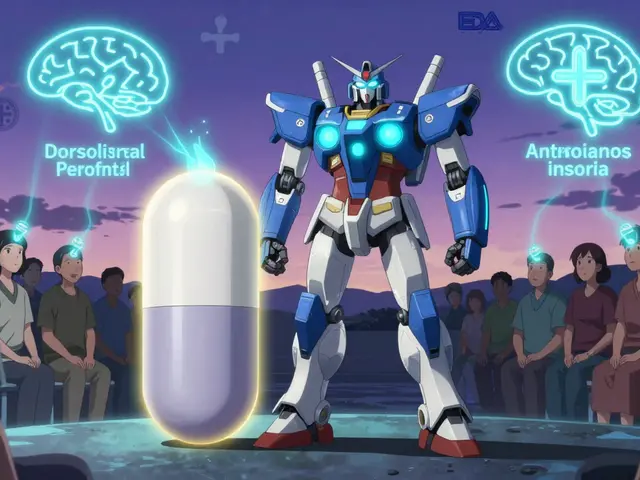
You might wonder how a thought can cause physical sickness. The answer lies in neurobiology. Neuroimaging studies reveal that negative expectations activate brain regions associated with pain processing and symptom perception. Specifically, areas like the anterior cingulate cortex, the insula, and prefrontal areas light up when you anticipate a bad outcome.
Think of your brain as an internal pharmacy. Professor Karin Jensen of Harvard Medical School describes this as complex psychoneurobiological processes where simply believing a treatment works activates mechanisms that improve outcomes. Conversely, fearing a treatment harms you activates threat responses. These aren't just feelings; they trigger the release of stress hormones and alter neurotransmitter levels.
In one landmark study involving the opioid analgesic remifentanil, researchers found that positive expectations doubled the pain-relieving effect. However, when patients were told the drug would increase pain sensitivity later, the analgesic effect vanished completely. The drug didn't change. The expectation did.
Why Do We Experience Nocebo Side Effects?
The nocebo effect operates through several distinct pathways. Understanding these helps you identify if your reaction is chemical or psychological.
- Misattribution: You have a headache or stomach ache from something else (stress, diet, lack of sleep), but because you just took a new pill, you attribute that normal discomfort to the medication.
- Heightened Awareness: Negative expectations make you hyper-aware of bodily sensations. Normal day-to-day twinges become significant events because you are scanning for problems.
- Anxiety Loop: Worrying about side effects causes anxiety. Anxiety causes physical symptoms like nausea, dizziness, and heart palpitations. You then assume the pill caused them.
- Information Overload: Reading exhaustive lists of potential side effects primes your brain to look for them. Studies confirm that the more adverse effects listed in patient leaflets, the more patients report experiencing them.
This is particularly evident during medication brand switches. In New Zealand, when patients switched from a brand-name venlafaxine to a generic version with identical active ingredients, reports of adverse effects spiked after media coverage highlighted potential differences. The chemistry was the same; the fear was different.

Who Is Most at Risk?
Not everyone experiences the nocebo effect equally. Certain groups are more susceptible due to psychological and social factors.
Women, for instance, report significantly more medication side effects than men in placebo-controlled trials-up to 23% more. This isn't necessarily biological; it often relates to social conditioning and higher health literacy regarding symptoms. People with anxiety or depression are also 1.7 times more likely to experience nocebo effects. If you tend toward pessimism or are highly influenced by your environment, you may be more prone to these expectation-driven symptoms.
Additionally, individuals who consume large amounts of health-related information online are at higher risk. Reading horror stories on forums can create a "multimodal image" of harm in your mind, setting off a cascade of physiological responses before you even take the first dose.
The Cost of Fear: Economic and Clinical Impact
The nocebo effect isn't just an individual problem; it has massive implications for healthcare systems. When patients stop working medications because they fear side effects, outcomes worsen. Studies suggest that 15-20% of patients discontinue effective medications due to perceived side effects that may be nocebo-mediated.
This leads to billions in lost revenue for pharmaceutical companies and increased costs for healthcare providers who must manage untreated conditions. It also complicates clinical trials. If 26-50% of reported side effects during medication initiation are attributable to nocebo mechanisms rather than pharmacological actions, it becomes difficult to assess true drug safety.
Regulatory bodies like the European Medicines Agency and New Zealand's Medsafe are now developing guidelines for balanced risk communication. The goal is to maintain transparency without triggering unnecessary fear. This is a delicate balance, as doctors must inform patients of risks without planting seeds of doubt that could sabotage treatment.

How to Mitigate the Nocebo Effect
Good news: the nocebo effect can be managed. Since it is driven by communication and expectation, changing how we talk about medicine can reduce its impact. Here are practical strategies for patients and providers.
- Reframe the Conversation: Instead of listing every possible side effect, focus on the most common ones and emphasize their rarity. For example, say "Most people notice no difference" rather than "Some patients find this ineffective."
- Balance Information: Ensure you understand the rationale for the treatment. Knowing why you are taking a drug builds positive expectation, which can counteract negative fears.
- Avoid Doomscrolling: Limit exposure to anecdotal horror stories online. One person's bad experience does not predict yours. Rely on statistical data provided by your doctor.
- Practice Mindfulness: If you feel a symptom starting, pause. Ask yourself: "Is this new? Did I eat differently? Am I stressed?" Distinguishing between drug effects and background noise reduces misattribution.
- Communicate with Your Doctor: Tell your provider if you are worried about side effects. A simple reassurance or adjustment in how the information is presented can lower your anxiety threshold.
Training programs for healthcare providers have shown success. In pilot regions within the UK's National Health Service, structured communication protocols reduced medication-related adverse event reports by 14%. By learning to frame risks positively, doctors helped patients stay on life-saving treatments.
Frequently Asked Questions
Is the nocebo effect the same as being hypochondriac?
No. Hypochondria involves excessive worry about having a serious illness despite medical reassurance. The nocebo effect is a specific physiological response triggered by negative expectations about a treatment. Both involve anxiety, but nocebo is directly linked to the therapeutic context and results in measurable biological changes, such as increased pain sensitivity or actual nausea.
Can the nocebo effect kill you?
While rare, severe nocebo reactions can lead to dangerous outcomes indirectly. For example, if a patient believes a heart medication will cause fatal arrhythmia, they may stop taking it, leading to a heart attack. Directly, extreme anxiety from nocebo expectations can trigger panic attacks or exacerbate existing conditions, but the effect itself is generally a modulation of symptoms rather than a direct cause of death.
Why do women experience more nocebo side effects?
Research indicates women report up to 23% more side effects in placebo trials. This is largely attributed to social and psychological factors, including greater health literacy, higher tendency to monitor bodily sensations, and societal conditioning that encourages women to express pain and discomfort. It is not necessarily a biological difference in drug metabolism.
Does the nocebo effect apply to generic drugs?
Yes, it is very common. Because generic drugs often look different (different color, shape) than brand-name versions, patients may perceive them as less potent or more likely to cause issues. This negative expectation can trigger nocebo symptoms, even though the active ingredient is chemically identical. This is known as the "generic nocebo effect."
How can doctors prevent the nocebo effect?
Doctors can use "positive framing" when discussing risks. Instead of saying "You might get a headache," they can say "Most people tolerate this well, but a small number might feel mild head pressure." Emphasizing the benefits and the high probability of success helps build positive expectations, which can enhance the drug's effectiveness and reduce side effect reporting.